Exterior Fire Sprinklers for Wildfire: Automated Roof and Perimeter Protection
You evacuate. The system stays and keeps the house wet.
Request a Private ConsultationWhat Your System Does
Dual Wildfire Detection
3 Automated Threat Levels
46 of 47 Survived
2007 Ham Lake Fire
Roof, Eaves, Perimeter
What Are Exterior Fire Sprinklers?
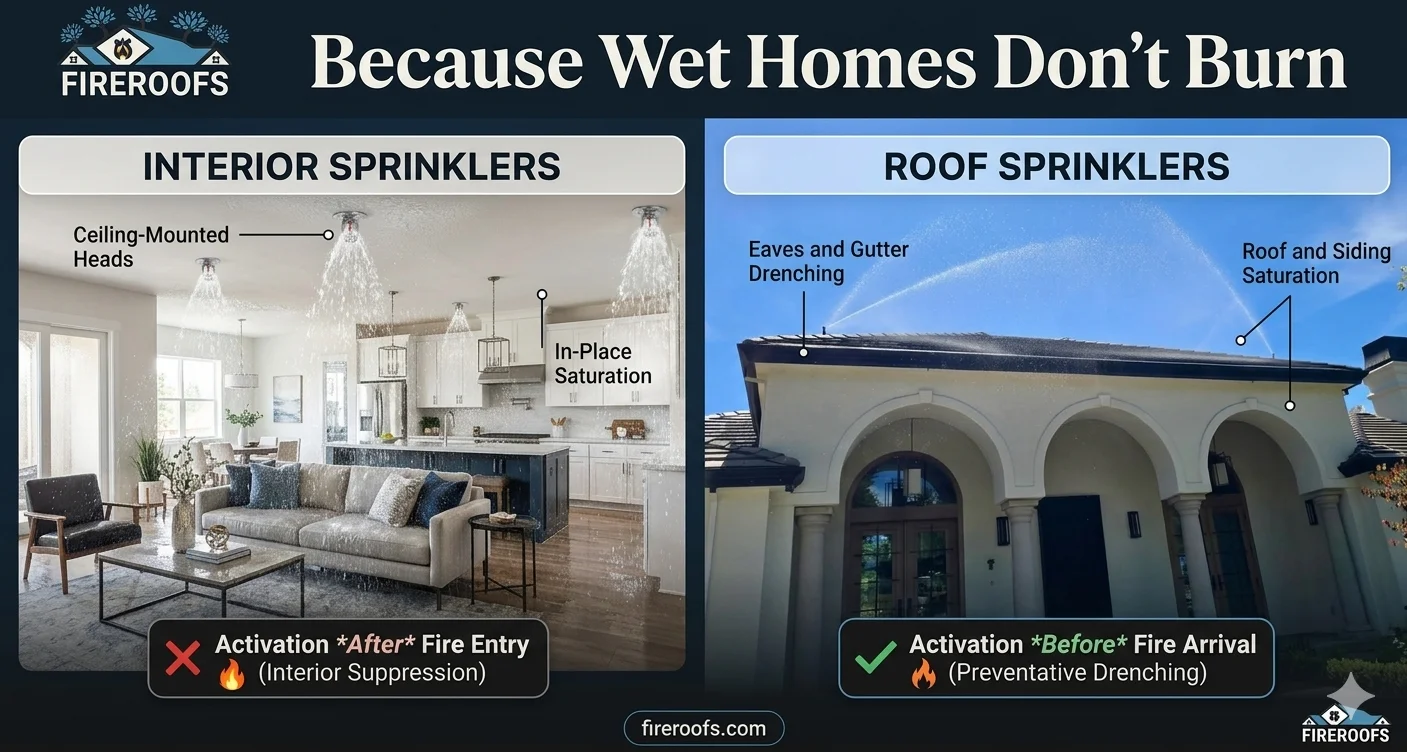
Exterior fire sprinklers, also called wildfire sprinklers, external sprinklers or roof sprinklers, mount on the roof, eaves and perimeter of a home. FireRoofs systems detect wildfire and turn on automatically, so they keep protecting the house after you evacuate. Interior sprinklers react after fire gets inside. Exterior sprinklers wet the roof, eaves, siding, decks, and nearby plants before fire arrives, so embers have nothing dry to ignite.
FireRoofs designs them for homes in California's Wildland-Urban Interface (WUI) and fire hazard severity zones. See the evidence from real fires.
Roof Sprinklers vs. Other Wildfire Protection Methods
| Feature | FireRoofs System | DIY Sprinklers | Garden Hose | Private Fire Service |
|---|---|---|---|---|
| Activates automatically | ✅ Yes | ❌ Manual | ❌ Manual | ❌ On-call |
| Works when evacuated | ✅ Yes | ❌ No | ❌ No | ⚠️ Maybe |
| Roof & eave coverage | ✅ Full | ⚠️ Partial | ❌ No | ⚠️ Varies |
| Dual detection | ✅ Satellite + camera | ❌ None | ❌ None | ❌ None |
| Class A foam option | ✅ Yes | ❌ No | ❌ No | ✅ Some |
| Licensed installation | ✅ Vetted, licensed & insured partners | ❌ No | ❌ N/A | ✅ Yes |
| Annual cost | $–$$ | $ | Free | $$$$ |
| Proven wildfire record | ✅ Yes | ⚠️ Limited | ❌ No | ⚠️ Varies |
When Wildfire Hits, There Is No Fire Engine for Every House.
After the January 2025 LA fires, the county's fire chief said it plainly: with thousands of homes burning at once, there are not enough engines. Homeowners in high fire zones got the message.
Inside Sprinklers Fight Fire After It Gets In. Roof Sprinklers Stop It Before It Starts.
A wildfire rarely burns a house with a wall of flame. Embers land on a dry roof, gutter or vent and light it from there. Ceiling sprinklers turn on after fire is already inside. Roof sprinklers run outside before it arrives, so embers land on surfaces too wet to catch.
FireRoofs designs automated wildfire sprinklers around each property: the slope, the prevailing wind, how close the trees and brush are, and the weak spots on the house. Eave heads soak the soffits and vents where embers get in from below, and perimeter heads wet the plants and ground near the foundation. Satellite monitoring and on-property cameras turn the system on, and it keeps every surface wet until the danger passes.
Roof Sprinklers for Wildfire
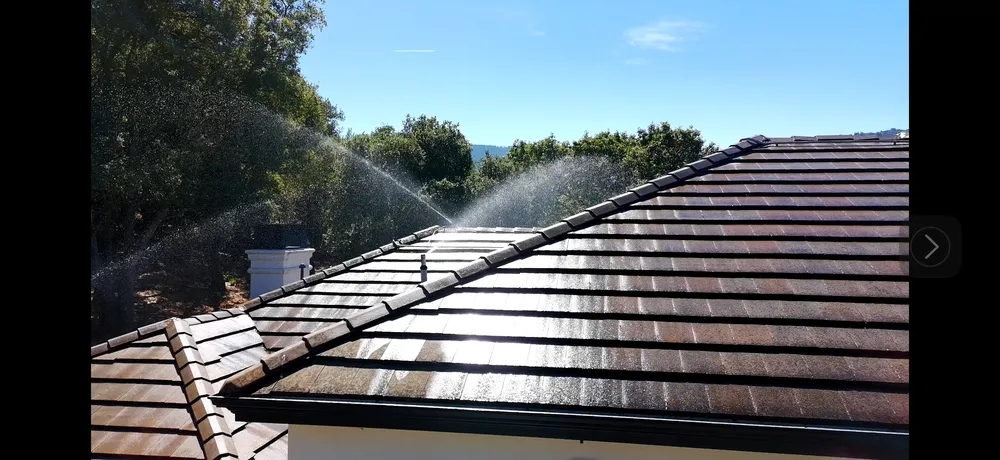
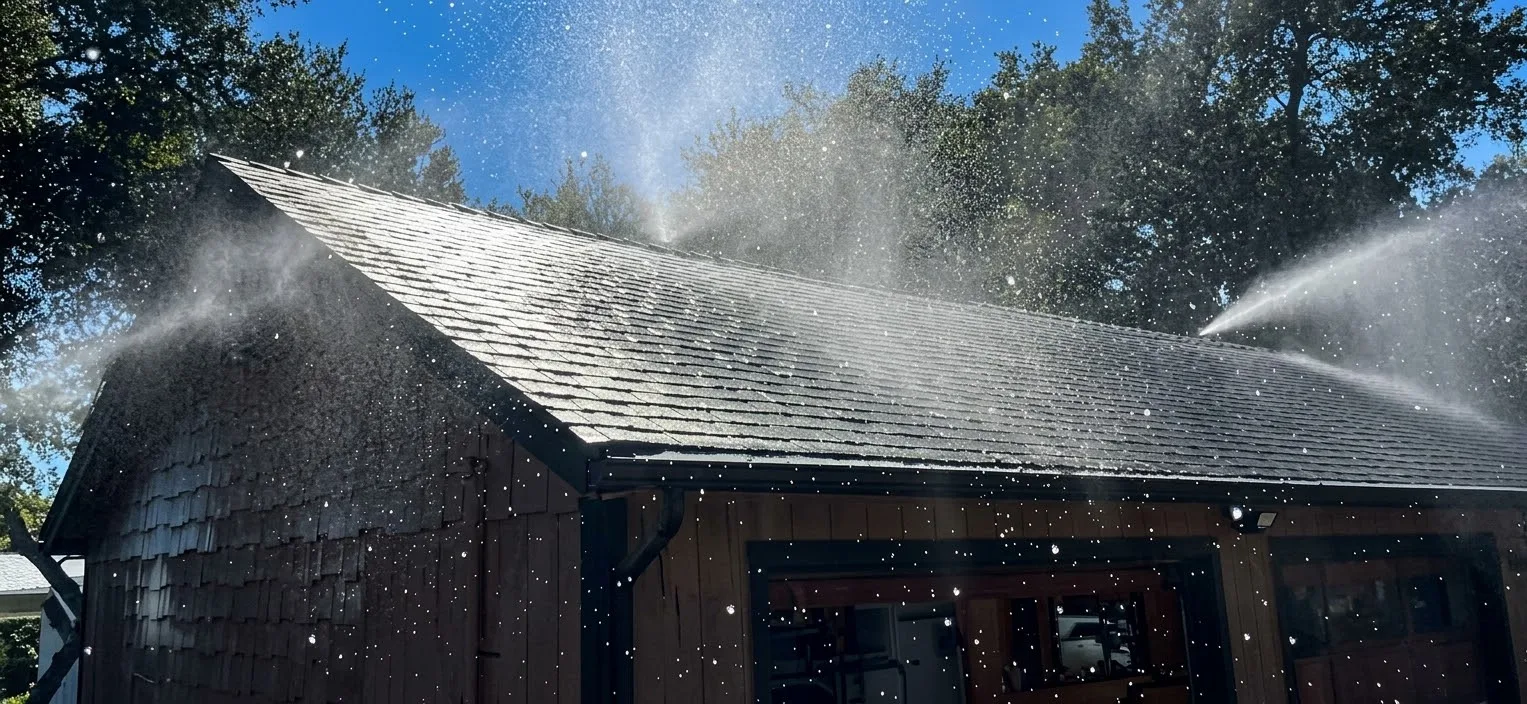
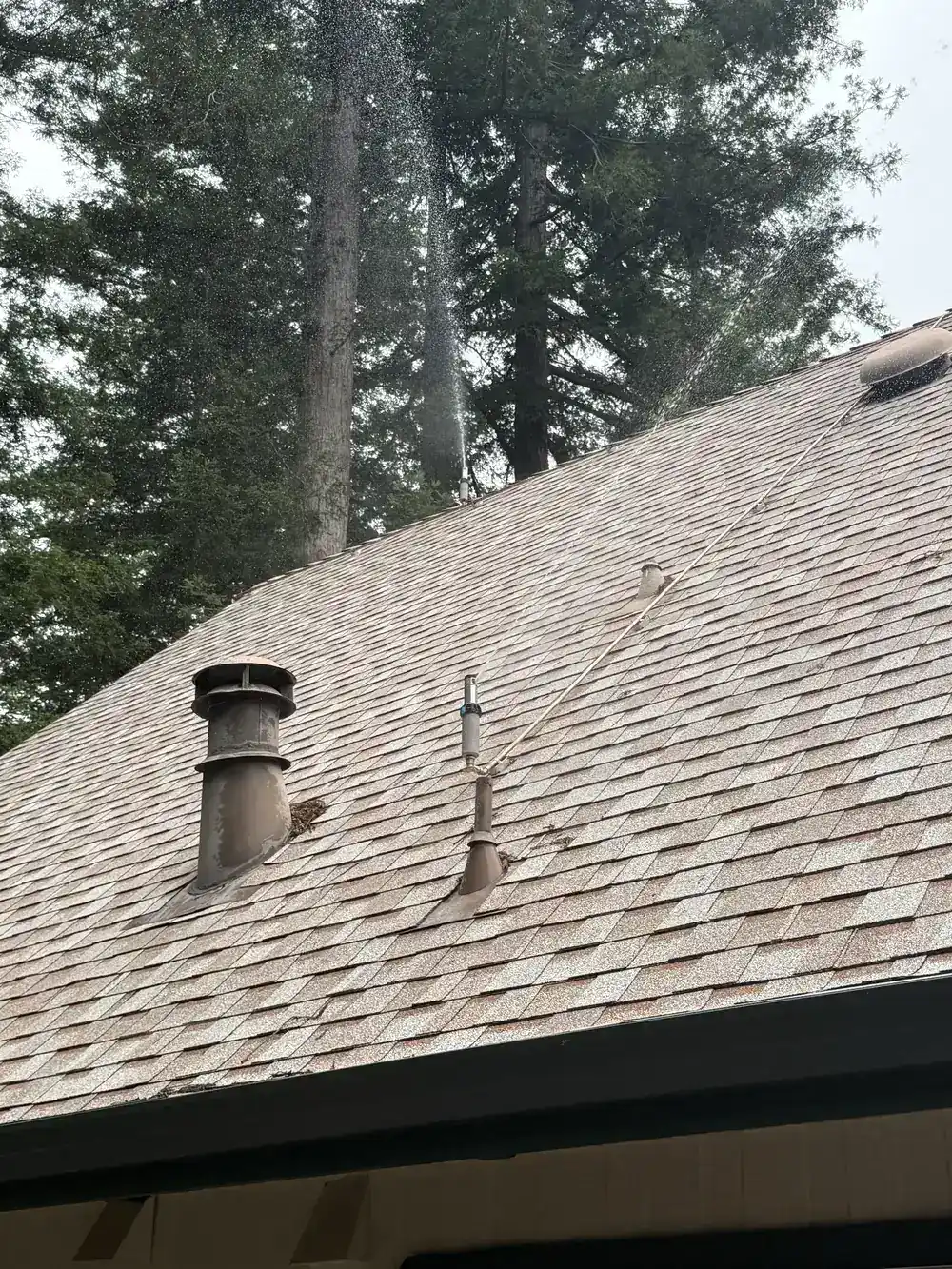
Roof sprinklers are the core of any set of exterior fire sprinklers. A roof sprinkler system wets your roof, eaves, and the ground around your home before wildfire embers arrive, even after you evacuate. Low-profile heads throw water 30 to 35 feet with overlapping patterns across every roof plane, eave nozzles keep vents and soffits wet where embers collect, and perimeter heads wet Zone 0 and nearby plants.
Every automated system waters at every threat level and runs more often and longer as the threat rises, with a push notification at each level change. Manual systems can upgrade to automatic activation anytime, with no re-piping.
Do Roof Sprinklers Work? The Ham Lake Fire
After the 2007 Ham Lake Fire in Minnesota, University of Minnesota researchers compared homes with working exterior sprinklers, homes whose systems failed, and homes with no sprinklers at all.
2007 Ham Lake Fire, University of Minnesota study (2008)
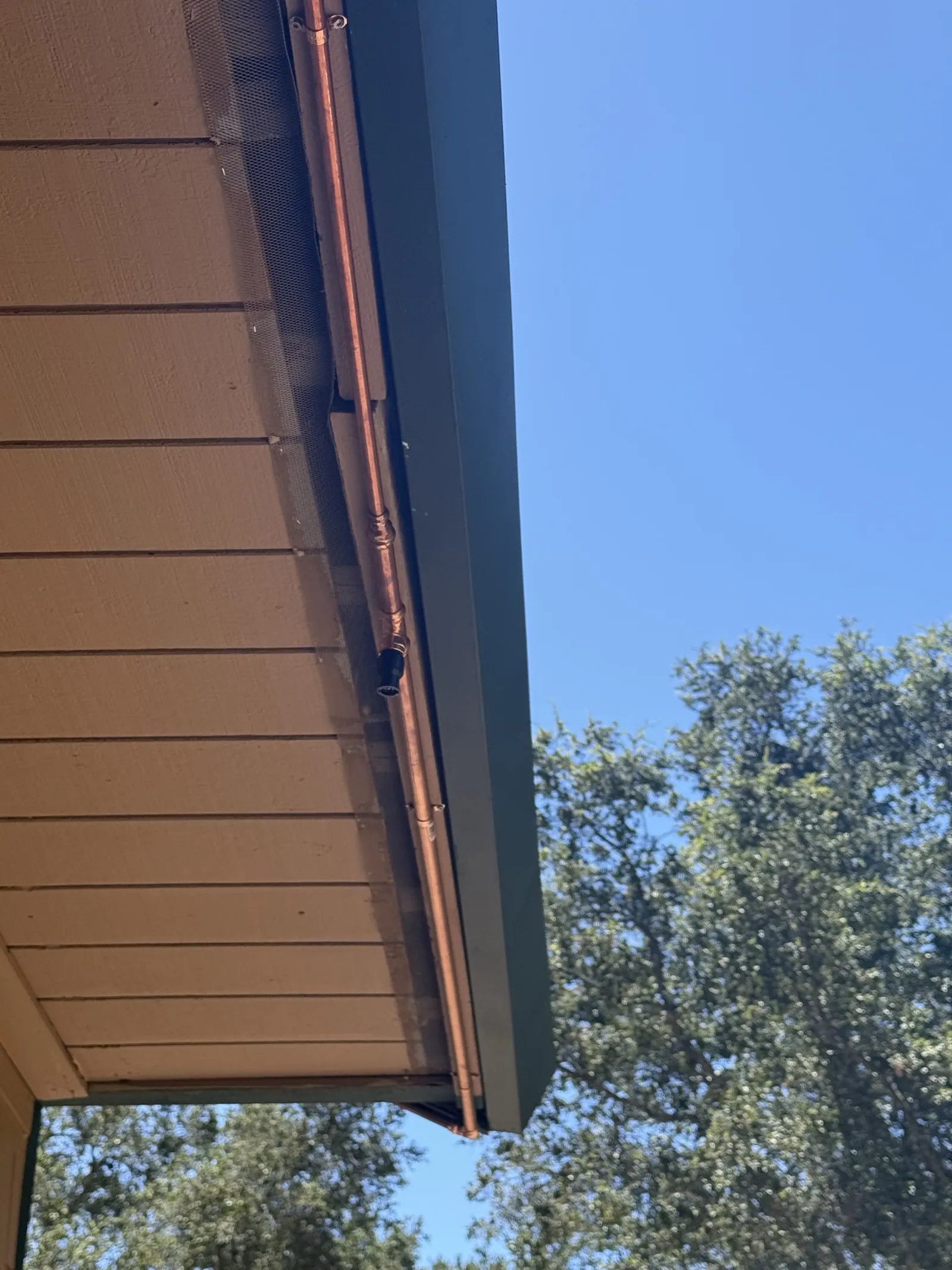
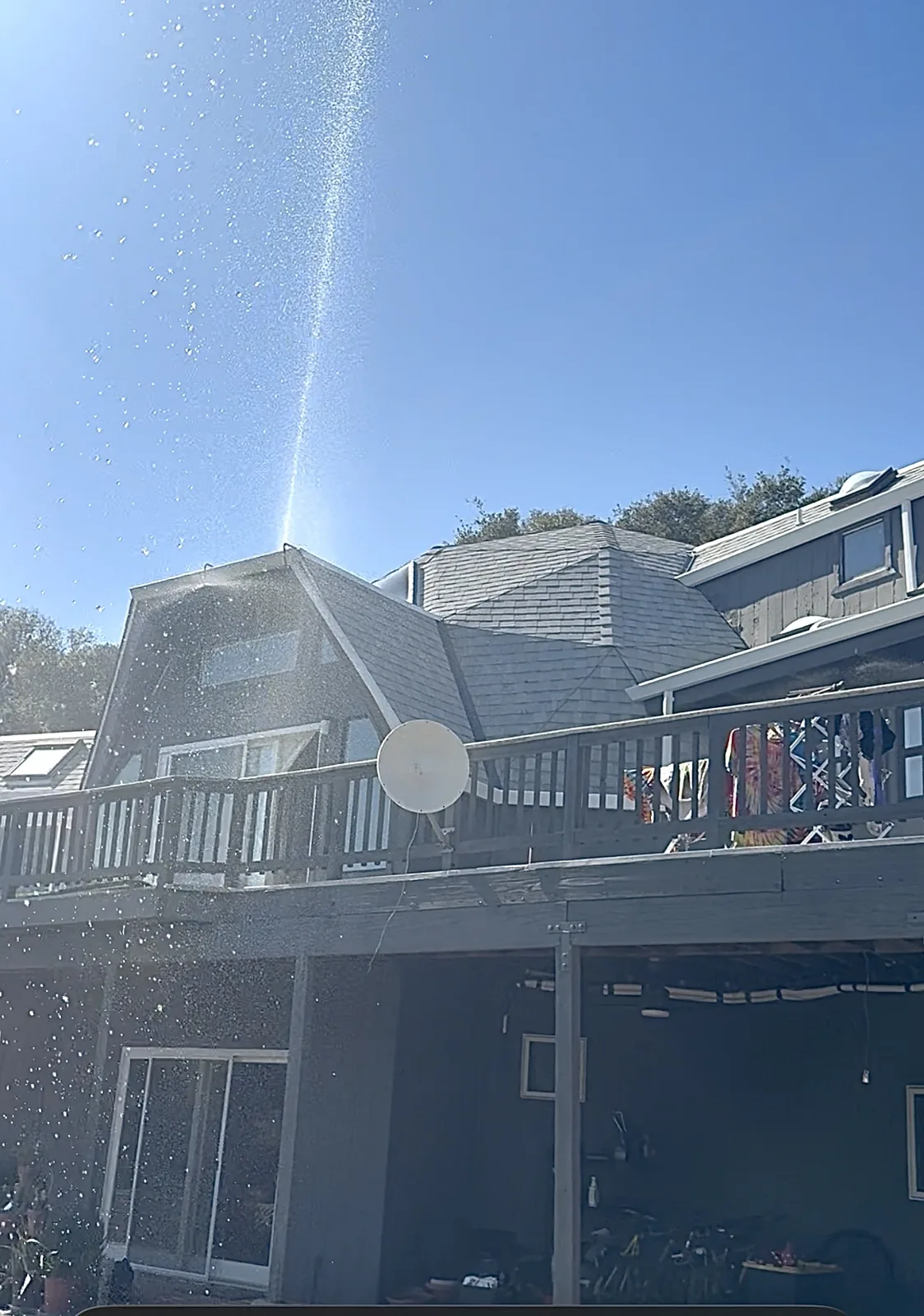
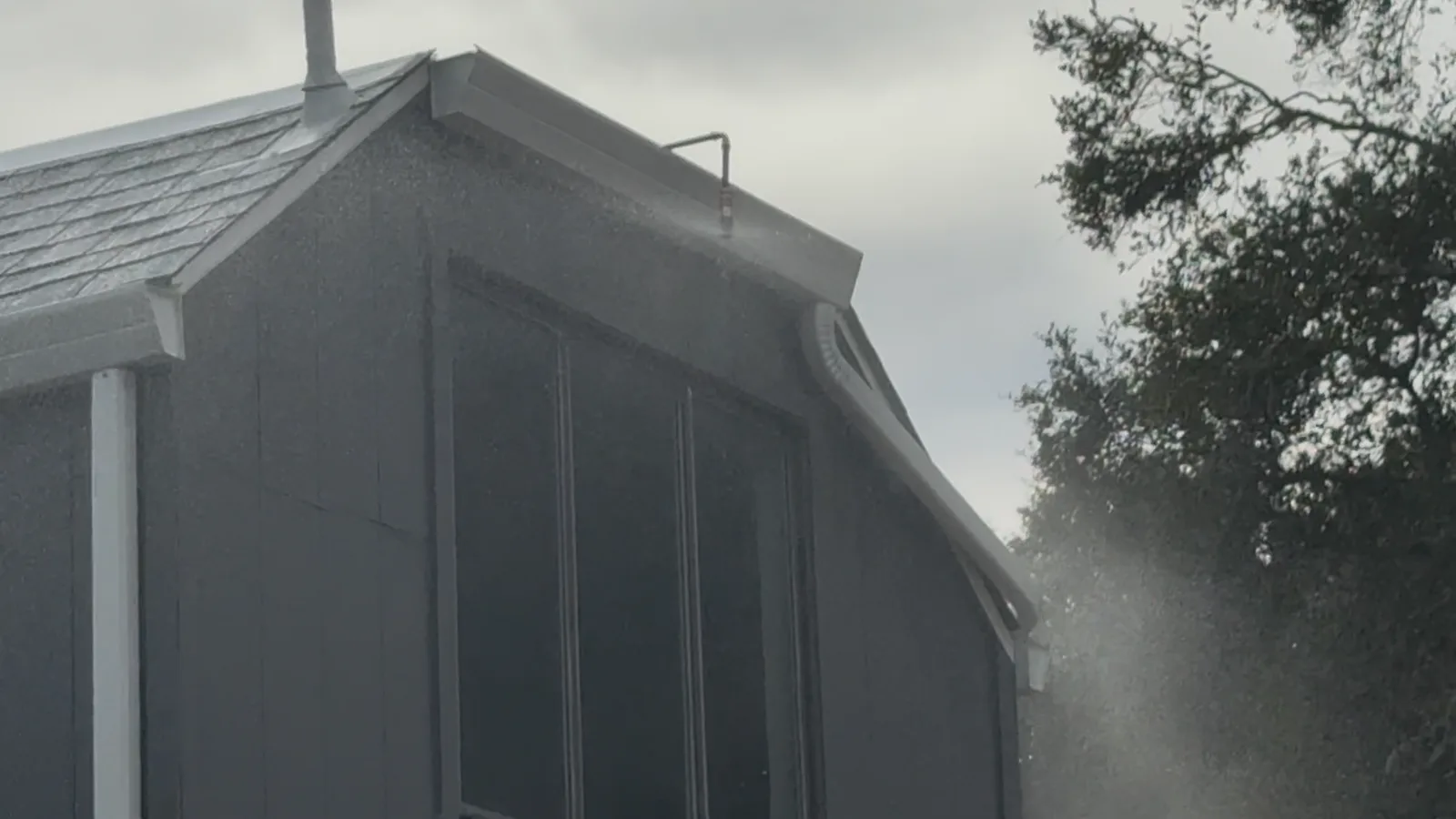
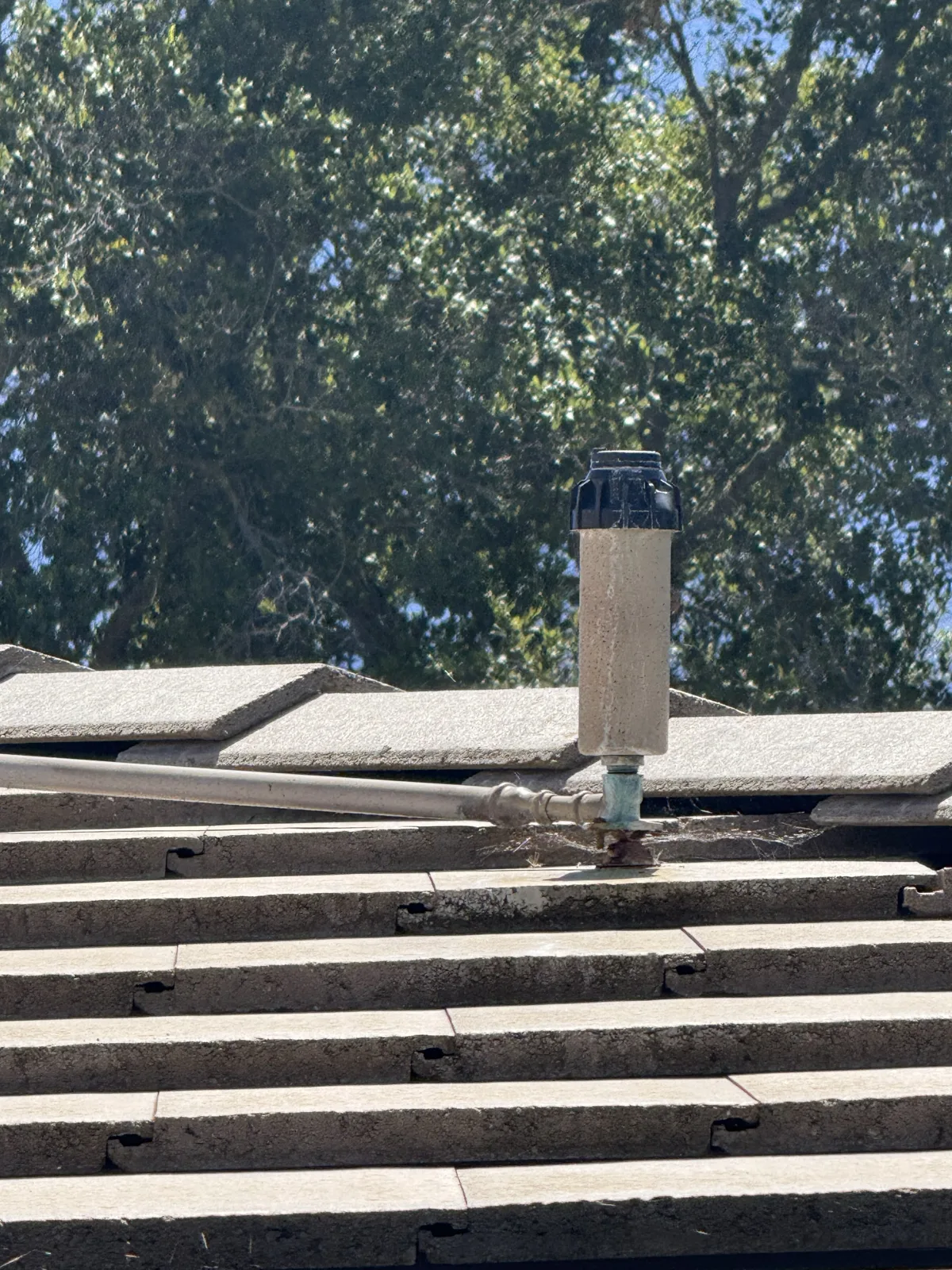
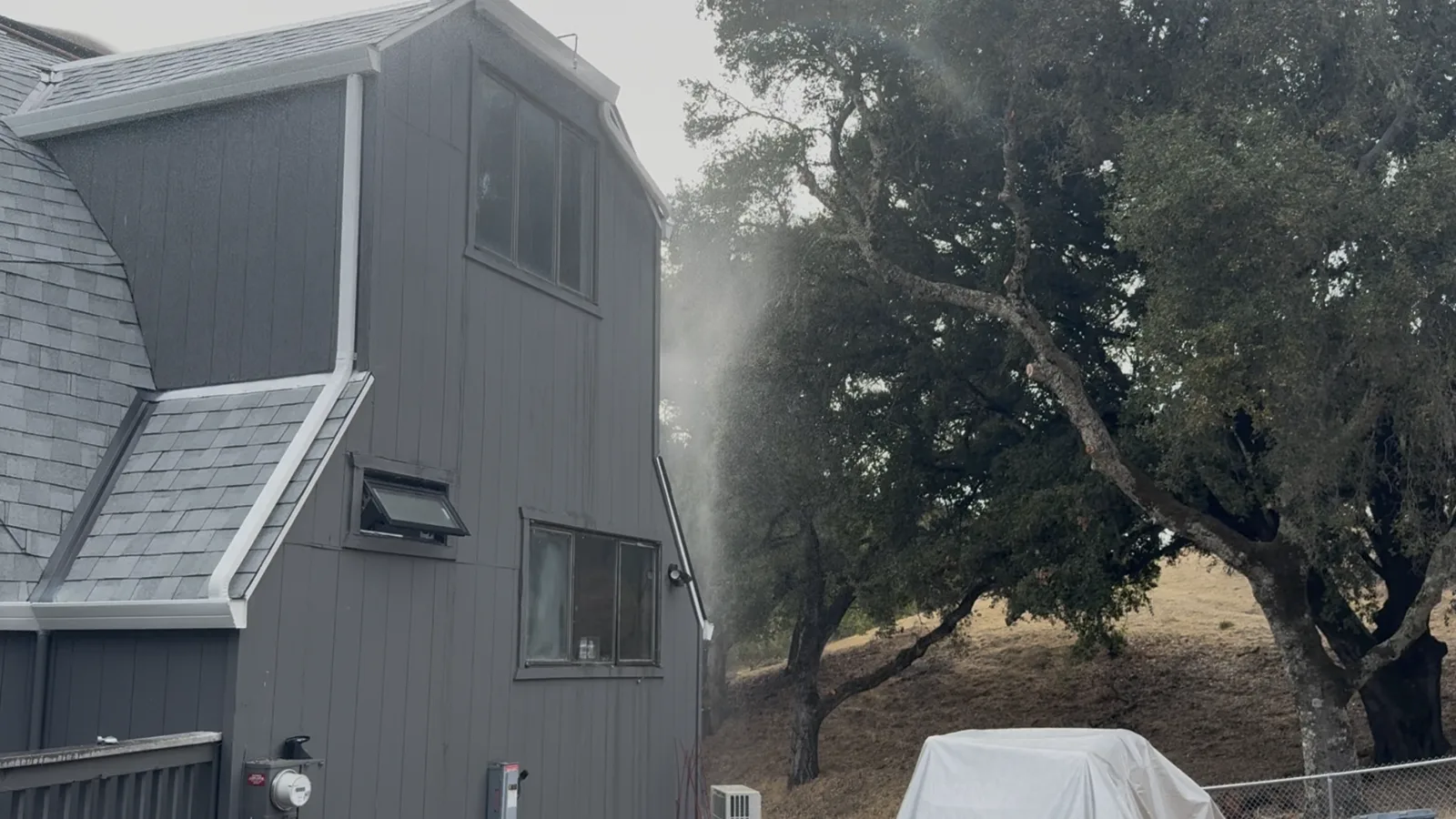
Our Installs, Portola Valley to the Santa Cruz Mountains
Real FireRoofs homes, tested on every roof.
Roof Sprinkler Questions, Answered
A roof sprinkler system for wildfire is a set of sprinkler heads mounted on the roof, along the eaves, and around the perimeter of a home. It wets the roof, walls, and nearby vegetation so wind-driven embers land on wet surfaces instead of dry fuel.
Each FireRoofs roof sprinkler throws water 30 to 35 feet. Heads are placed so their patterns overlap across every roof plane, with eave and perimeter heads covering the walls and the ground around the house.
The system uses regional satellite wildfire monitoring plus on-property cameras. It waters at every threat level and runs more often and for longer as the threat rises. You get a push notification at every threat level change, and you can override it from the app.
A system can draw from municipal water, a pool, a well, or a dedicated storage tank. City pressure can drop during a large wildfire, so many properties add a pool or storage tank paired with a pump sized to the number of zones.
Yes. A FireRoofs manual system can be upgraded to automatic activation anytime, with no re-piping.
Roof sprinklers are not a named category under California's Safer from Wildfires framework, and discounts vary by carrier. FireRoofs documents the hardening work your project includes, such as vents, eaves, and Zone 0, for your broker.
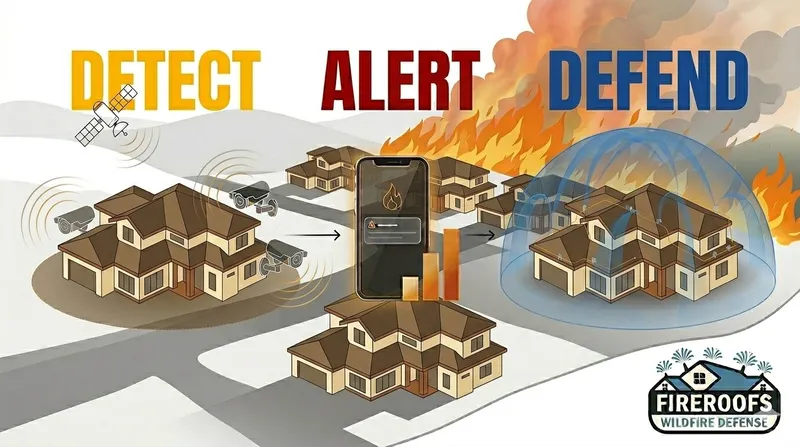
How Exterior Sprinklers Protect a House From Wildfire
Detect
Regional satellite wildfire monitoring tracks fire activity across your region. On-property cameras with intelligent fire detection watch the ground around your home. Both feed the automated threat protocol.
Alert
As a threat is confirmed, the system steps through three response levels and sends a push notification through the FireRoofs app at each level change. It does not wait for you to press a button.
Defend
Zones turn on in sequence based on where the threat is coming from. Roof heads cover past the roofline, eave heads protect the weakest ignition points, and perimeter heads soak defensible space. Optional Class A foam is biodegradable, non-toxic to plants, pets, and wildlife, and rinses off through the sprinklers.
Anatomy of a FireRoofs Roof & Eave Sprinkler System
Why Roof Sprinklers and Home Hardening Work Better Together
We design exterior sprinkler systems for a living, and we will still tell you that roof sprinklers alone do not make a home fireproof. A wet roof with open vents, plants touching the eaves, and pine needles piled against the foundation still has weak points. Sprinklers work when they actually run, and they work best on a hardened house with cleared fuel around it.
How Embers Actually Destroy Homes
Most homes are not lost to a wall of flame. Roughly 90% of home ignitions during a wildfire come from wind-driven embers, which can travel a mile or more ahead of the fire front. An ember only needs a landing spot and something dry.
It might land in a gutter full of pine needles and creep under the roof edge. It might blow through an attic vent with 1/4-inch mesh and smolder in the insulation for hours. Or flames climb shrubs growing against the wall, reach the eaves, and get into the attic from below, bypassing even a Class A roof. That is why Zone 0, the first five feet around the house, matters so much.
What Every Homeowner Should Do First
Clear Zone 0: nothing combustible within 5 feet of the house
No dead grass, leaves, firewood, mulch, or combustible furniture within 5 feet of any wall, window, vent, or deck.
Screen every vent with 1/8-inch metal mesh or finer
Attic, soffit, gable, and foundation vents are the most common ember entry points. Use 1/8-inch noncombustible mesh, or 1/16-inch in very high fire hazard zones.
Remove ladder fuels from eaves and walls
Trim anything touching or overhanging the eaves and keep vegetation 10 feet from the roofline. Shrubs against the house carry fire straight into the soffit and fascia.
Class A roof, enclosed eaves, and fire-resistant siding
Tile, metal, or Class A composite roofing resists ember ignition. Boxed eaves keep embers and flame off the underside of the roof deck, and ignition-resistant siding holds up to radiant heat.
Clean gutters and roof valleys every season
Leaves and needles in gutters and roof valleys are exactly what embers look for. Clear them before fire season.
Maintain defensible space in Zones 1 and 2
Zone 1 (5 to 30 feet) needs low, spaced, watered plants with no dead material. Zone 2 (30 to 100 feet) needs thinner fuel, limbed-up trees, and gaps between canopies.
Where Roof Sprinklers and Exterior Sprinklers Fit In
Once the house is hardened and the defensible space is clear, exterior sprinklers become the active layer. Roof heads keep the roof wet. Eave heads soak the soffit, fascia, and vent openings. Perimeter heads wet the plants and ground around the house.
On a home that already has a Class A roof, heads can sit at the corners and throw water 30 to 35 feet outward, shifting coverage to the eaves, walls, windows, and foundation where embers collect. Each layer covers a gap the others miss: defensible space cuts the number of embers, hardening removes easy ignition points, and wet surfaces put out the embers that still land.
The Full Picture: What a Protected Home Looks Like
We coordinate all of it, from defensible space to sprinkler design, and document the work for your insurance carrier.
Three Levels of Exterior Sprinkler Protection
Keystone
Essential Roof Defense
- Roof sprinklers with extended coverage past the roofline
- Commercial-grade copper piping throughout
- Smart controller with FireRoofs app connection
- Manual activation from your phone, anywhere
- System automation via regional satellite wildfire monitoring
- Automated pre-wetting triggered by satellite detection with homeowner cancel window
Guardian
Full Perimeter Defense with Dual Wildfire Detection
Everything in Keystone, plus:
- Eave sprinklers protecting Zone Zero, walls, and windows from radiant heat
- Cameras with intelligent fire detection and sensors mounted on your home
- Dual wildfire detection: regional satellite monitoring combined with on-property camera detection
- Three-level automated threat activation with homeowner cancel window
Fortress
Maximum Protection with Class A Foam
Everything in Guardian, plus:
- Class A foam injection system for roof and eave sprinklers during highest threat activation
- Foam clings to surfaces, holds moisture longer than water alone, and creates a fire-resistant barrier
- Same formulation used by wildland fire agencies
- 100% biodegradable, non-toxic to plants, pets, and wildlife. Rinses off through the sprinklers after the event
Designed for Homes in California's Wildfire Zones
These systems are for homes in the wildland-urban interface: a Very High Fire Hazard Severity Zone, a canyon lot, or a policy that got pushed to the FAIR Plan. Every system is designed for its own slope, water source, and roofline.
What Installation Looks Like
It starts with a 45 to 60 minute visit: water pressure test, roof and eave inspection, and a Zone Zero walk. You get a proposal in one to three business days.
Everything mounts outside in copper pipe. No roof penetrations, no interior wall work. Each system is tested before handoff.
Home Wildfire Sprinkler System Installer Serving the Bay Area
Based in Scotts Valley, FireRoofs designs wildfire sprinkler systems across the Santa Cruz Mountains, the Peninsula, and the South Bay, built by vetted, licensed and insured local partners. Pick your community to see its fire history, or call 831-705-0888 to schedule an on-site evaluation.
Santa Clara County
San Mateo County
Santa Cruz County
Don't see your town? View all service areas and check your community's wildfire risk.
Outside the Bay Area?
We install in 41 Bay Area communities. Elsewhere in California, our remote assessment report covers your parcel, vegetation, and access, with a ranked hardening list you can hand to any local contractor.
Get a California Wildfire Assessment Report ($149)California Codes and Standards for Exterior Sprinkler Systems
California Fire Code Chapter 49 (WUI Fire Areas)
Sets rules for buildings in Wildland-Urban Interface areas, including exterior materials, defensible space, and water supply.
Designed for Coverage, Not Interior Codes
Interior standards like NFPA 13 don't cover exterior sprinklers. We design each system on site at your actual water pressure. Built by a FireRoofs Vetted Installer: vetted, licensed and insured, and may differ by job location.
California Chapter 7A (Building Standards for WUI)
Covers roofing, siding, vents, and windows in fire hazard zones. Sprinklers add an active layer on top of that hardening. Browse our Home Hardening Products Guide for the listed materials we specify.
California Insurance Code Section 2644.9 (Safer from Wildfires)
Section 2644.9 lists 12 mitigation factors insurers use in wildfire rating. Exterior sprinklers are not one of them. Our evidence packet documents the named hardening categories your project touches. See our wildfire insurance discounts guide for details.
AB 3074 and the Board of Forestry Zone 0 rulemaking
AB 3074 calls for a noncombustible Zone 0 within 5 feet of the house. The statewide rule is still in draft as of August 2026, and some cities already require it. Eave sprinklers keep that zone wet. Learn more about defensible space requirements.
Price depends on home size, roof complexity, zone count, water supply, and tier. Every system is designed after a site visit. Automated systems typically start in the mid five figures; tanks, foam, and large estates add to that.
A DIY kit costs less, but someone has to be there to turn it on. For the full breakdown, see our full cost guide.
Maintenance and Annual Upkeep
External sprinklers are low maintenance, not no maintenance. One service visit a year keeps them ready.
Annual system test and inspection
We run every zone, check pressure at each head, and test the cameras.
Nozzle and head cleaning
Mineral buildup, spider webs, and leaves get cleared from every nozzle.
Water supply verification
Flow, tank levels, pumps, and the automatic switchover all get tested.
Controller and connectivity check
Controller, app, connectivity, and firmware, plus a check of your generator or battery tie-in.
Copper piping inspection
Joints and fittings get a visual check. In this climate copper lasts decades.
Sprinkler Systems & App Control
Roof, eave, and perimeter heads, plus the app that runs them.
Common Questions About Exterior Fire Sprinklers
Do exterior fire sprinklers actually work against wildfire?
Yes, exterior fire sprinklers work by keeping your house from igniting, even though they do not stop the wildfire itself. Around 90% of homes lost to wildfire are ignited by embers and radiant heat, not direct flame. Wet roofs, eaves, and plants give embers nothing dry to catch. Sprinklers work best alongside defensible space and home hardening.
Do roof sprinklers work?
Yes, roof sprinklers work when they are running before embers arrive. A University of Minnesota study of the 2007 Ham Lake Fire found 46 of 47 structures with working exterior sprinklers survived, 8 of 9 with failed systems burned, and only 18 of 48 without sprinklers survived.
How are exterior fire sprinklers different from indoor fire sprinklers?
Indoor fire sprinklers turn on after fire is already inside the house, while exterior fire sprinklers wet the outside of the house before wildfire arrives. The goal is to stop ignition, not fight a fire already burning.
Can I install exterior wildfire sprinklers myself?
You can install a basic manual kit yourself, but it only works if someone is home to turn it on before evacuating. An automated system starts on its own through dual detection and keeps running after you leave.
How close does a fire have to be before the system activates?
There is no fixed distance. Regional satellite wildfire monitoring watches for fire in your area, and on-property cameras confirm it on site. The system steps up through threat levels and can pre-wet the house well before flames reach the property line.
Do I need to be home for the system to work?
No. Every automated system activates on its own through dual wildfire detection. No one has to press a button.
What happens if I lose power during a wildfire?
The system runs on your home's generator or whole-home battery. Satellite internet is recommended. We plan for power continuity with you during the consultation.
How much water does an exterior sprinkler system use?
It depends on property size and zone count. Systems switch automatically between city water, wells, tanks, or pools to hold pressure.
Can an exterior sprinkler system help with homeowners insurance?
Some insurance carriers recognize exterior wildfire sprinkler systems when evaluating wildfire coverage eligibility. A documented system can help when you shop for private coverage. Results vary by carrier and property.
What California building codes apply to exterior sprinkler systems?
There is no California statute that requires exterior wildfire sprinklers on homes. Chapter 7A (and, from 2026, the California Wildland-Urban Interface Code) governs exterior materials; PRC 4291 governs defensible space; Regulation 2644.9 governs how insurers must treat documented mitigation. FireRoofs designs systems to those surrounding standards and documents them for your carrier.
How much does an exterior sprinkler system cost?
Most whole-home exterior sprinkler systems fall in the mid five figures. Home size, zone count, water source, and site access set the final number. You get a line-by-line breakdown after the evaluation.
What maintenance does the system need each year?
One visit a year: flow test, nozzle cleaning, water supply check, controller and camera check, and a look at the piping. FireRoofs offers annual service plans.
Does the system work in freezing weather?
The Bay Area rarely freezes, so most systems use a wet-pipe design. Higher homes in the Santa Cruz Mountains can get a dry-pipe setup that keeps water out of the lines until the system starts.

Ask HydroIQ - Free AI Wildfire Assistant
HydroIQ is a free AI wildfire assistant that knows California wildfire law, insurance rules, local ordinances, and the science behind why homes burn. It covers communities across all nine Bay Area counties. No login, no cost.
Under California's Safer from Wildfires rules, carriers count documented hardening and defensible space. Sprinklers are not a named category, and discounts vary by carrier. Every FireRoofs system comes with third-party documentation formatted for your carrier.
Wildfire Mitigation Credits and Documentation
California Insurance Discounts Guide
Safer from Wildfires regulation, CDI mitigation categories, FAIR Plan context, and what underwriters evaluate.
Read the guideRequest a Sample Evidence Packet
Want to see what a carrier-ready evidence packet looks like? Contact our team and we will share a sample directly with you.
Contact usReviewed by the FireRoofs Team
Bay Area wildfire sprinkler specialists. Built by a FireRoofs Vetted Installer: vetted, licensed and insured, and may differ by job location. Learn more about us
Last updated August 2026
Sources and References
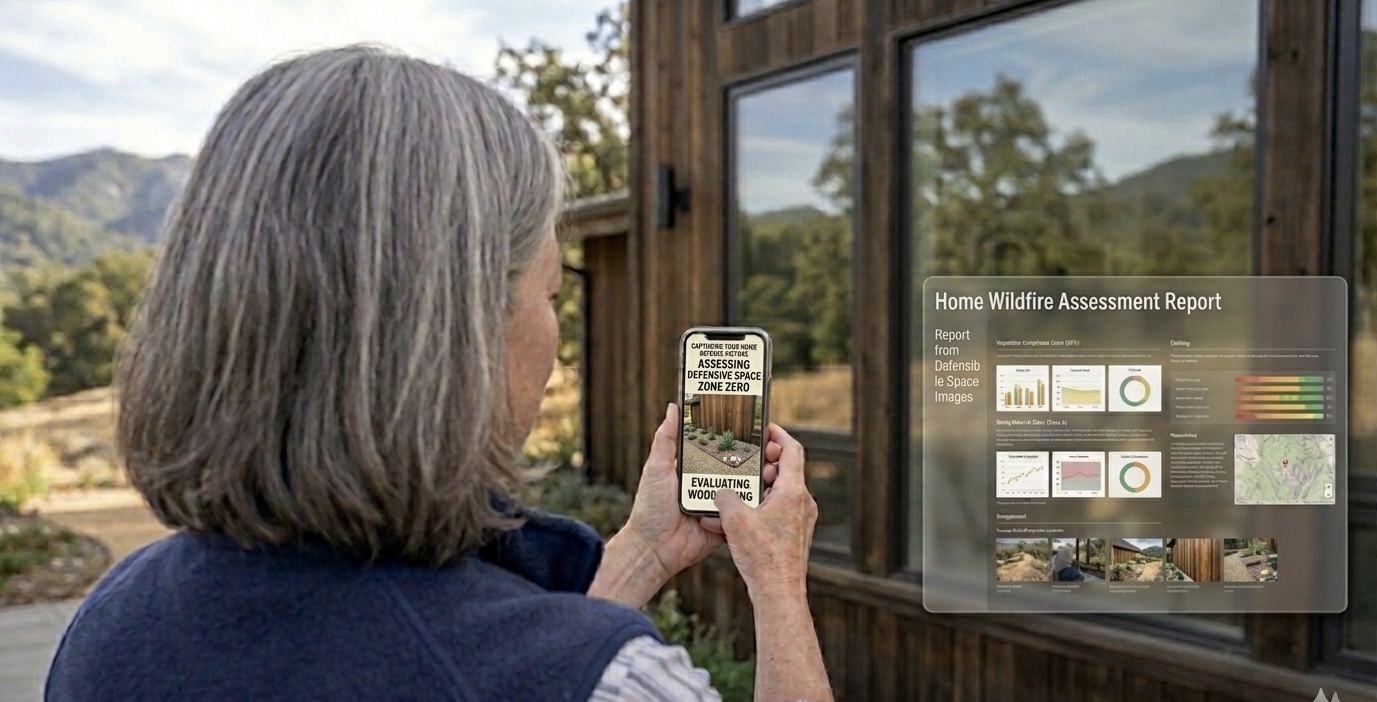
How Vulnerable Is Your Roofline?
See what the satellite shows about your roof, nearby vegetation, and fire zone. It takes about a minute.
- Aerial view of your roof and surrounding landscape
- Defensible space and vegetation analysis
- Full assessment with sprinkler recommendations available
Takes about a minute. No account needed.