System Specifications
Every component engineered for autonomous wildfire defense. These are the details behind a Bay Area wildfire defense system built for homes in Very High Fire Hazard Severity Zones.
See the non-technical overview
Dual Wildfire Detection
Most wildfire defense companies rely on a single detection method. FireRoofs uses both satellite monitoring and on-property intelligent cameras, cross-referencing what they detect to reduce false alarms and catch real threats faster.
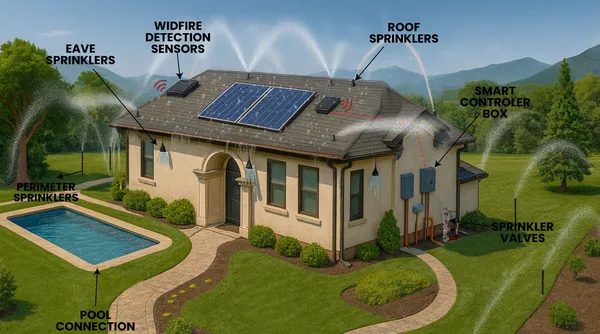
Regional Satellite Wildfire Monitoring
Satellite monitoring provides wide-area awareness. It detects fire activity and movement direction before it reaches your area, giving your system a head start that ground-level detection alone cannot match.
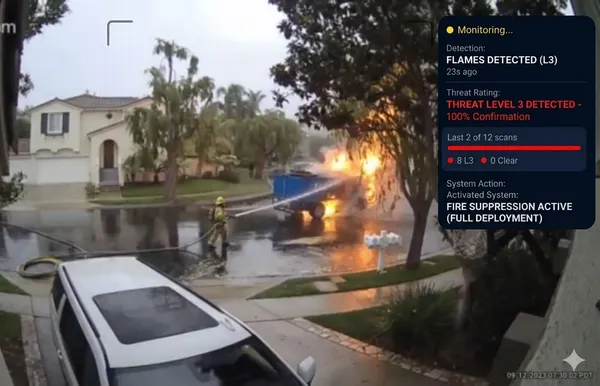
On-Property Cameras with Intelligent Fire Detection
On-property sensors can trigger all three threat levels independently.
If the cameras detect a wildfire threat before satellite picks up regional activity, the system responds immediately to what is happening at your property without waiting for cross-confirmation.
Multi-Stage Automated Response
The system uses an automated multi-stage threat response designed to protect the home proportionally to actual wildfire threat conditions. The homeowner retains control at every stage through the FireRoofs app, including the ability to cancel activation.
Early Awareness
When wildfire activity is detected in the region, the system enters an early awareness state. You receive a push notification and the system begins automated preparation. A cancel window gives you full control.
Active Defense
As conditions escalate, the system increases its response proportionally. Water supply redundancy ensures uninterrupted protection. If primary water becomes unavailable, the system automatically transitions to backup sources.
Automatic Backup Water Switchover
When primary water becomes unavailable, the system automatically transitions to your independent water source. No manual valves, no interruption. The January 2025 Palisades Fire demonstrated exactly why this matters. Municipal water infrastructure collapsed under demand, leaving homes without any fire suppression capability at the worst possible moment.
Maximum Protection
Under imminent threat, the system operates at full capacity. For Fortress-tier systems, Class A foam activates automatically, creating a fire-resistant barrier that clings to surfaces and holds moisture longer than water alone. The system runs continuously until the threat clears.
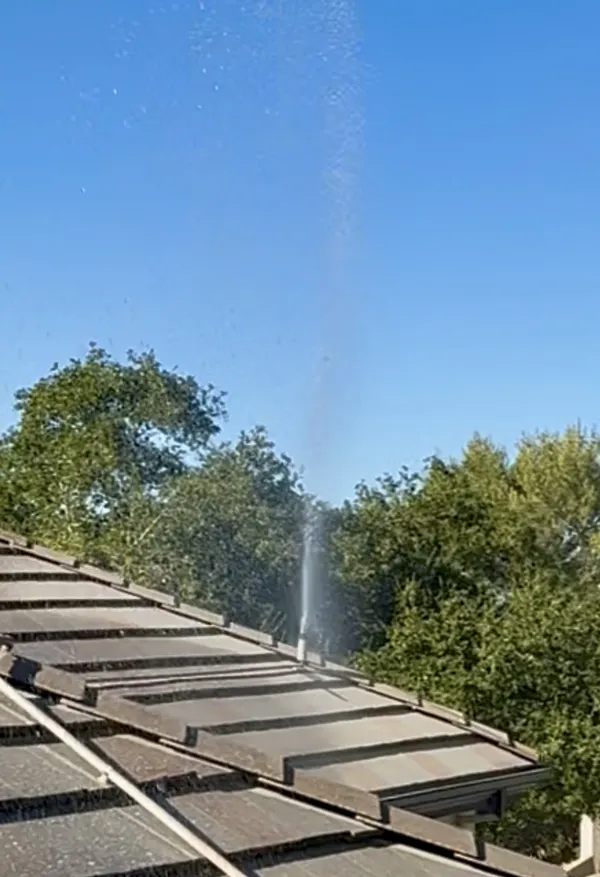
Roof & Eave Sprinkler System Technical Specifications
Water Supply and Automatic Switchover
The January 2025 Palisades Fire demonstrated that municipal water infrastructure collapses under wildfire demand. FireRoofs systems are engineered with water supply redundancy so your property stays protected when it matters most. Your free property evaluation includes a detailed review of your water supply and runtime expectations.
Class A Firefighting Foam (Optional)
Satellite Communications
Smart Controller and Mobile App
Controller
- Manages zone activation, water pressure monitoring, and communication
- Physical emergency activation button on exterior of controller enclosure
- Physical off button inside controller enclosure for manual shutdown
- Discreet enclosure, color-matched to exterior finishes or tucked behind landscaping
- Typically installed in garage or utility area
App Capabilities
- Arm/disarm system manually
- Trigger individual zones
- Cancel activations during response window or after activation
- Real-time threat levels from satellite and camera data
- Push notifications for every event
- Detection history log
- Water pressure and backup supply monitoring
- System health check
Installation and Construction
Property Recommendations
Insurance carriers want to see that homeowners have handled the basics before evaluating advanced mitigation. Start with these. Most are low-cost and can be done in a weekend.
Clear Zone 0 (0 to 5 feet from the house)
Remove all combustible materials within 5 feet of the structure. No wood piles, no dry leaves, no patio furniture touching the house. Use gravel, concrete, or noncombustible ground cover only.
Clean gutters and roof valleys
Remove leaf litter, pine needles, and debris from gutters and roof valleys. Embers land here first and ignite accumulated debris. This takes an afternoon and costs nothing.
Screen all vents with 1/8-inch mesh
Replace attic, soffit, and foundation vent screens with 1/8-inch metal mesh. Vents are how embers enter the structure and smolder undetected. Mesh kits run $10 to $30 per vent.
Maintain Zone 1 vegetation (5 to 30 feet)
Keep grass mowed to 4 inches. Space shrubs at least twice their height apart. Remove dead branches and ground debris. Trim tree branches 6 feet above the ground.
Check your roof rating
Class A roofing (concrete tile, metal, asphalt composite) is the standard for wildfire zones. If your roof is wood shake or untreated, this is the single biggest vulnerability on the structure.
Upgrade to dual-pane tempered windows
Single-pane glass shatters from radiant heat. Dual-pane tempered glass withstands significantly more exposure. Prioritize windows facing slopes, vegetation, or neighboring structures.
Replace combustible siding and decking
Fiber cement, stucco, and masonry siding resist ignition from embers and radiant heat. Composite decking rated for ignition resistance replaces wood decking that catches embers.
Completing these steps before adding exterior sprinklers gives insurance carriers exactly what they need to see under the Safer from Wildfires framework. The combination of home hardening, defensible space, and documented sprinkler protection is the strongest position a homeowner can be in.
Common Questions
What materials are used in a FireRoofs sprinkler system?
Every FireRoofs system uses copper pipe throughout for durability and corrosion resistance. Sprinkler heads are commercial-grade and rated for exterior exposure. All fittings, valves, and mounting hardware are built to withstand sustained heat.
How does dual wildfire detection work?
Layer 1 is regional satellite wildfire monitoring that watches for wildfire activity within a 5-mile radius of your property. Layer 2 uses on-property cameras with intelligent fire detection and sensors to confirm a real threat. Both layers feed into the smart controller, which automates the system response.
What is the difference between exterior wildfire sprinklers and interior fire sprinklers?
Interior fire sprinklers are heat-activated ceiling heads designed to suppress fire that has already started inside your home. Exterior wildfire sprinklers are mounted along your roofline, eaves, and property perimeter to defend against incoming wildfire. They activate automatically based on dual wildfire detection before fire reaches your property. Exterior systems use commercial-grade copper piping and optional Class A foam to protect the entire building envelope and surrounding defensible space. The two systems protect against completely different threats and can coexist on the same property.
The technical specifications behind each FireRoofs system are not just engineering details. They are the foundation of the insurance documentation that accompanies every installation. Sprinkler counts, pipe materials, zone configurations, flow rates, and commissioning test results are all captured in a structured evidence packet designed to satisfy the documentation requirements that California underwriters evaluate under the Safer from Wildfires framework. When your carrier asks what mitigation measures are in place, these specs provide the answer.
From Specs to Insurance Documentation
California Insurance Discounts Guide
Safer from Wildfires regulation, CDI mitigation categories, FAIR Plan context, and what underwriters evaluate.
Read the guideRequest a Sample Evidence Packet
Want to see what a carrier-ready evidence packet looks like? Contact our team and we will share a sample directly with you.
Contact usSee How Your Property Lines Up
Technical specs matter when they apply to your specific situation. Run a satellite pre-assessment to see your roof condition, fire zone, and vegetation clearance. It takes about a minute.
- Satellite imagery of your home and landscape
- Fire zone and terrain analysis
- Upgrade to full assessment for system sizing recommendations
Takes about a minute. No account needed.
Three-Level Automated Defense
Each detection layer triggers the next level of protection automatically. No buttons. No phone calls. The system escalates on its own.
Pre-Wetting
Trigger: Satellite Trigger
Intensive Saturation
Trigger: On-Property Threat Detection
Maximum Defense
Trigger: Active Wildfire Confirmed
If municipal water pressure drops below the configured threshold during an event, the system automatically switches to your pool or storage tank pump. No manual intervention. Continuous protection is maintained regardless of infrastructure status.
On-Property Detection. Real-Time Monitoring.
Intelligent cameras detect wildfire threats at your property in real time. No cloud dependency. No internet required.
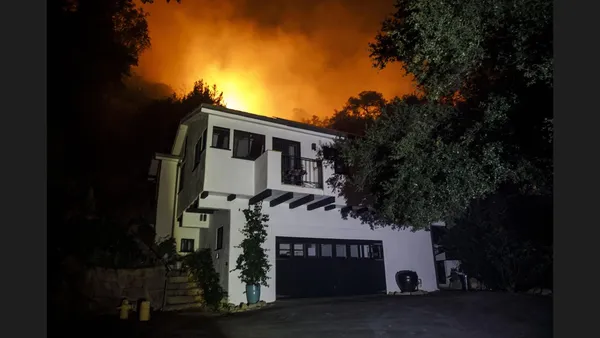
Simulated visualization. Actual system detects threats on-property with no cloud dependency.
After the Fire: Automated Clean-Up
Once the threat clears, your system transitions to rinse mode. Class A foam is biodegradable and washes away with a standard water cycle. No hazmat. No manual cleanup.
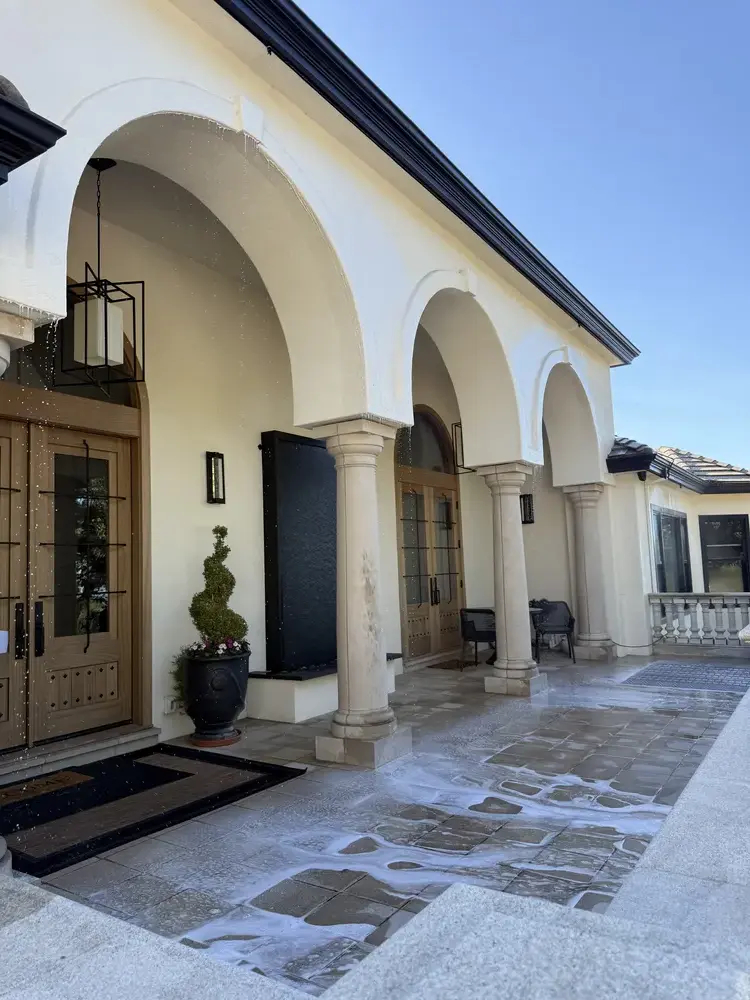
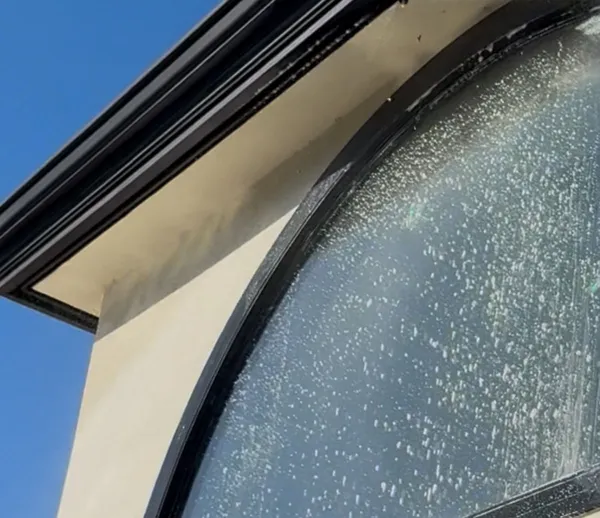
Drag the slider to compare: foam application (left) vs. automated water rinse (right). Class A foam is fully biodegradable and leaves no residue.
Biodegradable Foam
Class A foam breaks down naturally. Safe for plants, pets, and landscaping.
Automated Rinse
System enters rinse mode once threat level returns to zero. No manual activation.
Zero Residue
Standard water cycle clears all foam within minutes. Property returns to normal.