
Wildfire Readiness
Before You Evacuate: Your California Wildfire Evacuation Plan
The calmest evacuation is the one you planned before fire season started. Build your family's plan now, pack your go bag once, and leave early when it counts. Download the full plan and checklist below.
The math most families get wrong
Most families evacuate late. Not because they ignore the warnings, but because they are trying to protect the house. They stay to move sprinklers, wet down the roof, and watch the ridge line. Those are the minutes that turn a calm departure into a dangerous one.
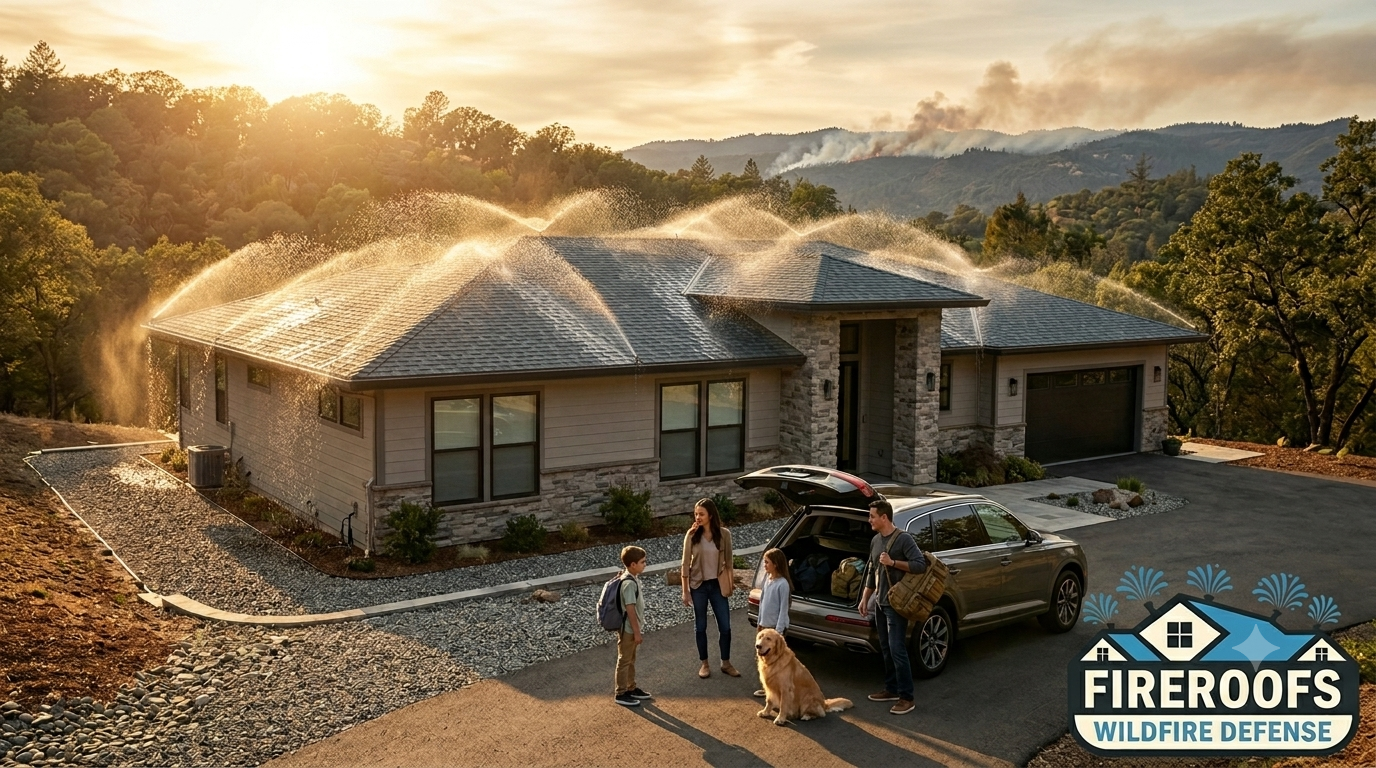
A home that defends itself changes the math. When your roof and eave sprinklers activate on their own, the structure is already working while you load the car. That means you can leave earlier, with people and pets as the only priority, not possessions.
That is the point of everything we build. Automated exterior sprinklers that activate before you evacuate, so leaving is about your family, not your house.
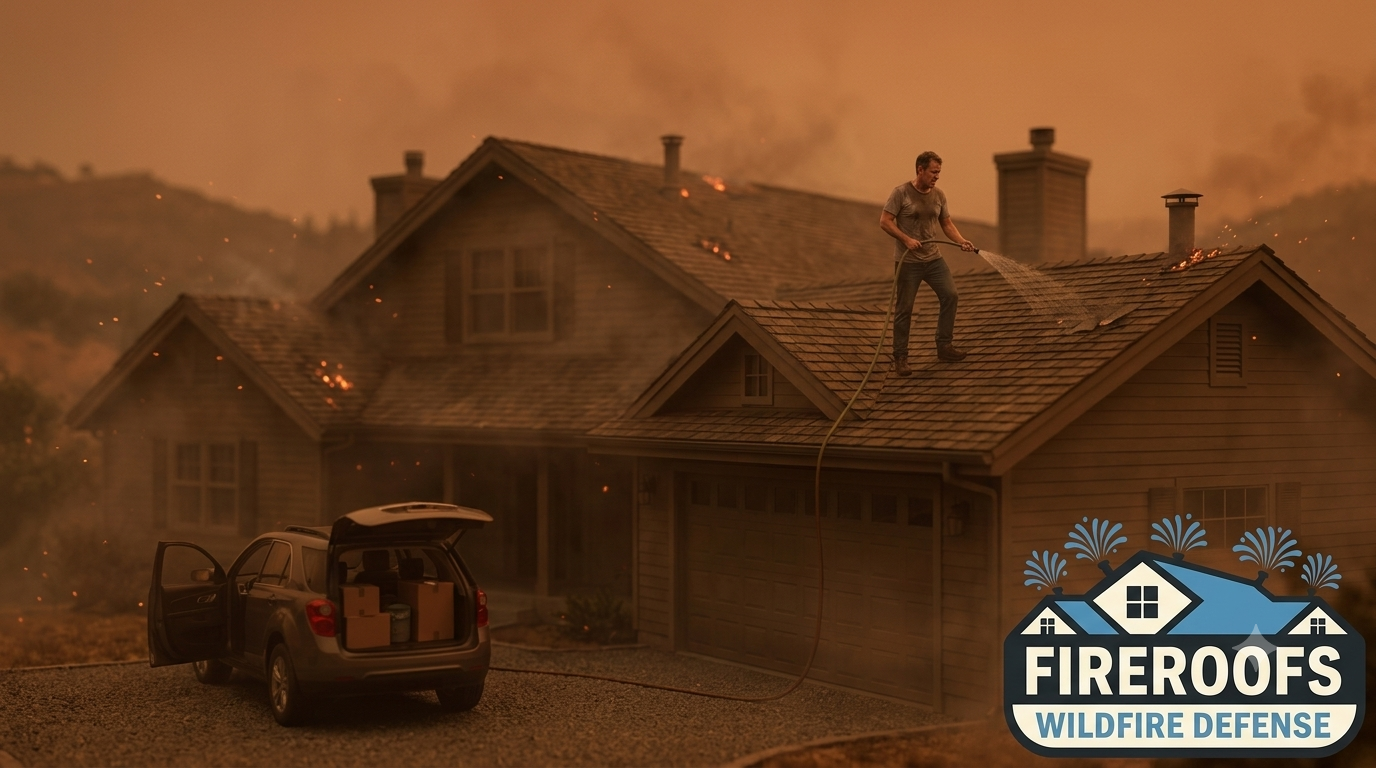
Important: Automated sprinklers and home hardening protect the structure. They are never a reason to stay. When officials issue an evacuation order, leave. Always.
Your wildfire evacuation plan, step by step
Seven steps you can walk through in an afternoon. Do it once and your family is ready for the season.
Step 1. Know your zone and set your trigger
Sign up for your county's emergency alerts and find your evacuation zone today, not during a fire. Then decide your personal "go" trigger in advance. Do not wait for a mandatory order. If your county uses a zone alert system, the moment your zone moves to Warning is the moment to finish loading and leave.
Recommended: Download the Watch Duty app for real-time wildfire alerts across California. It tracks active fires and firefighting efforts so you can make informed decisions about when to leave.
Step 2. Map two ways out
Pick a primary route and a backup, because fire and traffic close roads fast. Choose a meeting point outside your neighborhood and a single out-of-area contact everyone checks in with. Put the contact's number on paper, not just in a phone.
Step 3. Harden the home so it can hold the line without you
Defensible space, ember-resistant vents, and automated exterior sprinklers let the structure protect itself while you focus on getting out. This is the difference between a home that needs you standing on the roof and one that defends itself.
See what we hardenStep 4. Pack the go bag once
Build it before fire season and store it by the door you will actually use. The full checklist is below.
Step 5. Assign roles
Decide now who grabs the kids, who handles pets, who carries the documents, and who drives. In a real evacuation, nobody should be deciding these things for the first time.
Step 6. Practice it
Walk the plan once with everyone in the house before fire season. A five-minute drill finds the gaps while it is still safe to find them.
Step 7. Leave early. Let the home hold.
When in doubt, go. A hardened home buys you the freedom to leave on your terms instead of the fire's.
The wildfire go bag checklist
Pack one bag per person where you can grab it in seconds. Keep it light enough to carry and complete enough that you never have to think.
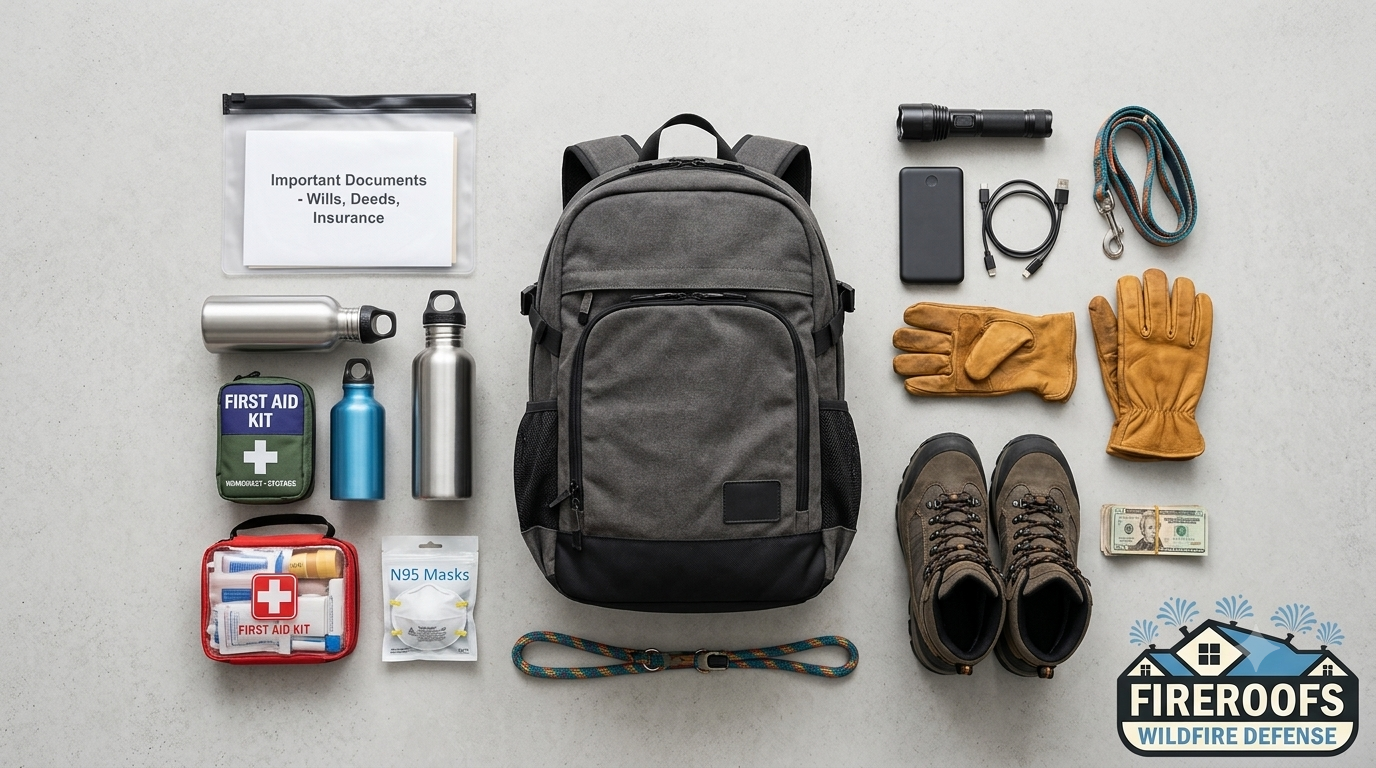
Documents (waterproof folder + cloud/USB backup)
- Photo ID and copies for each family member
- Insurance policy and your agent or broker's number
- Property deed or lease
- Your FireRoofs documentation packet, if you have one
- Medical and prescription list, and any special needs information
- A written list of key phone numbers
Water, food, and health
- Water for three days per person
- Non-perishable food and a manual can opener
- All daily medications, plus a small first aid kit
- N95 masks and goggles for smoke
Power and light
- Phone and chargers
- A charged battery pack
- Flashlight or headlamp with spare batteries
Cash and access
- Small bills (ATMs and card readers may be down)
- Spare house and car keys
Clothing and protection
- Sturdy closed shoes, long sleeves, work gloves
- A change of clothes per person
For your people
- Pet food, leash, carrier, and vaccination records
- Diapers, formula, comfort items for young children
- Glasses, hearing aids, mobility aids for those who need them
Get Your Free Evacuation Plan and Go Bag Checklist
One printable PDF with the full step-by-step plan and the complete go bag checklist. Built for California homeowners. No cost.
A Plan Gets Your Family Out. Hardening Keeps the Home Standing.
An evacuation plan protects the people. Home hardening and automated exterior sprinklers protect the structure they come home to. We do both under one scope of work, and we document every upgrade so your insurer sees exactly what changed.
Bay Area Homeowners
A 45-minute walkthrough with a written plan and real numbers. 41 communities from the Santa Cruz Mountains to the Peninsula.
Book Free EvaluationAll work is performed by licensed and insured contractors.
Any California Homeowner
See your roof, vegetation clearance, and fire zone in about a minute. No email, no account.
Check Your RiskHave a wildfire question right now? Ask HydroIQ, free.
Frequently Asked Questions
Not sure where to sign up for your county's alerts?
Every California county has its own emergency alert system. If you do not know where to register, ask HydroIQ. It can look up the alert registration website for any California county and walk you through what to sign up for. Free, instant, no account needed.