684,000 Homeowners on the Last-Resort Plan. One Company Built the Missing Layer.
Everything journalists, producers, and researchers need to cover the wildfire defense gap and the system designed to close it.
Story at a Glance
684,388 FAIR Plan Policies
Up 152% since 2022. Growing every month.
$750 Billion Exposure
FAIR Plan caps at $3M. Bay Area rebuilds cost $5M to $15M.
100% Sprinkler Survival
Every home with exterior sprinklers survived.
41 Communities Served
Bay Area, Santa Clara Valley, Santa Cruz Mountains.
Featured Coverage - Press Banner
"New tool aims to simplify regional wildfire preparedness" - FireRoofs founders discuss HydroIQ and wildfire defense in the Press Banner.
Product and Installation Photos
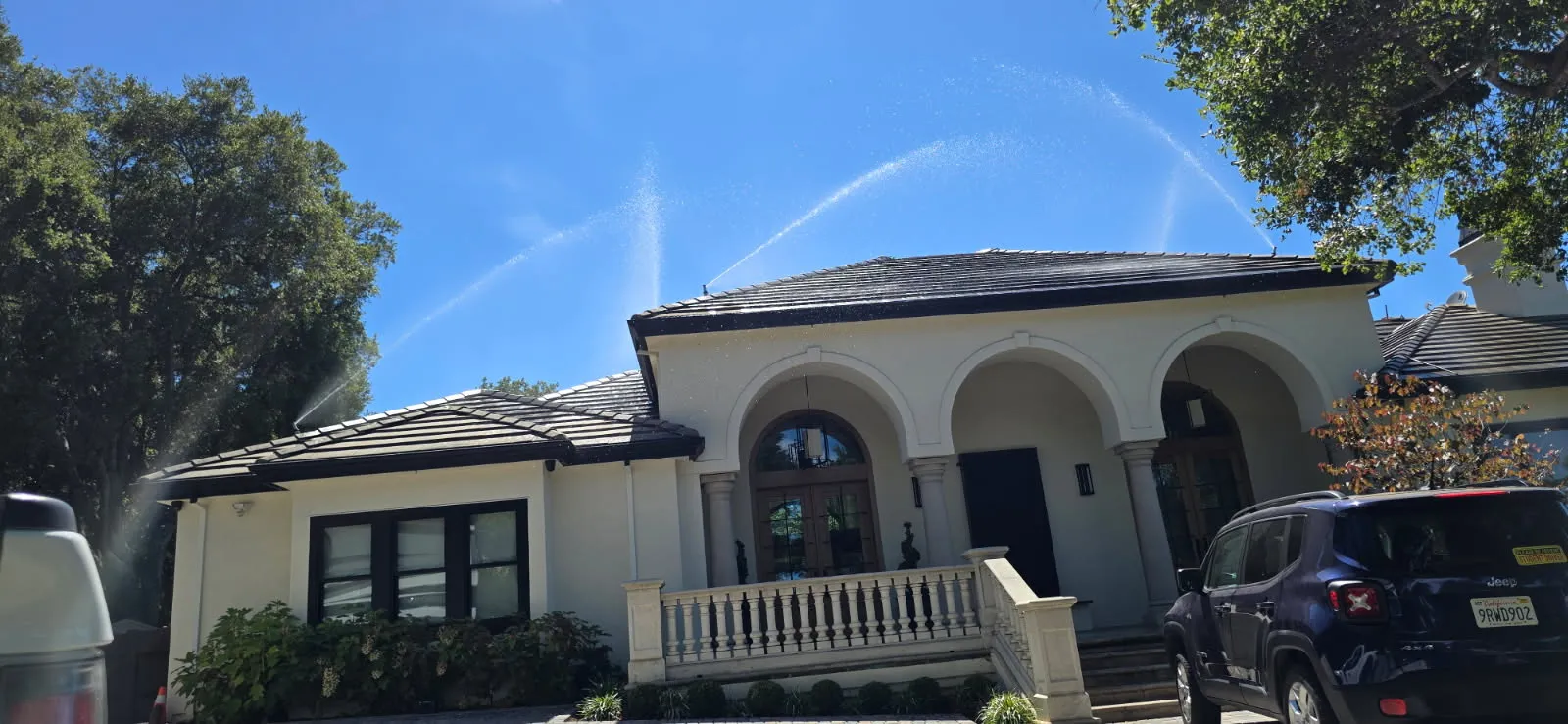
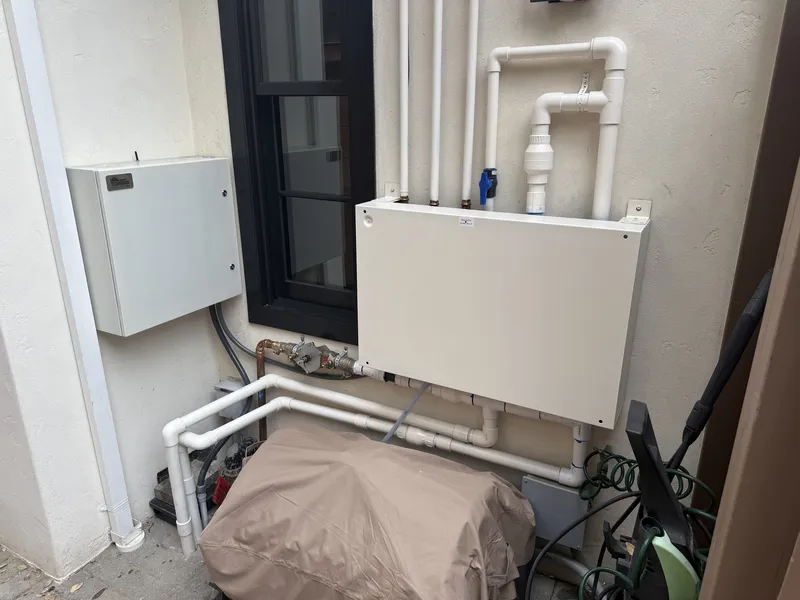
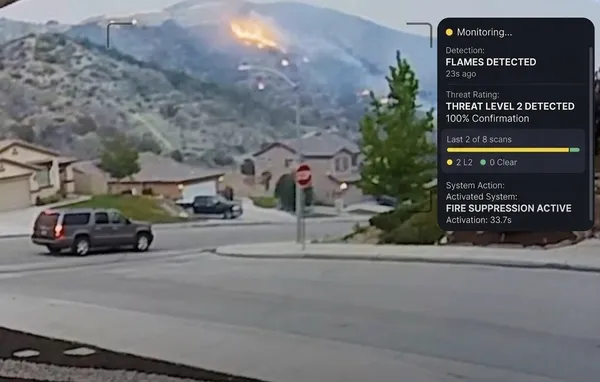
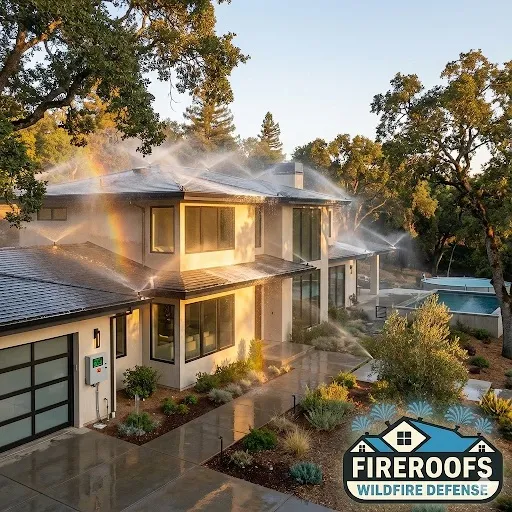
High-resolution images of FireRoofs systems, hardware, and installations. Click any image to view full size. All photos are available for editorial use.
FireRoofs in the News
Press releases, media coverage, and feature stories. Scroll through to see what people are saying about FireRoofs. For interview requests, story collaboration, or expert source inquiries, contact press below.
New Tool Aims to Simplify Regional Wildfire Preparedness
FireRoofs co-founders Shawn Gardner and Walt Mullins talk about HydroIQ, wildfire defense, and helping Santa Cruz Mountains homeowners navigate fire risk and insurance.
Read on pressbanner.com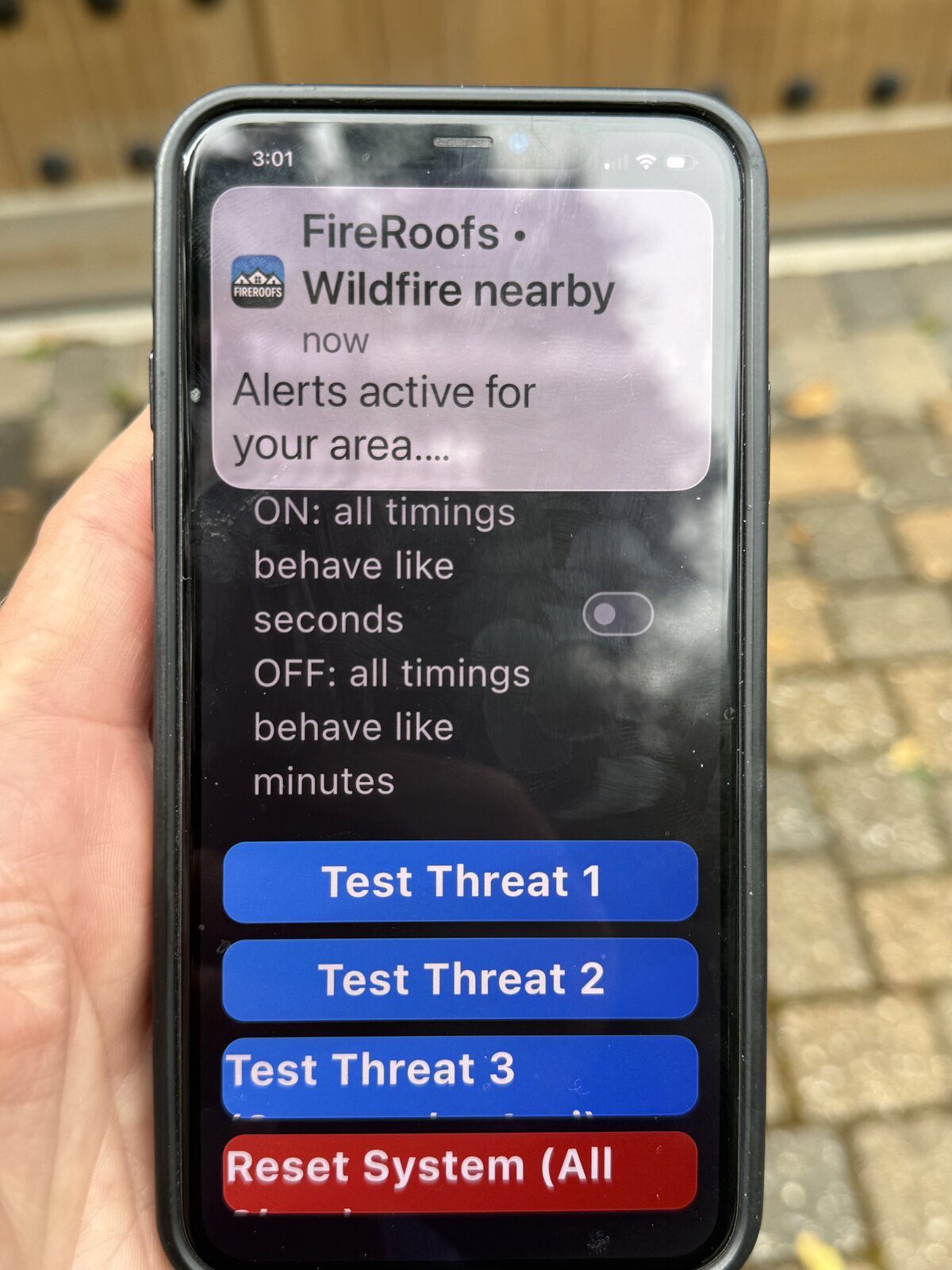
FireRoofs Completes Fortress-Level Installation at Saratoga Hilltop Estate
Maximum-tier Fortress installation on an 8,900 sq ft Saratoga estate, with automated roof and eave sprinklers, optional Class A foam, and a pool-integrated backup water supply.
Read full release
FireRoofs Launches HydroIQ: Free AI Wildfire Assistant Covering All Nine Bay Area Counties
California wildfire law, insurance rules, local ordinances, and fire science in a single free conversation. Jurisdictional-level data for communities across all nine Bay Area counties.
Read full releaseThe Gap in California's Wildfire Defense
What the Data Shows About Passive Mitigation and Active Defense Systems
A field report examining the verified data from Tubbs (2017), Camp (2018), Palisades (2025), and Australia's post-Black Saturday response. Defensible space and building codes meaningfully reduce risk. Ember storms, extreme wind events, and municipal water failures are a different problem. This is the one California has not yet solved.
“A neighborhood so safe it was not even on the map lost 1,321 homes in one night. Seven years later, the pattern has not changed.”
From the Report
The Crisis Facing Bay Area Homeowners
More than 684,000 California homeowners are now on the FAIR Plan, the state's insurer of last resort. That number grows by roughly 17,000 every month. Major carriers have pulled out of wildfire zones across California, and the homes hit hardest are in the wildland-urban interface, where developed neighborhoods meet undeveloped wildland.
The Bay Area sits at the center of this crisis. Communities like Saratoga, Los Gatos, Woodside, Portola Valley, and the Santa Cruz Mountains are classified as Very High Fire Hazard Severity Zones by CAL FIRE. Homeowners in these areas are losing private insurance coverage, getting non-renewed, or being forced onto the FAIR Plan with a dwelling coverage cap of $3 million.
For luxury homes in the Bay Area, rebuild costs run $400 to $850 per square foot. A 6,000 square foot estate costs $5 million or more to rebuild. A 10,000 square foot property can exceed $8 million. The FAIR Plan covers a fraction of that. The gap between what insurance pays and what it costs to rebuild is where families lose everything they have built.
The FAIR Plan was designed as a temporary safety net. It does not cover liability, personal property, or additional living expenses. It is fire-only coverage with a hard cap. For Bay Area homeowners with properties valued at $5 million to $15 million or more, the FAIR Plan does not come close to making them whole after a total loss.
This is not a hypothetical. The January 2025 Palisades and Eaton fires caused an estimated $30 to $50 billion in insured losses. 85% of structures were lost in the first 60 to 90 minutes, before fire crews could reach most homes. Municipal water infrastructure collapsed under demand. Homes that could have been saved had no water pressure to fight with.
The insurance industry is not coming back to these zip codes without evidence that homeowners are actively reducing risk. Defensible space and home hardening are necessary. They are not sufficient. What is missing is an active automated defense layer that defends property when no one is home and no fire crew is available.
What FireRoofs Does
FireRoofs designs and coordinates automated exterior wildfire defense systems for luxury homes in Bay Area WUI communities. The system uses dual wildfire detection, two independent layers that work together to identify threats and trigger an automated response.
Layer 1 is regional satellite wildfire monitoring. The system monitors regional satellite wildfire data. When fire activity is detected within a 5-mile radius, the system pre-arms and begins automated preparation.
Layer 2 is on-property cameras with intelligent fire detection. Cameras mounted at strategic positions around the home watch the surrounding landscape day and night. When threats are detected at the property, the system escalates its response automatically.
The system operates through three escalating threat tiers. At the earliest stage, it pre-wets the property when fire is detected in the region. As the threat intensifies, the system increases its response and automatically switches to a backup water source if needed. At the highest tier, it activates maximum defense across all zones and, if equipped, deploys optional Class A firefighting foam. The foam is 100% biodegradable, non-toxic to plants, pets, and wildlife, and rinses off through the sprinklers after the event.
No buttons. No valves. No phone calls. The system runs whether the homeowner is home or has evacuated. It switches water sources on its own. It escalates on its own. It was designed for the exact scenario that played out in the Palisades Fire: the 60 to 90 minute window when the home is on its own.
For backup power, FireRoofs recommends a whole-home generator over battery systems. A generator delivers the sustained wattage needed to run backup water pumps, booster pumps, and the satellite communication link simultaneously for hours. Battery systems can keep the controller and cameras online but may not sustain the higher electrical loads required for water pumping during an extended event.
The Science Behind Roof Sprinkler Defense
Roof sprinkler systems are not theoretical. They are backed by decades of field data, government research, and post-fire analysis. Here is what the evidence shows.
NIST Wildland-Urban Interface Research
The National Institute of Standards and Technology has conducted extensive research on structure ignition in WUI fires. Their experiments tested how embers, radiant heat, and direct flame contact ignite homes and found that wetting exterior surfaces significantly reduces ignition probability. NIST also tested nearly 200 fence and mulch configurations, demonstrating that combustible fencing carries flame to structures in under four minutes.
nist.govIBHS Wildfire Prepared Home
The Insurance Institute for Business & Home Safety developed the Wildfire Prepared Home framework based on laboratory and field research. Their testing demonstrates that homes with hardened exteriors and active water application survive ember storms and radiant heat exposure that destroy unprotected structures. IBHS research directly informs how insurance carriers evaluate wildfire risk mitigation.
ibhs.org2007 Ham Lake Fire, Minnesota
During the Ham Lake Fire in northern Minnesota, homes equipped with exterior sprinkler systems survived while neighboring unprotected homes burned to the ground. This event is one of the most documented real-world demonstrations of exterior sprinkler effectiveness in a wildland fire. The protected homes were saturated before the fire front arrived and remained intact.
NFPA 1144 Standard
The National Fire Protection Association's Standard for Reducing Structure Ignition Hazards from Wildland Fire (NFPA 1144) provides the framework for exterior fire protection in WUI zones. FireRoofs systems meet or exceed NFPA 1144 detection and exterior protection requirements.
nfpa.org2025 Los Angeles Wildfire Data
Post-fire analysis from the January 2025 Palisades and Eaton fires showed that properties with professionally installed exterior sprinkler systems survived at a rate of approximately 90%, compared to roughly 50% for unprotected structures in the same fire zones. Municipal water infrastructure collapsed during the event, proving that independent water supply and automated activation are not optional features but requirements for any serious wildfire defense system.
Australian Country Fire Authority Research
Australia's Country Fire Authority has studied external sprinkler systems for decades in the context of bushfire defense. Their research confirms that wetting the roof, walls, and surrounding vegetation before and during a fire significantly increases structure survivability, particularly against ember attack, which is the primary ignition source in most wildland fires.
About FireRoofs
FireRoofs designs and coordinates automated exterior wildfire defense systems for homes in Bay Area wildland-urban interface communities. Founded in 2025, the company is the only Bay Area wildfire defense provider that combines regional satellite monitoring with on-property cameras with intelligent fire detection. While national competitors expand coast to coast, FireRoofs went deeper into the Bay Area's fire corridors. 50+ years of local construction and irrigation expertise. Every system designed for the specific terrain. The system escalates through three automated threat levels and operates independently, protecting homes even after residents have evacuated. Every system is designed for the specific property and installed by vetted, licensed and insured partner contractors. The company is headquartered in Scotts Valley, California.
This boilerplate is approved for publication. For custom quotes, contact [email protected].
Company Facts
Founded
2025
Headquarters
Scotts Valley, California
Service Area
Bay Area and Santa Cruz Mountains
Founders
Shawn Gardner and Walt Mullins
Combined Experience
50+ years in construction, irrigation design, and municipal public works
Installations
Multiple Bay Area properties protected across Saratoga, Los Gatos, Los Altos Hills, and surrounding communities
Differentiator
Only Bay Area company with dual wildfire detection combining satellite monitoring and on-property cameras
System Operation
Fully automated, three threat levels, independent water source switchover
Installation Oversight
Licensed California General Contractor
Website
fireroofs.com
Leadership

Shawn Gardner
Co-Founder, Director of Wildfire Systems and Operations
Shawn Gardner brings over 20 years of experience in irrigation design, arboriculture, construction management, and municipal public works. Before co-founding FireRoofs, he served as Parks Manager for the City of Saratoga, overseeing fire-fuel reduction projects and large-scale infrastructure. He leads system design, detection strategy, and operations.

Walt Mullins
Co-Founder, Director of Construction and Field Operations
Walt Mullins brings over 30 years of experience as a licensed California General Contractor and President of Mullins Construction Inc. His background in high-end custom homebuilding informs how every FireRoofs project is designed and coordinated to meet code for the specific property.
Story Ideas for Journalists
The Insurance Gap Nobody Talks About
The FAIR Plan caps coverage at $3 million. Bay Area luxury homes cost $5 million to $15 million to rebuild. More than 684,000 California homeowners are already on the FAIR Plan. What happens when the safety net doesn't cover the fall?
Dual Detection: What No Other Bay Area Company Has Built
Most wildfire sprinkler companies rely on satellite data alone to detect fire and trigger their systems. FireRoofs combines satellite monitoring with on-property cameras using intelligent fire detection. Two independent layers, three automated threat levels, and a system that runs whether you are home or not.
The 90-Minute Window
85% of structures lost in the Palisades Fire burned in the first 60 to 90 minutes, before fire crews could reach most homes. Municipal water failed. What does a home need to survive on its own during the minutes that matter most?
Media Kit
Logos, headshots, and product photos for press use. Click the thumbnail to preview, or use the download link to save the full-resolution file.
All assets may be used for editorial coverage of FireRoofs. For commercial licensing, contact [email protected].
Embeddable Widgets
Embed FireRoofs tools on your website, newsletter, or fire safe council page. Each widget carries a followed link back to the source page on fireroofs.com.
Bay Area Fire Status Badge
Live fire-status badge showing active incidents and fire-weather alerts for Santa Cruz, Santa Clara, or San Mateo County.
<iframe src="https://fireroofs.com/fire-status/santa-clara-county" width="100%" height="600" style="border:none;border-radius:12px" loading="lazy" title="Bay Area Fire Status"></iframe><p style="font-size:12px;margin-top:4px">Source: <a href="https://fireroofs.com/fire-status" rel="dofollow">FireRoofs Bay Area Fire Status</a></p>Replace "santa-clara-county" with "santa-cruz-county" or "san-mateo-county" as needed.
Fire Hazard Zone Lookup
Address-level FHSZ lookup using CAL FIRE 2025 maps. Residents can check whether their home is in a Very High, High, or Moderate fire hazard zone.
<iframe src="https://fireroofs.com/california-wildfire-map" width="100%" height="700" style="border:none;border-radius:12px" loading="lazy" title="California Fire Hazard Zone Lookup"></iframe><p style="font-size:12px;margin-top:4px">Source: <a href="https://fireroofs.com/california-wildfire-map" rel="dofollow">FireRoofs FHSZ Lookup</a></p>Insurance Non-Renewal Tracker
Statewide non-renewal data by county from the California Department of Insurance. Shows which counties have more non-renewals than new policies.
<iframe src="https://fireroofs.com/california-fair-plan#non-renewal-tracker" width="100%" height="600" style="border:none;border-radius:12px" loading="lazy" title="California Insurance Non-Renewal Tracker"></iframe><p style="font-size:12px;margin-top:4px">Source: <a href="https://fireroofs.com/california-fair-plan" rel="dofollow">FireRoofs California FAIR Plan Guide</a></p>Press Contact
We respond to all press inquiries within one business day. Available for phone, video, or in-person interviews. We can arrange on-site walkthroughs of installed systems for visual coverage.
Email Press