Professional Wildfire Defense vs. DIY: What the Difference Actually Means
What a Professionally Engineered System Includes
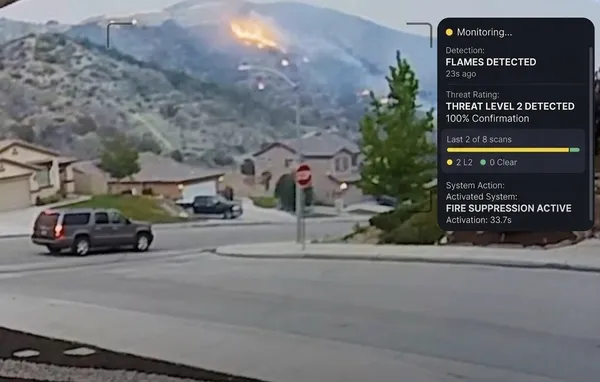
A professional exterior wildfire defense system is not a collection of sprinkler heads bolted to a roof. It is a custom-engineered network of copper piping, multi-zone sprinkler coverage, dual wildfire detection, independent water source integration, and automated three-level threat response. Every component is sized, placed, and pressure-tested for the specific property it protects.
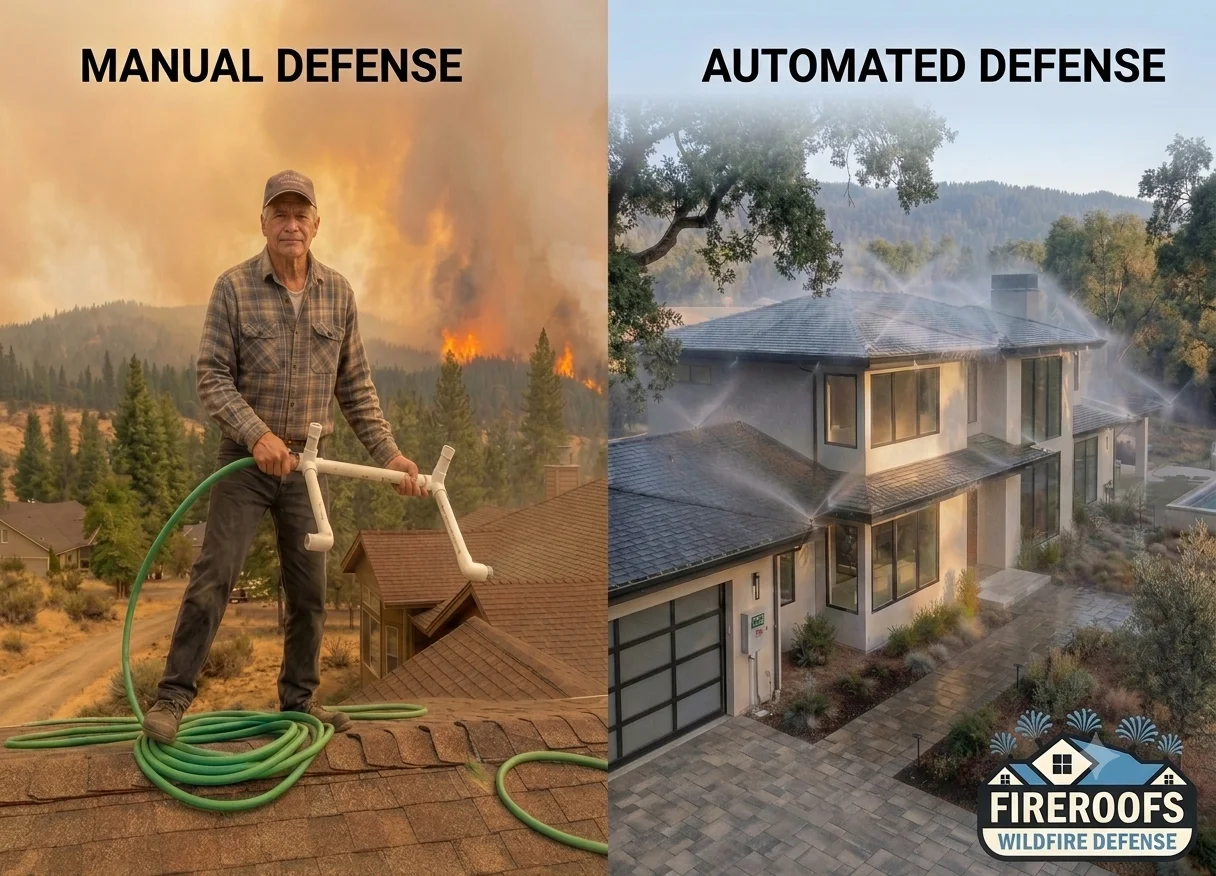
Consumer-grade alternatives, whether garden hoses on a roof, portable pump kits, or aftermarket sprinkler heads, lack the detection integration, pressure verification, zone control, and material durability that a wildfire event demands. The difference is not just in quality. It is in whether the system can actually function when fire reaches the property and no one is home.
Why System Engineering Matters
Water pressure, zone design, pipe material, and detection integration matter at the system level. A garden hose delivers 5 to 10 GPM at variable pressure. A professional system delivers 60+ PSI through engineered zones that activate independently based on threat proximity. Copper piping withstands high heat. PVC and rubber hose melt. Multi-zone design means the system escalates coverage as the threat escalates. A single hose pointed at the roof does not.
Insurance and Documentation
A permitted, professionally installed system produces documentation that a DIY system cannot: engineering specifications, zone coverage maps, water pressure test results, inspection records, and installation certificates. These documents are what insurance carriers review when evaluating wildfire mitigation. A DIY setup with no permits, no inspection, and no engineering records does not provide the evidence insurers need.
Professional System vs. DIY Approach
| Category | Professional System | DIY Approach |
|---|---|---|
| Detection capability | Dual wildfire detection: regional satellite monitoring (5-mile radius) plus on-property cameras with intelligent fire detection | None. Requires visual confirmation and manual activation by someone on-site |
| Water pressure verification | 60+ PSI verified during site evaluation. Independent water source with auto-switching failover | No testing. Relies on municipal pressure, which often drops during wildfire events |
| Pipe material | Copper piping throughout. Withstands high heat and maintains integrity during fire | Garden hose or PVC. Can melt or fail under radiant heat |
| Zone coverage | Multi-zone design covering roof, eaves, and perimeter. Zones activate independently based on threat level | Single zone at best. No independent zone control. Gaps in coverage are common |
| Permits and documentation | Permitted, inspected, and documented. Engineering specs, zone maps, and installation records provided for insurance | No permits. No inspection. No documentation for insurance purposes |
| Ongoing support | System monitoring, seasonal commissioning, and technical support from the installing contractor | No support. Homeowner responsible for all maintenance and troubleshooting |
Detection capability
Water pressure verification
Pipe material
Zone coverage
Permits and documentation
Ongoing support
See What a Professional System Looks Like for Your Property
Every FireRoofs evaluation includes a water pressure test, roof and eave inspection, and a complete Zone Zero walkthrough. The evaluation is free.
Book Your Evaluation