What Does a Wildfire Defense System Cost?
Every property is different, and that is exactly why FireRoofs does not publish a fixed price list. Roof area and pitch, the number of eaves and overhangs, zone count, water pressure and supply source, terrain access, and whether foam injection or supplemental water storage is included all influence system design and cost.
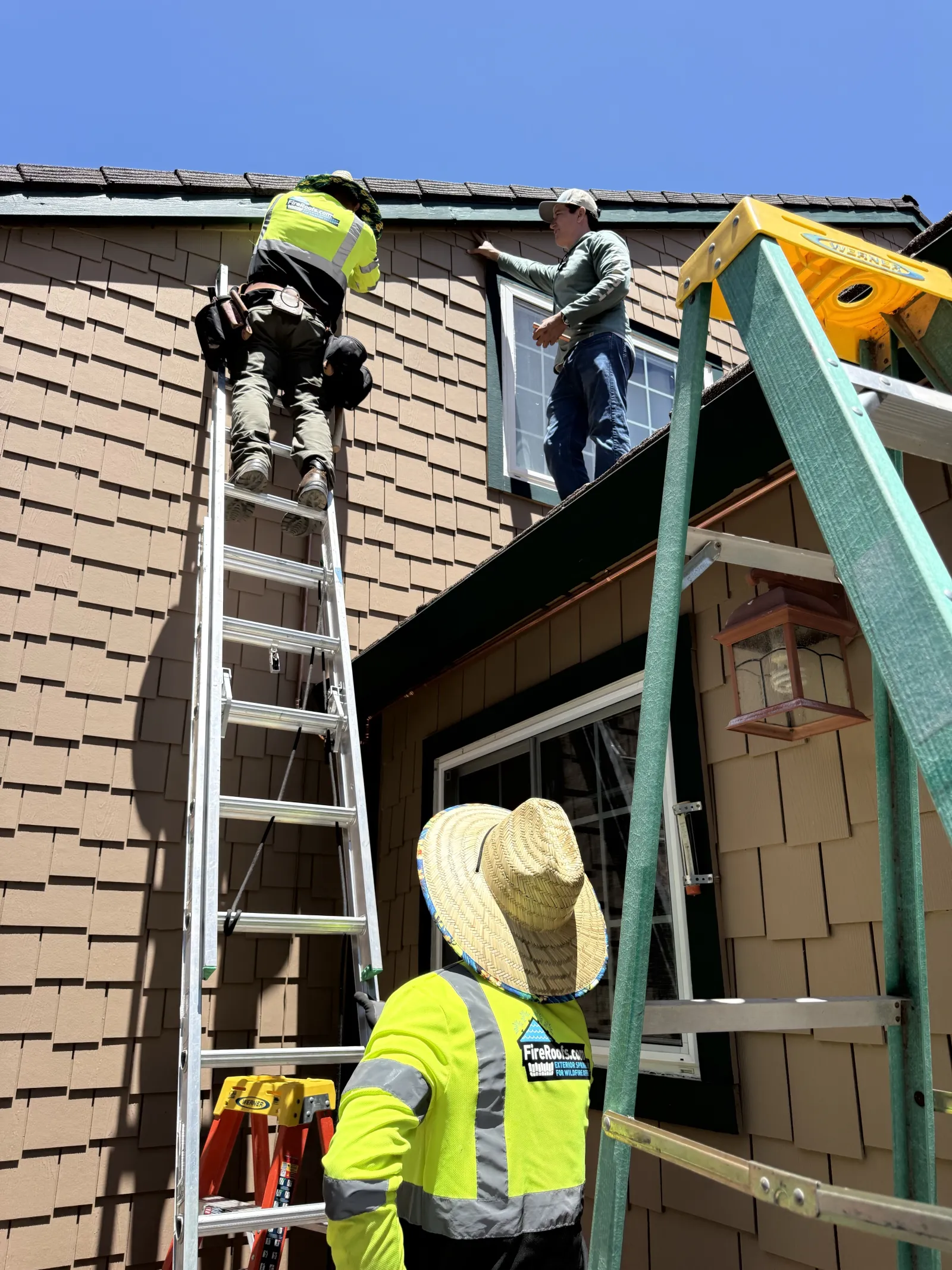
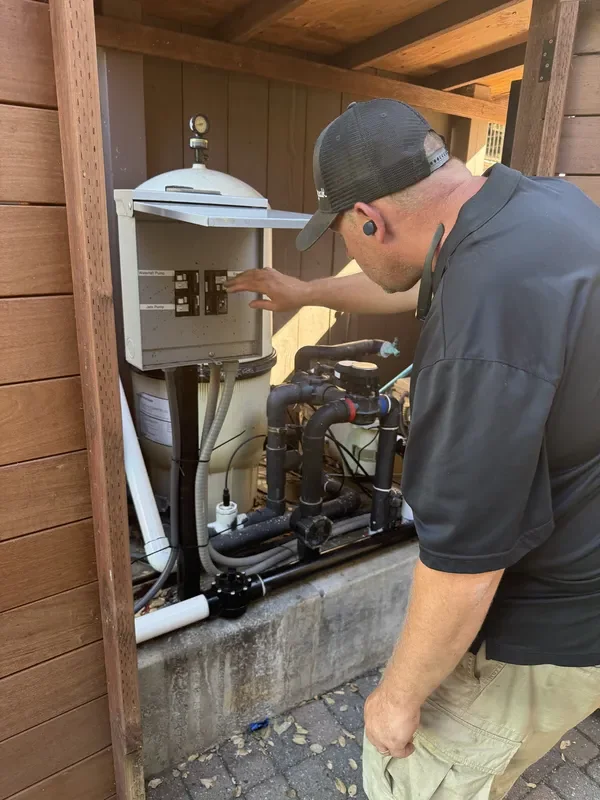
FireRoofs requires a physical site evaluation before providing a proposal. That evaluation includes water pressure testing, a roof and eave inspection, and a complete Zone Zero walkthrough. It is how we protect homeowners from undersized systems that leave gaps or over-specified systems that waste money.
The evaluation is free. No obligation. No deposit.

Estimated Investment by Tier
Illustrative example: 3,000 sq ft single-story ranch home, asphalt shingle roof, 4:12 pitch

Keystone
$33,000
$11 per sq ft estimated
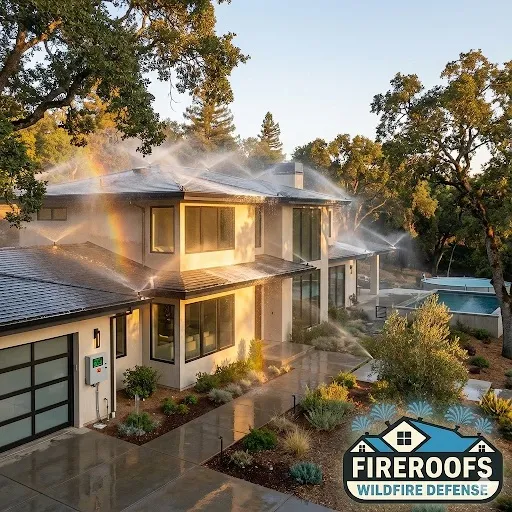
- Roof sprinklers with extended coverage past the roofline
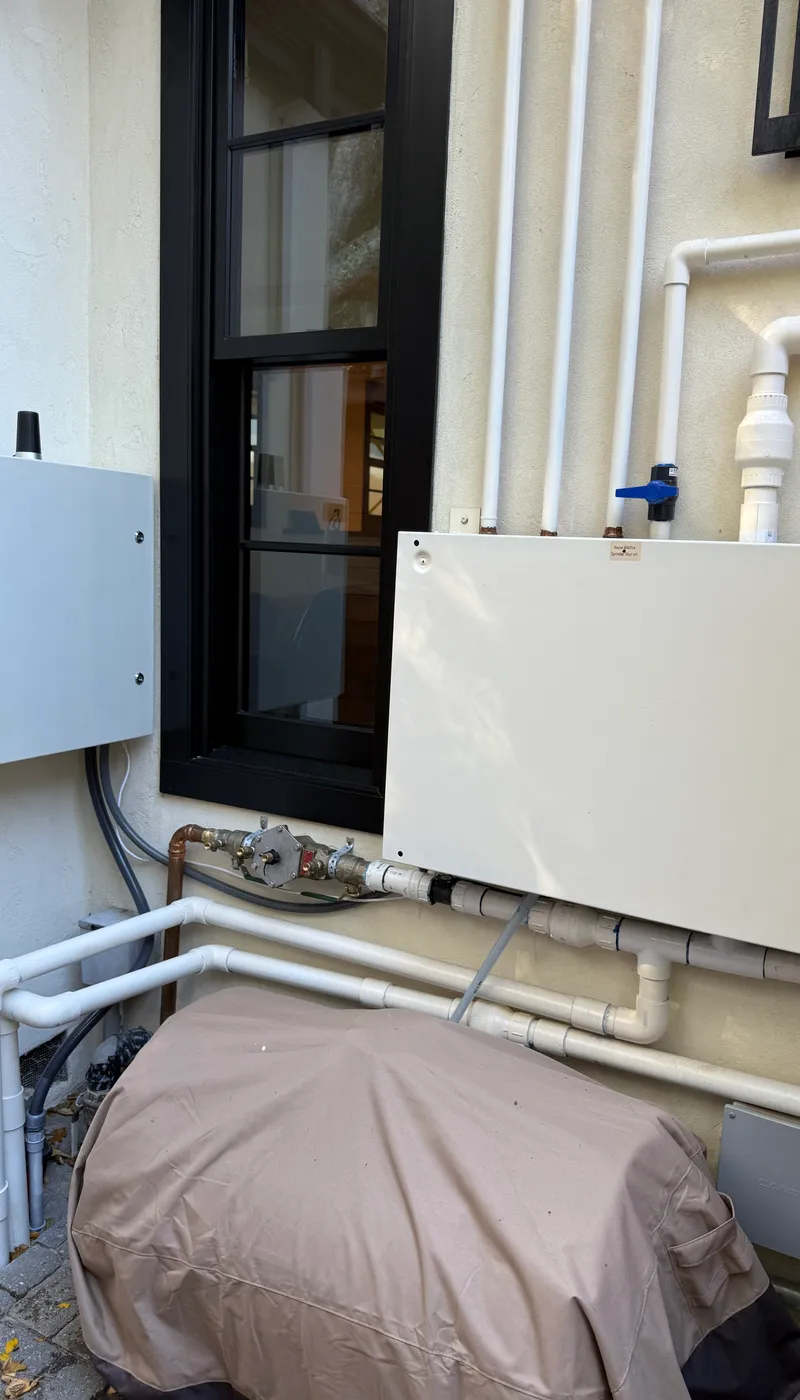
- Commercial-grade copper piping throughout
- Smart controller with FireRoofs app connection
- Manual activation from your phone, anywhere
- System automation via regional satellite wildfire monitoring
- Automated pre-wetting triggered by satellite detection with homeowner cancel window

Guardian
$51,000
$17 per sq ft estimated
Everything in Keystone, plus:
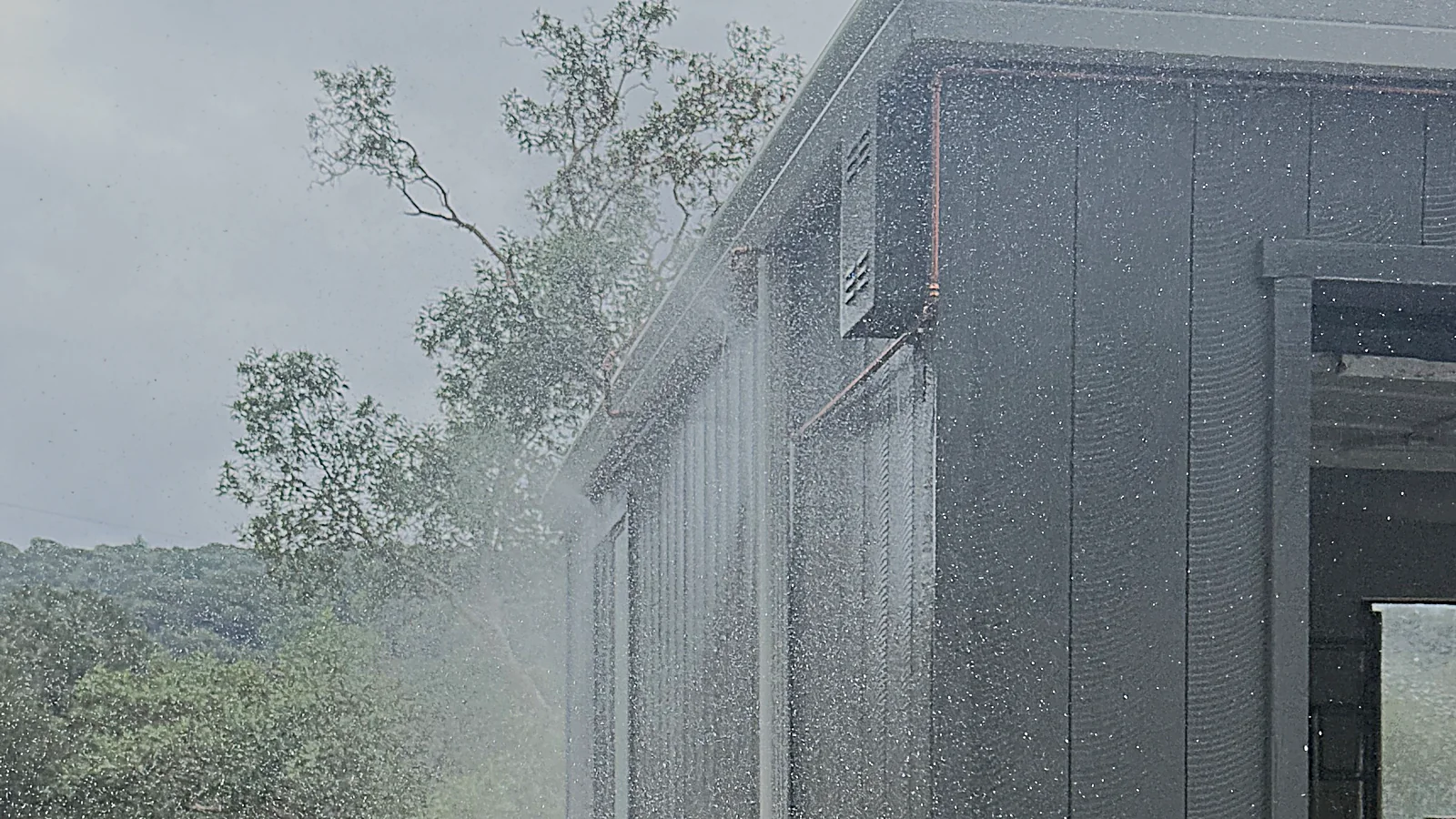
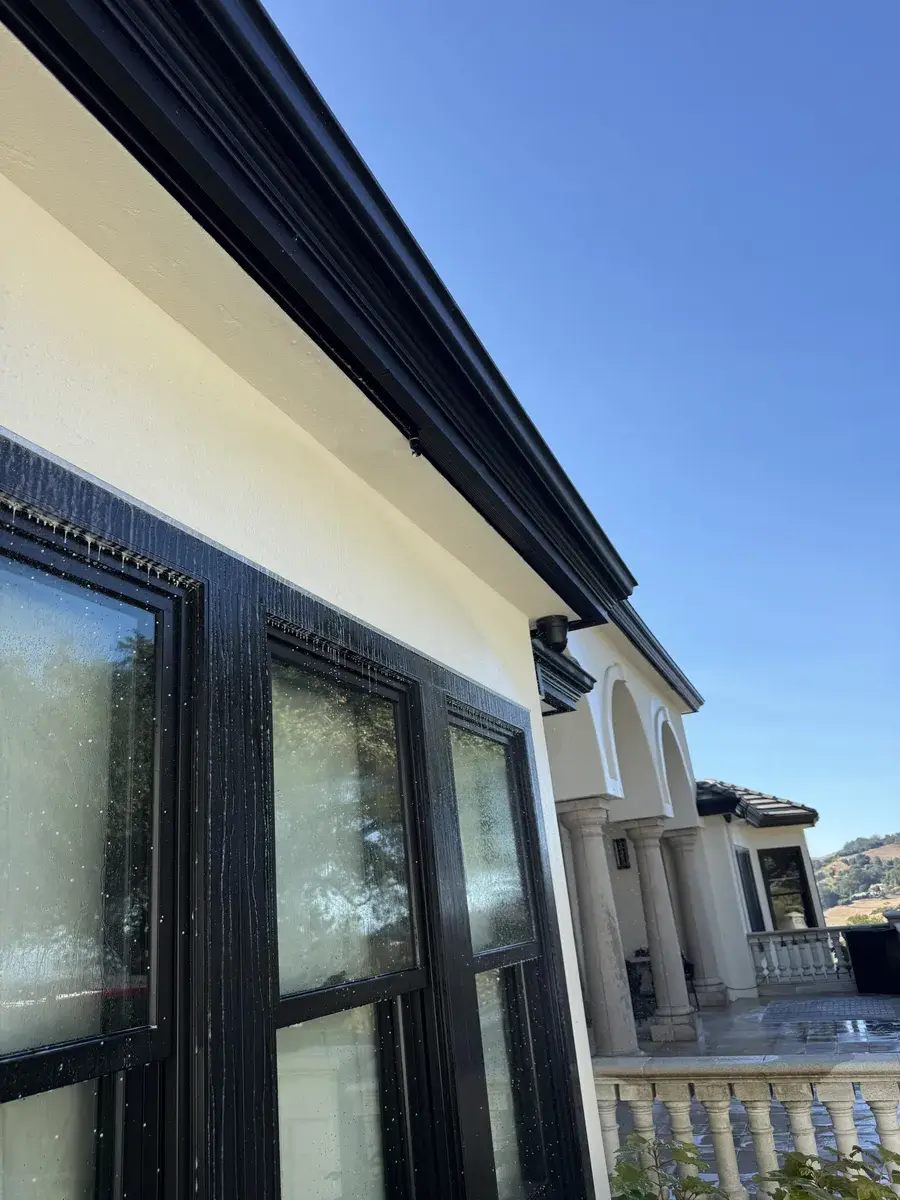
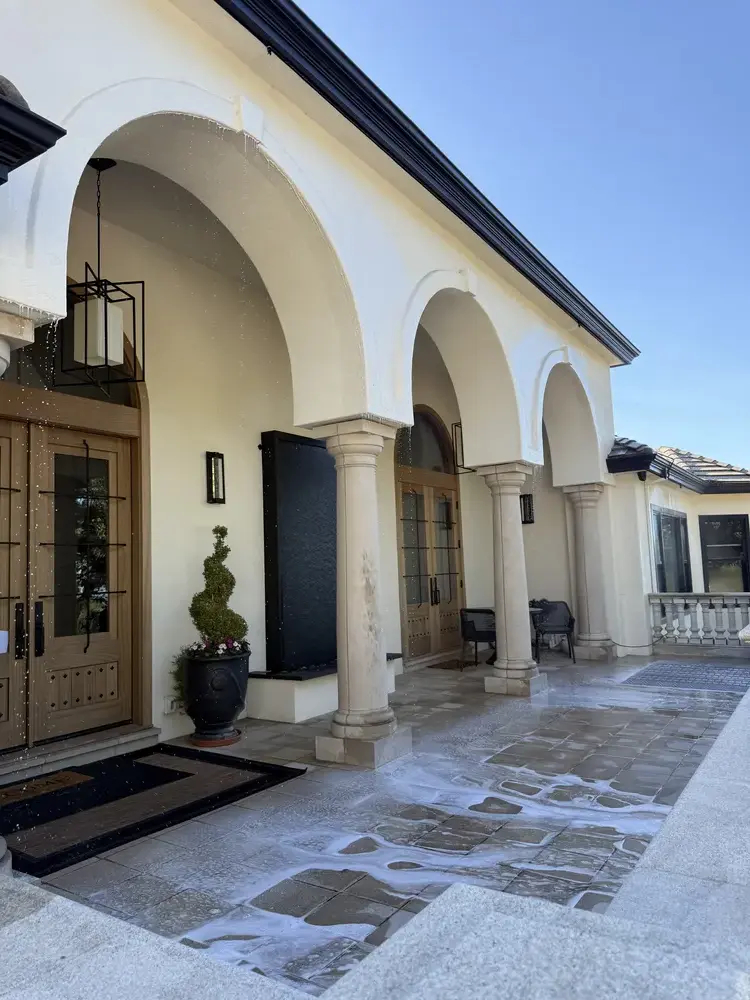
- Eave sprinklers protecting Zone Zero, walls, and windows from radiant heat
- Cameras with intelligent fire detection and sensors mounted on your home
- Dual wildfire detection: satellite monitoring combined with on-property camera detection
- Three-level automated threat activation with homeowner cancel window

Fortress
$63,000
$21 per sq ft estimated
Everything in Guardian, plus:
- Class A foam injection system for roof and eave sprinklers during highest threat activation
- Foam clings to surfaces, holds moisture longer than water alone, and creates a fire-resistant barrier on the roof, eaves, and walls
- Same formulation used by wildland fire agencies. 100% biodegradable, non-toxic to plants, pets, and wildlife, rinses off through sprinklers
These figures are illustrative estimates based on a standard single-story home. Your actual investment will depend on site-specific conditions. FireRoofs provides a detailed proposal following an on-site evaluation.
The True Cost of Wildfire Defense vs. The FAIR Plan
$3M to $8M+
Typical WUI Home Value
Bay Area properties in wildfire-prone communities
$3M
FAIR Plan Cap
Maximum dwelling coverage available through the state plan
$5M to $15M+
Rebuilding Cost
Custom home rebuilding in the WUI after a total loss
Up to $12M
Uninsured Gap
The exposure that insurance alone no longer covers

When evaluating whether exterior wildfire sprinklers are worth the cost, homeowners must look beyond the initial installation price and consider the ongoing financial burden of the California FAIR Plan.
As of late 2025, the average homeowner on the FAIR Plan pays over $3,000 per year, with some high-risk properties paying upwards of $32,000 annually [1]. Meanwhile, the average standard California homeowners insurance policy ranges from $1,335 to $1,543 [1]. With a pending 35.8% rate hike requested by the FAIR Plan, the cost of being uninsured or underinsured in the Wildland-Urban Interface (WUI) is compounding rapidly [1].
5-Year ROI Calculation
Consider the financial impact over five years if your home remains on the FAIR Plan versus securing private insurance through documented mitigation:
| Scenario | Annual Premium (Avg) | 5-Year Total | Uninsured Gap Risk |
|---|---|---|---|
| FAIR Plan (Current) | $3,000+ | $15,000+ | Up to $12M+ |
| FAIR Plan (With 35.8% Hike) | $4,074+ | $20,370+ | Up to $12M+ |
| Standard Private Insurance | $1,500 | $7,500 | Fully Covered |
The cost of a FireRoofs Guardian system (estimated at $51,000 for a 3,000 sq ft home) represents a one-time capital investment in your property's value [2]. Over a 10-year period, the premium savings from moving off the FAIR Plan, or avoiding it entirely, can offset a significant portion of the system's cost. Furthermore, a home that survives a wildfire avoids the $5M to $15M+ out-of-pocket rebuilding costs that the FAIR Plan's $3M cap fails to cover [2].
Pending Tax Credits and Incentives
The financial equation is shifting further in favor of active mitigation. The bipartisan FIREWALL Act, reintroduced in Congress in late 2025, proposes a refundable federal tax credit of up to $25,000 to cover 50% of eligible home hardening costs [3]. At the state level, the California Safe Homes Act (AB-888) established a framework for a one-time tax credit of up to $10,000 for completing fire code-compliant hardening projects [3].
Additional Services and Add-Ons
Every property has different water supply, terrain, and landscape conditions. These services extend any system tier for total property protection.
Hillside Perimeter Sprinklers
Ground-level sprinklers protecting vegetation and landscape surrounding your property, including hillsides leading to the home. Mounted along your fence line to saturate the surrounding defensible space.
Backup Pool Connection
Connects your swimming pool as an independent water source. Automatic switchover when municipal pressure drops. Runtime depends on pool size and system configuration.
Water Storage Tank Connection
For properties without a pool. Dedicated water storage tanks provide the same independent supply capability. We size the tank to your system’s flow requirements and available space.
Booster Pump
Increases water pressure for properties where municipal or well supply falls below optimal levels. Ensures consistent sprinkler coverage across all zones, especially on steep lots or large properties.
Vegetation Fire Retardant Treatment
Professional application of fire retardant to vegetation around your property. One application provides full fire season protection. Non-toxic, biodegradable, safe for plants and pets.
Learn MoreNoncombustible Fencing
Your fence is the most overlooked wildfire vulnerability. We design and install noncombustible fencing systems that eliminate the fence-to-structure flame path.
Learn MoreWhen weighing the cost of a wildfire defense system, consider the insurance dimension. Homeowners in fire-prone areas are seeing premiums climb and coverage options shrink. California's Safer from Wildfires regulation now ties mitigation directly to how insurers price risk. A documented, professionally installed system produces the kind of evidence package that insurance carriers and underwriters need to evaluate your property favorably. For many Bay Area homeowners, the investment in active defense is a fraction of the annual premium increases they would face without it.
How Active Defense Supports Your Insurance Position
California Insurance Discounts Guide
Safer from Wildfires regulation, CDI mitigation categories, FAIR Plan context, and what underwriters evaluate.
Read the guideSample Evidence Packet (PDF)
See what a carrier-ready evidence packet looks like. Includes system specs, test logs, CDI alignment matrix, and more.
Download sampleCost and Investment FAQ
Yes, when factoring in the rising costs of California FAIR Plan premiums and the massive uninsured gap most luxury homes face. A system typically costs between $33,000 and $63,000. However, avoiding a $4,000+ annual FAIR Plan premium and securing private insurance can save homeowners tens of thousands of dollars over a decade, while protecting against a multi-million dollar total loss [1] [2].
Start With a Site Evaluation
The site evaluation is where accurate pricing begins. A FireRoofs specialist will assess your water pressure, roof configuration, and perimeter to build a proposal matched to your property.
Book Your EvaluationReferences
- [1]Yahoo Finance. "California FAIR Plan insurance can range from $92 to $32,000." February 2026.
- [2]FireRoofs Cost Estimates.
- [3]National Association of Insurance Commissioners (NAIC). "Strengthen Insurance Markets Through Disaster Mitigation." May 2025.