Why Some Homes Survive Wildfires and Others Do Not.
It is not luck. The homes that survive have fewer weak spots.
It Is Almost Never Direct Flame Contact
Most people picture wildfire as a wall of flame that melts everything in its path. That is not how homes are lost. Research by NIST and IBHS consistently shows that 80 to 90 percent of WUI structure ignitions start from wind-driven embers, not direct flame contact.
Embers (burning fragments of wood, bark, and vegetation) travel up to a mile ahead of the fire front. They land on roofs, in gutters, through vent openings, on decks, and against siding. If the surface they land on is combustible and dry, ignition follows. If the surface is noncombustible or wet, the ember dies.
This is why home survival is predictable. The variables are known. The entry points are documented. And every one of them is addressable before a fire arrives. Want to know your home's specific vulnerabilities? Check your wildfire risk on our interactive map.
What the Evidence Consistently Shows
Every post-fire analysis identifies the same combination of factors. No single measure is sufficient alone. Together they create a defense system where each layer compensates for the others.
Ember Resistance
of WUI structure ignitions start from wind-driven embers, not direct flame contact. Hardened vents, enclosed eaves, and non-combustible gutters eliminate the most common ember entry points.
Surface Wetting
Wet surfaces do not ignite from embers. Exterior sprinklers keep roofs, walls, and decks wet during the critical hours when embers are actively landing on your property.
Defensible Space
Vegetation management in Zones 0, 1, and 2 reduces both radiant heat exposure and the volume of embers generated near your home. Zone 0 (0 to 5 feet) is the most critical.
Material Hardening
under CDI Reg 2644.9. Class A roofing, tempered glass, fiber-cement siding, noncombustible decking, each upgrade eliminates one more ignition pathway.
Five Fires. One Pattern.
Different climates. Different terrains. Different decades. The lesson is always the same.
Ham Lake Fire
A University of Minnesota study (2008) found 46 of 47 structures with working exterior sprinklers survived. 8 of 9 with failed systems burned, and 18 of 48 without sprinklers survived.
Wet surfaces do not ignite from embers. Exterior sprinklers keep roofs, walls, and decks wet through the hours when embers are actively landing.
University of Minnesota, 2008
Camp Fire (Paradise)
The deadliest and most destructive wildfire in California history. Nearly 19,000 structures destroyed. NIST post-fire analysis found that homes with noncombustible roofing, enclosed eaves, ember-resistant vents, and maintained defensible space survived at measurably higher rates.
Individual home hardening matters even when community-level defense fails. The homes that survived had fewer ignition vulnerabilities, not better luck.
Marshall Fire
A grass-driven fire in a suburban setting that destroyed over 1,000 homes in hours. The Marshall Fire proved that WUI fires are not limited to forested mountain properties. Ember transport from burning homes ignited neighboring homes in a chain reaction.
Your neighbor's home is a fuel source. Home-to-home ignition via embers and radiant heat means your own hardening and defensible space matter even in suburban neighborhoods.
Lahaina Fire
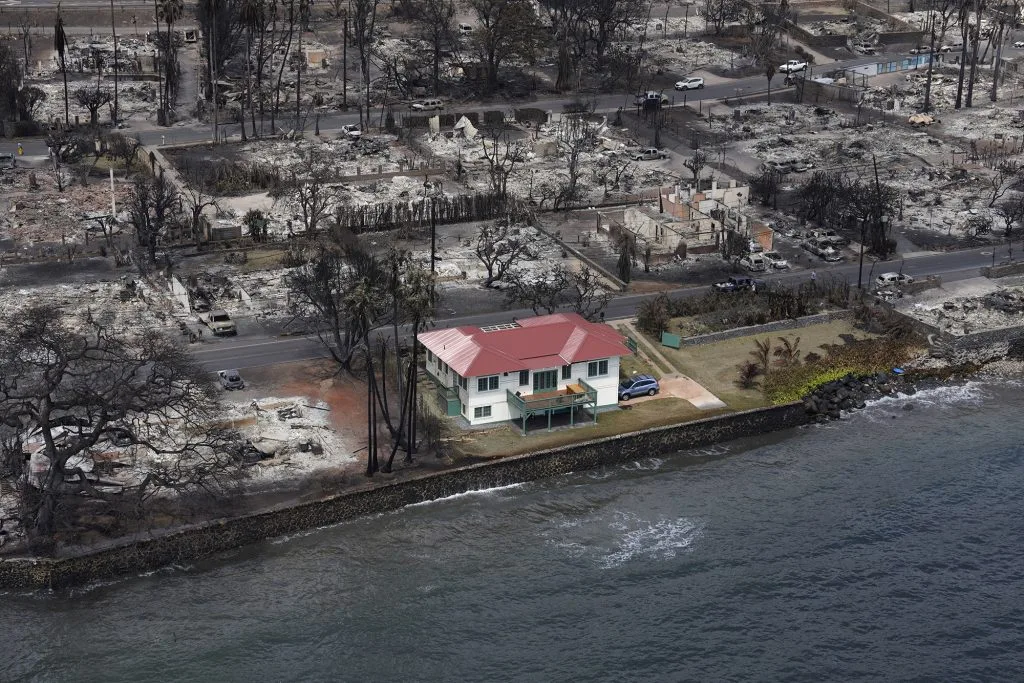
Wind-driven fire destroyed the historic town of Lahaina with devastating speed. The fire demonstrated how wind, dry vegetation, and dense construction create conditions where standard firefighting response cannot keep pace.
When fire moves faster than emergency response, the homes that survive are the ones that can defend themselves autonomously. Pre-positioned, automated defense is not optional in high-wind zones.
Hawaii Wildfire Management Organization post-fire analysis
Palisades Fire
The Palisades Fire reinforced what fire scientists have documented for decades: ember-driven ignition is the primary mechanism of structure loss. Homes with hardened exteriors, maintained defensible space, and pre-wetting capability fared significantly better.
Every major fire teaches the same lesson. The variables that determine home survival are measurable, addressable, and within the homeowner's control.
Preliminary post-fire damage assessments and aerial surveys
Every Factor Is Within Your Control
The evidence is not ambiguous. Homes that survive wildfire share measurable characteristics that any homeowner can address. The question is not whether mitigation works. The question is which measures your specific property needs and in what order. See our wildfire mitigation cost guide for what each category costs, or read our FAIR Plan guide to understand the insurance implications.
FireRoofs evaluates every property across all four survival factors: ember resistance, surface wetting (water supply engineering), defensible space, and material hardening. The written plan includes real numbers, real timelines, and a prioritized sequence that addresses your highest-risk vulnerabilities first. Request a private consultation or call us at 831-705-0888.
Common Questions
What is the main reason homes are destroyed in wildfires?
Embers, not direct flame contact. NIST and IBHS research shows 80 to 90 percent of WUI structure ignitions start from wind-driven embers landing on vulnerable surfaces like roofs, gutters, vents, and decks. Homes that survive have those surfaces either hardened or kept wet.
Do exterior sprinklers actually help homes survive?
Yes. Post-fire analysis across multiple events shows that homes with exterior sprinkler systems, combined with defensible space and home hardening, survive at significantly higher rates. The Ham Lake Fire is one of the most documented examples.
Can my home survive if my neighbors have not done any mitigation?
Yes. While neighborhood-level mitigation improves outcomes for everyone, individual home hardening provides significant protection. IBHS research shows that a hardened home with defensible space can survive even when adjacent unmitigated structures ignite.
Which is more important: sprinklers, hardening, or defensible space?
All three work together. Defensible space reduces ember volume and radiant heat. Hardened materials resist the embers that do land. Sprinklers keep surfaces wet during the critical hours. No single measure is sufficient alone. The evidence consistently shows that the combination produces the best survival outcomes.