188 Homes Had Sprinklers. All 188 Survived.
You have probably heard wildfire sprinklers do not work. That advice is about a product from 15 years ago. Here is what the evidence actually shows.
All work is performed by licensed and insured contractors.
The Numbers That Matter
Sources: NFPA, IBHS, Los Angeles County Fire Assessment 2025
What You Have Probably Heard
If you have looked into wildfire sprinklers at all, you have run into some version of these objections. They come from fire departments, insurance agents, neighbors, and internet forums.
"Fire departments say not to use them."
"Power gets shut off during fires. How would it even turn on?"
"Water pressure drops when everyone is using it."
"It is just water on a roof. That cannot stop a wildfire."
"Defensible space and hardening are enough."
Here is the thing: most of those concerns are valid. They just describe a product from 15 years ago. The conversation has not caught up to what modern systems actually are.
Wildfires Attack from the Sky. Your Yard Cannot Stop That.
Most people picture a wall of fire hitting their house. That is not how homes actually catch fire.
Wind-blown embers (called firebrands) travel miles ahead of the fire front. They fly right over a 100-foot defensible space buffer. They land on your roof, fall into your gutters, pile up under your deck, and get sucked into your attic vents.
Embers cause up to 90% of home ignitions during wildfires. Not direct flame. Not radiant heat. Embers.
Defensible space protects your yard. Home hardening protects your materials. But you also need something that actively protects your structure when thousands of glowing embers are raining down from the sky.
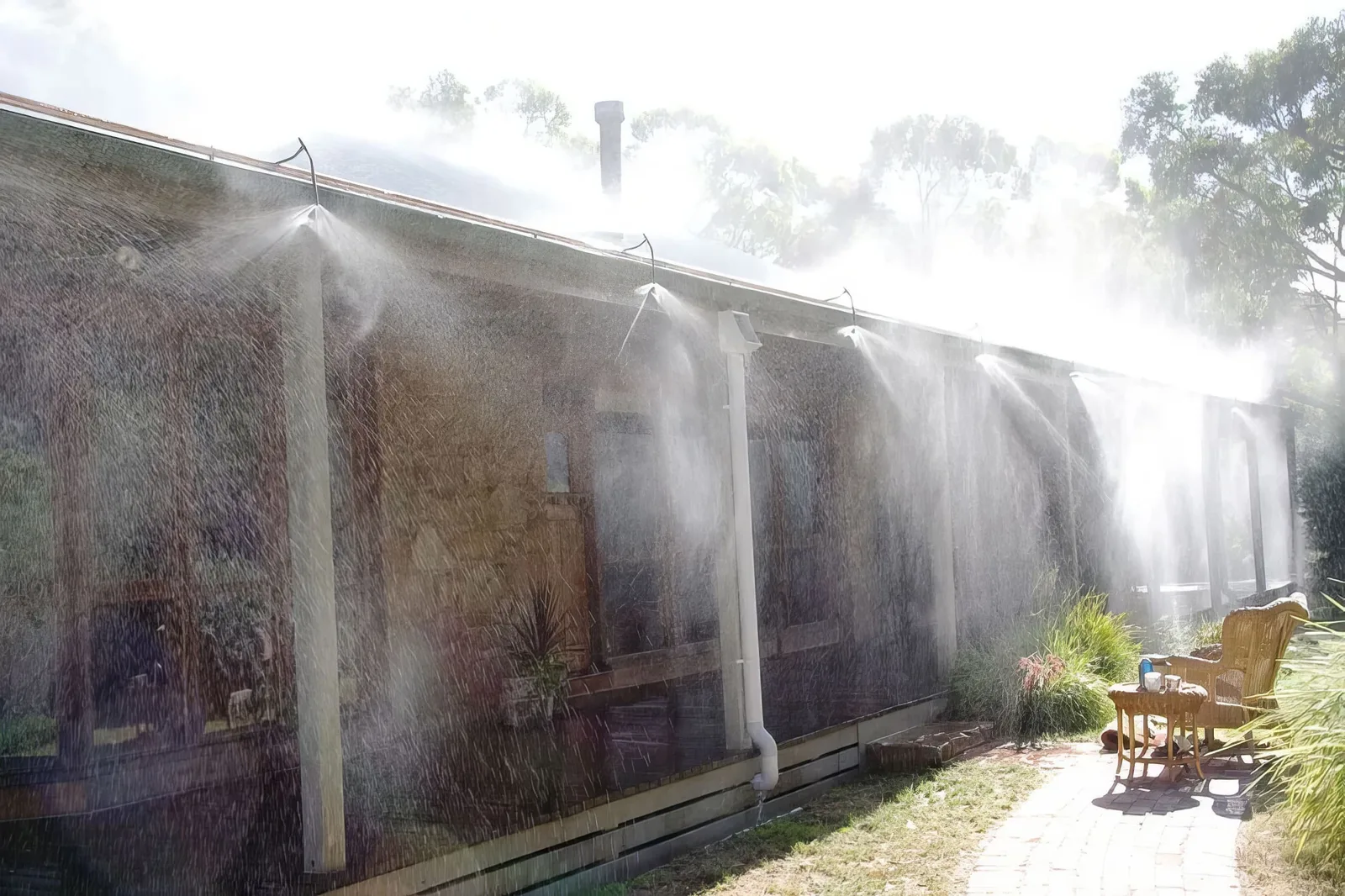
Exterior sprinklers wet down the roof and walls, keeping embers from catching. Photo: Fire Safe Marin
Embers fly 1+ miles
Wind carries burning fragments far ahead of the fire front, bypassing defensible space entirely.
Land in gutters
One pine needle in a gutter gives an ember everything it needs: fuel, oxygen, and contact with your fascia.
Enter through vents
Standard 1/4-inch attic vent mesh lets embers through. They smolder inside for hours before igniting.
Ignite from outside in
The home burns from the exterior inward. By the time you see flames, the structure is already compromised.
The Advice You Heard Is About a Different Product
Fire Safe Marin says they "do not recommend any exterior sprinkler system that requires manual triggering on site." They are right. That describes a garden sprinkler on a timer. It does not describe what modern systems are.
The Old System
What fire departments warn about
- ✗Manual activation: someone has to be home to turn it on
- ✗Garden hose or PVC pipes that melt in heat
- ✗Runs on municipal water only, pressure drops when neighbors use it too
- ✗No backup power. PSPS shuts it down
- ✗No detection. You have to see the fire yourself
- ✗Just water on the roof ridge. Gutters, eaves, and vents stay dry
- ✗No documentation for insurance
A Modern System
What actually exists now
- Automated activation: satellite detection + on-property cameras trigger the system
- Copper piping and commercial-grade brass heads rated for extreme heat
- Dedicated water tank (2,500 to 10,000+ gallons) or pool backup with auto-switchover
- Backup power (generator or home battery) and satellite connectivity. Works during PSPS events
- Dual wildfire detection from miles away. Activates before fire reaches you
- Multi-zone coverage: roof, eaves, and perimeter sprinklers wet everything
- Engineering docs, permits, and pressure tests for your insurance file
The fire department guidance makes sense for the product it describes. If you are thinking about putting a Rainbird sprinkler on your roof ridge and hoping for the best, they are right to warn you. But that is not what modern exterior fire protection systems are. The technology moved faster than the pamphlets.
The Evidence from Real Fires
Skeptics say "there is no proof." There is. It comes from fires that actually happened, not lab simulations.
188
Homes with exterior sprinklers in the 2007 Ham Lake Fire
All 188 survived. Over 100 neighbors without sprinklers lost everything.
0
FireRoofs-protected homes lost to wildfire
Every system we have installed remains standing and operational.
90%
Of home ignitions caused by embers, not direct flame
Embers travel over a mile ahead of the fire. They find the one gap you missed.
19,000
Structures destroyed in the 2018 Camp Fire
But homes with wet roofs and soaked gutters survived while neighbors burned.
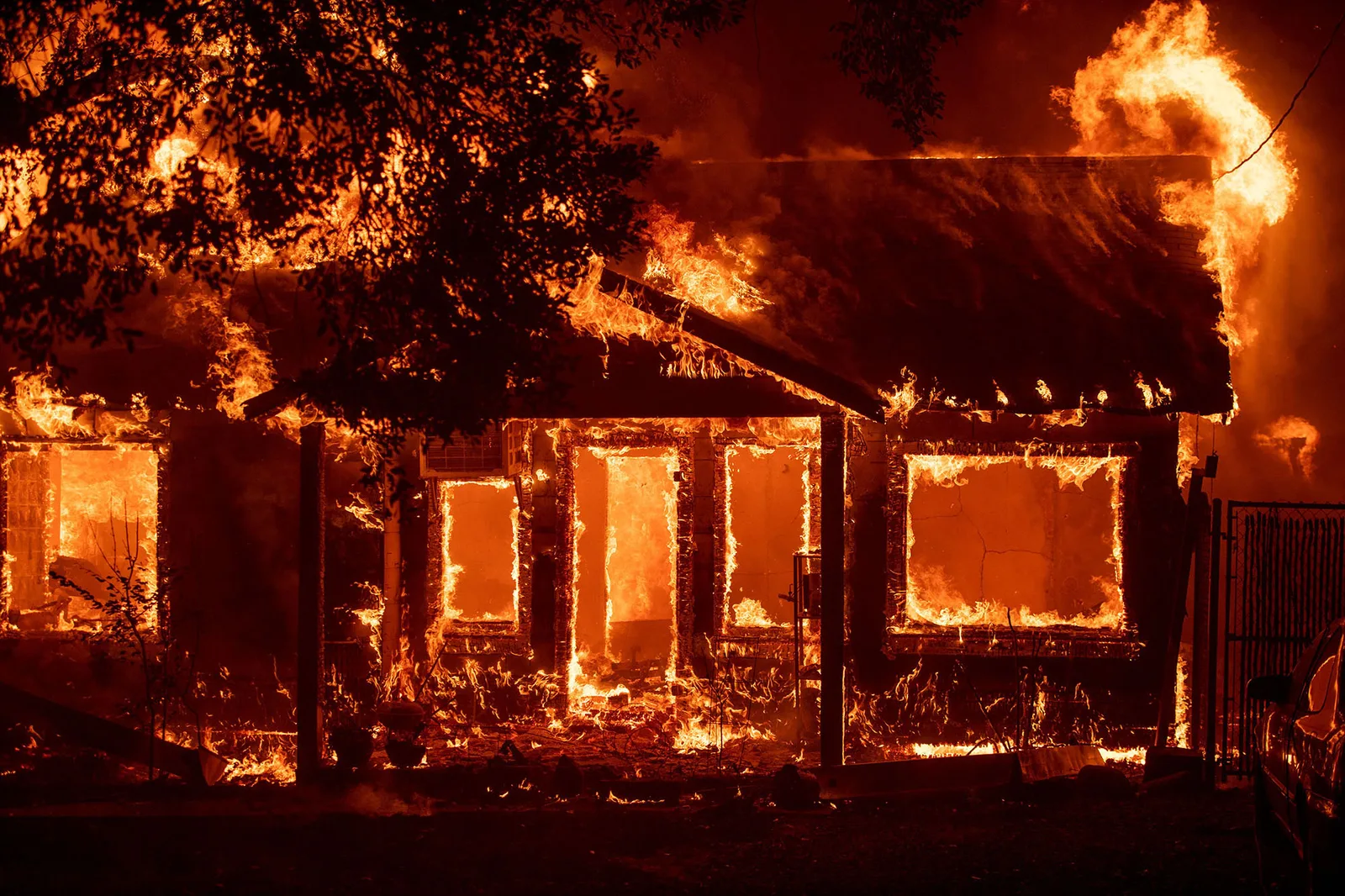
Paradise, California. November 2018. Over 19,000 structures destroyed in hours.
The 2018 Camp Fire: 19,000 Structures Lost. But Not All of Them.
The Camp Fire tore through Paradise, California and destroyed 19,000 structures in hours. It killed 85 people. It was the deadliest and most destructive wildfire in California history.
But scattered through the destruction were homes that survived. One belonged to Jeff and Cathy Moore in Chico, whose rooftop sprinklers kept the pine needles in their gutters completely soaked. Embers landed everywhere. The gutters never caught fire. Their home stood while their neighbors' homes burned to the ground. They stayed behind and saved not just their own home but helped protect others in their neighborhood.

Cathy and Jeff Moore in front of their home in Chico, CA after the Camp Fire. Note the exterior sprinklers on the roof. Photo by Mason Trinca, The Washington Post.
The lesson is not that sprinklers are magic. The lesson is that a wet roof and soaked gutters are dramatically harder for embers to ignite than a dry one. That is not an opinion. That is physics.
The 2007 Ham Lake Fire: 188 out of 188
In 2007, the Ham Lake Fire burned 75,000 acres along Minnesota's Gunflint Trail. Over 100 homes without sprinklers were destroyed.
But 188 properties had been fitted with exterior sprinkler systems through a FEMA Hazard Mitigation Grant. The program cost $764,255, with 75% covered by federal funds.
All 188 survived. Every single one. Firefighter Dan Baumann described approaching the sprinkler perimeters as "walking into a moisture bubble."
Important detail: those 188 properties also had defensible space and home hardening. The sprinklers were not alone. The combination worked.
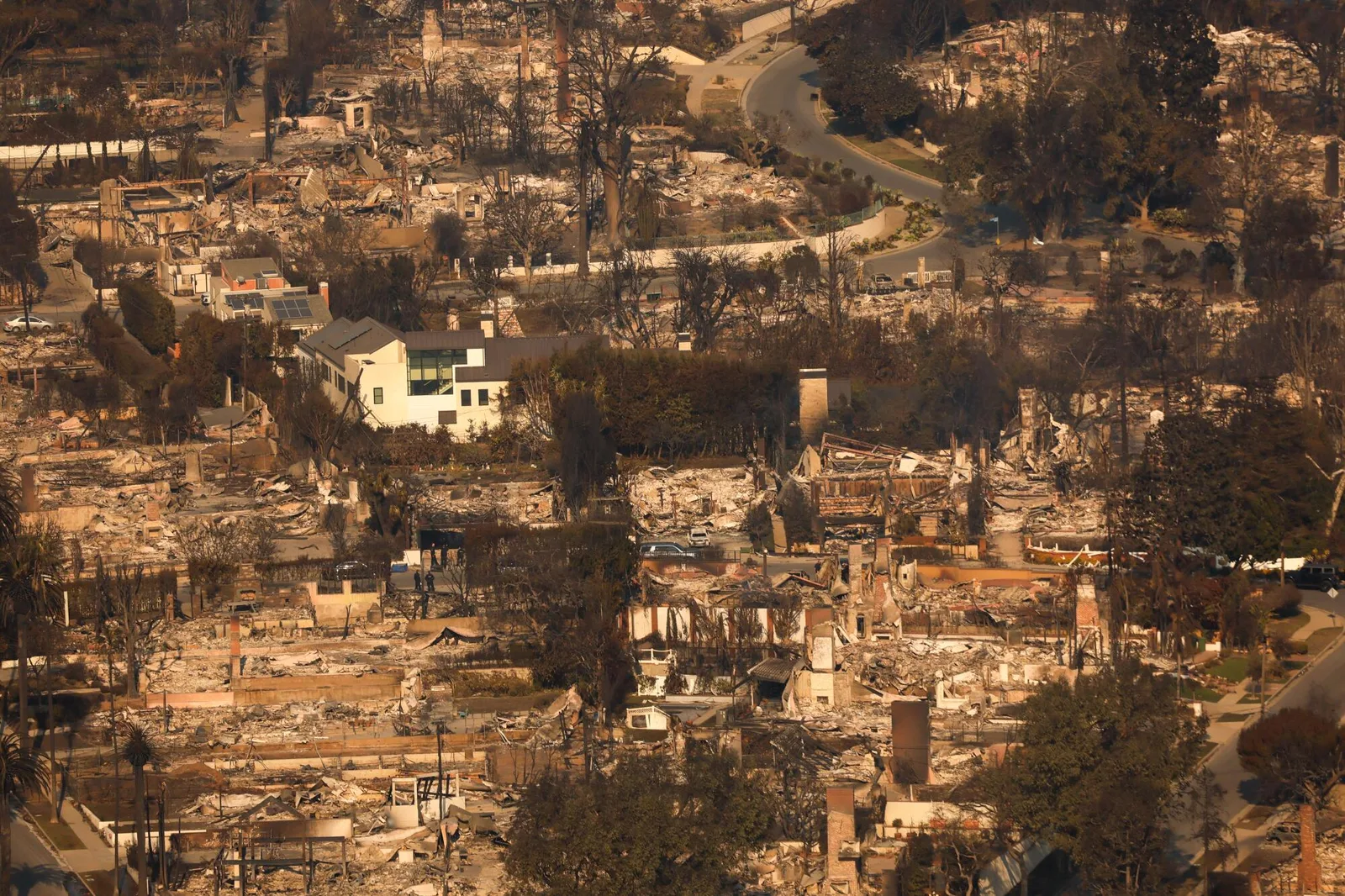
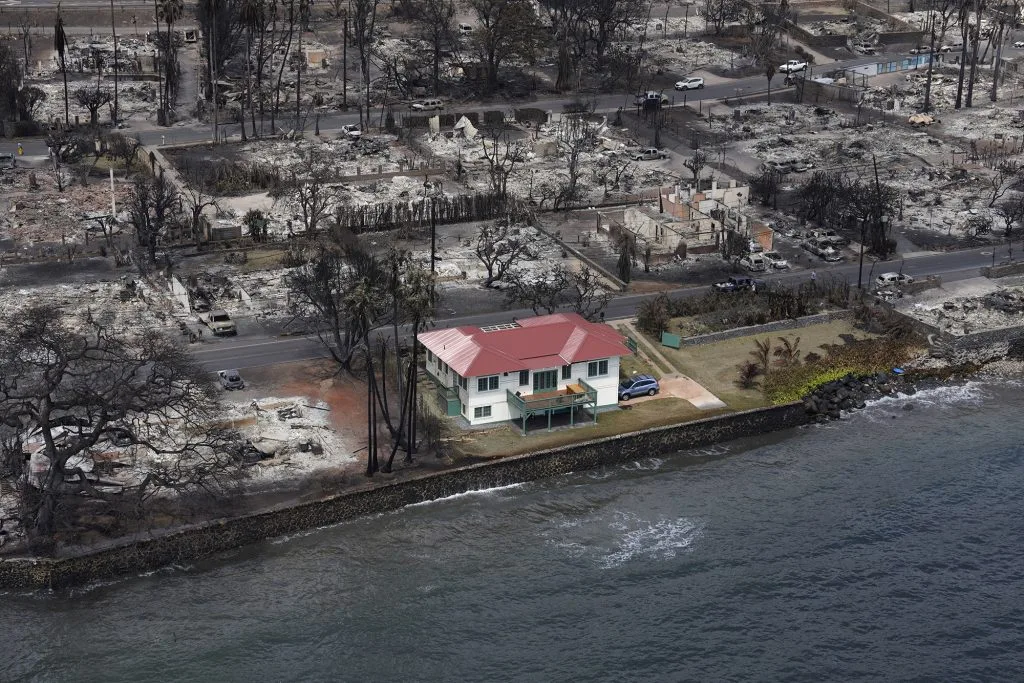
Aerial view of wildfire destruction. Homes without active defense are reduced to foundations.
"But What About...?"
Fair questions. Every one of them. Here is how modern systems handle the real-world problems that made the old ones fail.
"Water pressure drops during a fire."
True for municipal-only systems. When the whole neighborhood turns on their garden hoses at the same time, pressure crashes. Fire departments are right to worry about this.
Modern systems use a dedicated water tank (2,500 to 10,000+ gallons) or a pool backup with automatic switchover. Zone-by-zone activation controls how much water flows at once. During our on-site evaluation, we test your water pressure and flow rate before designing anything. If your municipal pressure is not enough, we build around it. Read our full water supply engineering guide.
"Power gets shut off. PSPS events are constant."
True for any system plugged into the wall with no backup. If a Public Safety Power Shutoff kills the grid, a system that depends on it is dead.
Modern systems are designed for backup power (generator or home battery) and satellite connectivity. The detection does not need your home wifi. The activation does not need PG&E. We design systems that work when everything else has failed, because that is exactly when you need them.
"Wind blows the water away. It is just evaporating."
A legitimate concern with a single rooftop sprinkler. One head on the ridge cannot cover a whole house in heavy wind.
Multi-zone systems put sprinkler heads at the roof line, under the eaves, and around the perimeter. Overlapping coverage means wind pushes water from one zone into the area another zone already covered. Optional Class A firefighting foam reduces surface tension and helps water soak into materials instead of beading off. A wet roof stays wet longer than you think.
"It is just water on a roof. That cannot stop a wildfire."
Correct. Nothing "stops" a wildfire. Not defensible space, not home hardening, not a sprinkler system. A wildfire is going to do what it is going to do.
The goal is not to stop the fire. The goal is to stop your house from catching fire. And the data is clear: a pre-wetted structure is dramatically harder for embers to ignite than a dry one. The IBHS has tested this in controlled burns. The Ham Lake Fire proved it in the real world. You are not fighting the fire. You are making your home a bad target for embers.
Sprinklers Do Not Replace Home Hardening. They Finish the Job.
We are going to be honest about something a lot of sprinkler companies will not say: if your Zone 0 is not clear, your vents are not screened, and your eaves are open, a sprinkler system is not where you should start.
Home hardening and defensible space are the foundation. They stop the easy ignitions. But even a well-hardened home has vulnerable moments. One pine needle in a gutter. One vent with mesh that is too wide. One section of wood fencing that touches the house.
That is where the sprinkler system earns its place. It is the active layer that catches what passive hardening misses. It keeps the roof wet when embers are landing. It soaks the eaves when heat is rising from below. It wets the perimeter vegetation that defensible space could not eliminate entirely.
The Ham Lake data proves the combination: 188 homes with sprinklers and hardening and defensible space - 100% survived. Over 100 homes without that combination - destroyed.
Modern automated exterior sprinklers work when they are part of a complete system: defensible space, home hardening, independent water supply, and dual wildfire detection. The old advice was about garden hoses on the roof. That is not what these systems are.
What We Tell Homeowners Who Are Not Ready for Sprinklers Yet
Start here. These cost less and matter more than you think.
- Clear Zone 0: remove everything combustible within 5 feet of your home
- Screen every vent with 1/8-inch or 1/16-inch metal mesh
- Enclose open eaves with non-combustible soffits
- Clean gutters. Then clean them again. Keep them clean.
- Remove ladder fuels: trim branches 6 feet from the ground, 10 feet from your roof
- Replace any wood fencing that touches the house with metal
We help with all of this too. Our satellite pre-assessment shows which of these items apply to your property.
Can Sprinklers Help with Insurance?
Short answer: yes. And it is getting better.
California Insurance Code 2644.9
Requires insurers to offer premium discounts for wildfire mitigation efforts. This is law, not a suggestion.
Safer from Wildfires Framework
The California Department of Insurance created this framework. Exterior sprinkler systems are a recognized mitigation measure.
5% to 20% Premium Discounts
Multiple California carriers now offer discounts for documented wildfire mitigation, including exterior sprinkler systems.
FAIR Plan Mitigation Credits
Even the insurer of last resort offers credits for certain protective measures. Documentation from your contractor is key.
Over 700,000 Californians have lost private insurance coverage since 2019. Many were pushed onto the more expensive FAIR Plan. A documented wildfire defense system will not guarantee private coverage, but it makes your home a better risk on paper. And that matters when your insurer is deciding whether to renew your policy. Read more in our California wildfire insurance discounts guide or our FAIR Plan guide.
What to Look for If You Are Considering a System
Not all systems are the same. Here is what separates a real wildfire defense system from a garden sprinkler with a brand name.
Automated activation
The system turns on by itself. No one has to be home.
Independent water supply
A dedicated tank, pool backup, or both. Not just the garden hose.
Backup power
Generator or home battery (e.g., Powerwall). Works during PSPS shutoffs.
Commercial-grade materials
Copper piping and brass heads. Not plastic that melts in heat.
Multi-zone coverage
Roof, eaves, and perimeter. Not just the ridge line.
Engineering documentation
Permits, pressure tests, and zone maps your insurer can use.
Want the full technical breakdown? See how our roof, eave, and perimeter sprinkler systems work or compare professional vs. DIY systems.
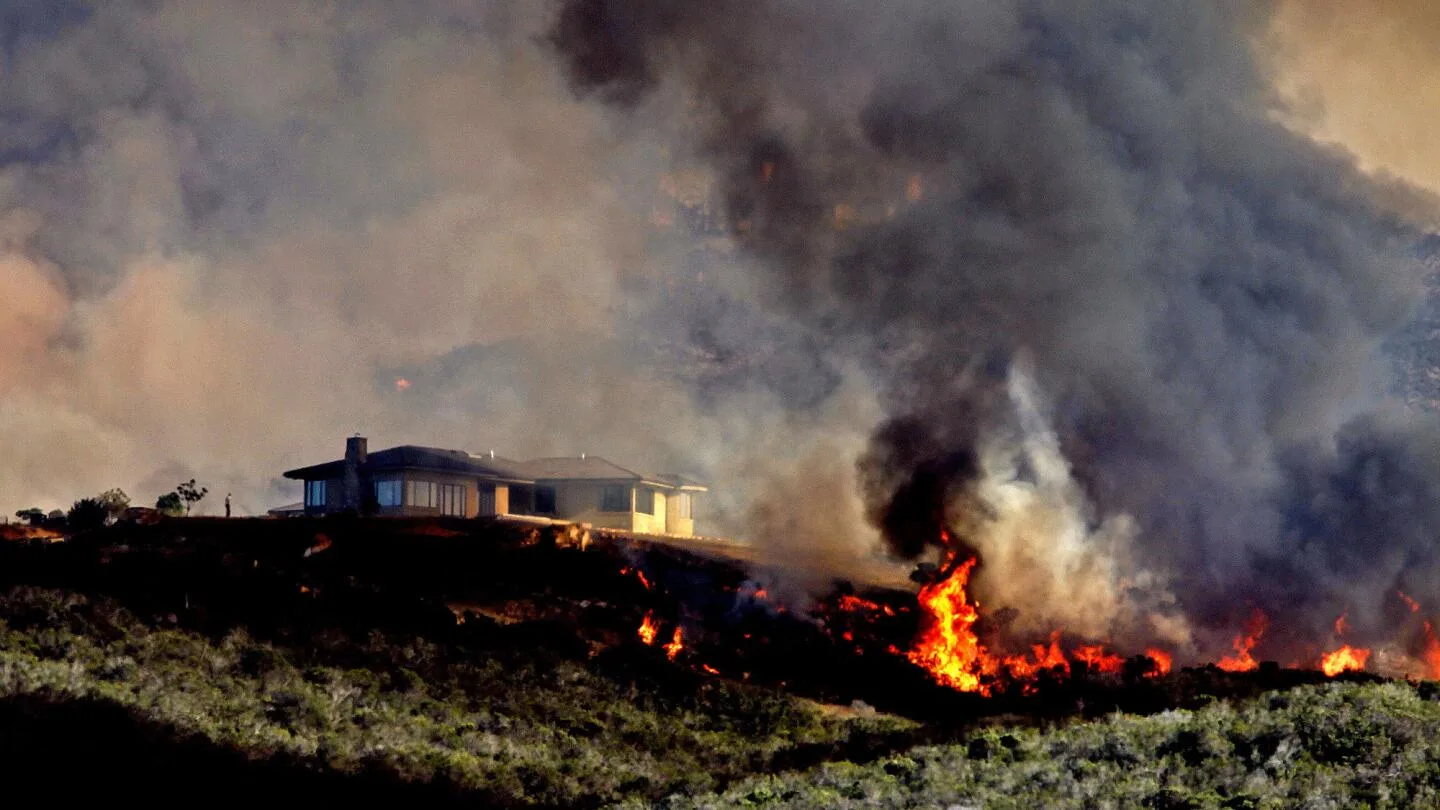
When a wildfire approaches, there is no time to climb on the roof with a garden hose. Your system needs to already be working.
Reviewed by Shawn Gardner and Walt Mullins
Co-founders of FireRoofs with over 50 years of combined experience in construction, irrigation, and wildfire defense across the San Francisco Bay Area. All work is performed by licensed and insured contractors. Learn more about us
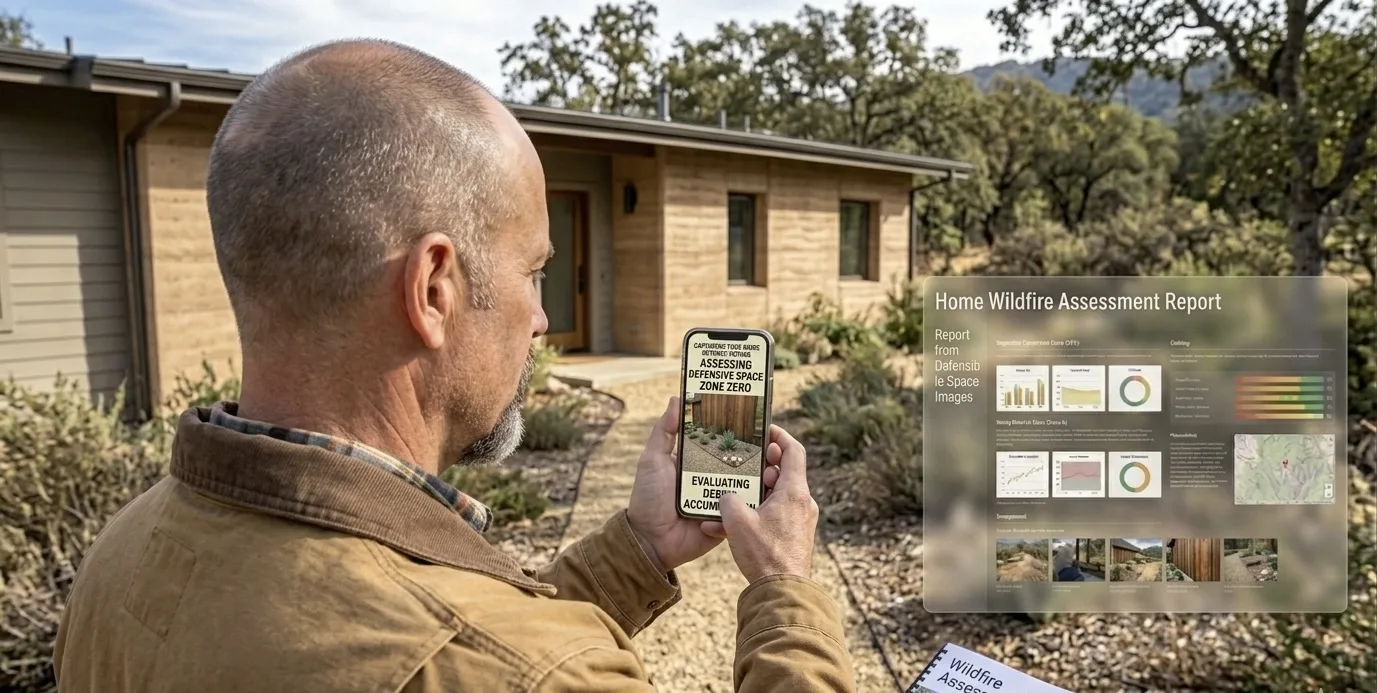
See What the Satellite Shows for Your Property
Enter your address and get a satellite pre-assessment showing your roof, vegetation, and fire zone. No email required. Takes about a minute. Then decide if you want the full on-site evaluation.
- Satellite view of your roof and surrounding area
- Fire zone classification for your address
- Full assessment with California code analysis available for $149
Takes about a minute. No account needed.
Continue Reading
Exterior Sprinkler Systems
Roof, eave, and perimeter - full product details
How It Works
Detection to activation in 3 stages
Ember Protection Guide
How embers destroy homes and what stops them
Cost and ROI
What a system costs and what it saves
Professional vs. DIY
Side-by-side comparison
California Wildfire Stats
The numbers behind the risk

Ask HydroIQ - Free AI Wildfire Assistant
HydroIQ is a free AI wildfire assistant that knows California wildfire law, insurance rules, local ordinances, and the science behind why homes burn. It covers communities across all nine Bay Area counties. No login, no cost.