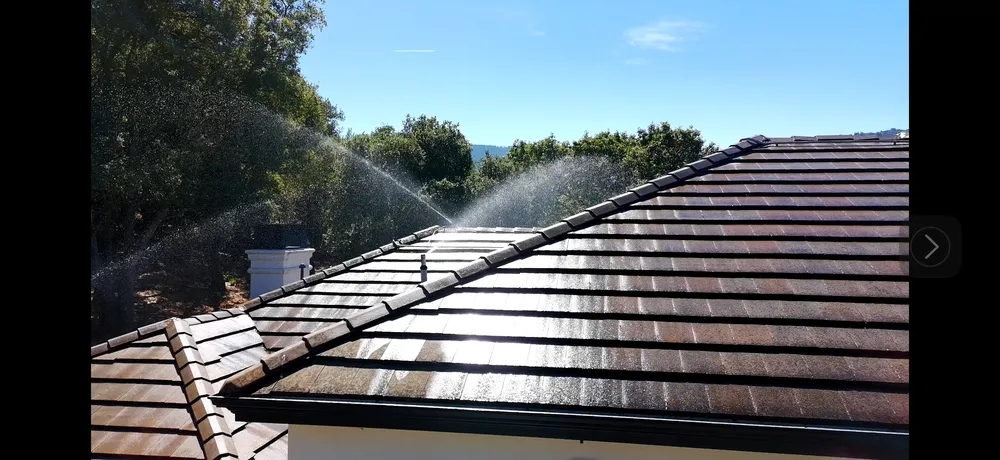
Exterior Wildfire Sprinkler Systems. You Cannot Stay and Fight. Your System Can.
When evacuation orders come, you leave. Our automated exterior wildfire sprinkler systems detect fire, activate on their own, and wet every surface where embers land. The system keeps working after you evacuate.
All work is performed by licensed and insured contractors.
What Your System Does
Dual Wildfire Detection
Satellite monitoring + on-property cameras. Two layers, zero gaps.
3 Automated Threat Levels
Pre-wet, escalate, maximum defense. No buttons. No calls.
100% Survival Rate
Every home with exterior sprinklers survived the Ham Lake Fire.
Roof, Eaves, Perimeter
Every surface where embers land, soaked before fire arrives.
In short: Exterior wildfire sprinklers are one layer of a complete wildfire defense. They drench your roof, eaves, and perimeter before fire arrives to prevent ember ignition. Combined with defensible space, home hardening, and dual detection, they dramatically increase home survivability. Sprinklers alone are not enough. Skeptical? See the evidence from real fires.
What Is an Exterior Wildfire Sprinkler System?
An exterior wildfire sprinkler system is an automated fire defense system installed on the outside of a home to protect it from wildfire. Unlike interior fire sprinklers that activate after fire enters a building, exterior sprinklers pre-wet the roof, eaves, siding, decks, and surrounding vegetation before fire arrives - preventing ember ignition on contact.
These systems are designed specifically for homes in California's Wildland-Urban Interface (WUI) and fire hazard severity zones. They activate automatically using dual detection (satellite monitoring + on-property cameras) - no one needs to be home.
Roof Sprinklers vs. Other Wildfire Protection Methods
| Feature | FireRoofs System | DIY Sprinklers | Garden Hose | Private Fire Service |
|---|---|---|---|---|
| Activates automatically | ✅ Yes | ❌ Manual | ❌ Manual | ❌ On-call |
| Works when evacuated | ✅ Yes | ❌ No | ❌ No | ⚠️ Maybe |
| Roof & eave coverage | ✅ Full | ⚠️ Partial | ❌ No | ⚠️ Varies |
| Dual detection | ✅ Satellite + camera | ❌ None | ❌ None | ❌ None |
| Class A foam option | ✅ Yes | ❌ No | ❌ No | ✅ Some |
| Licensed installation | ✅ Vetted, licensed & insured partners | ❌ No | ❌ N/A | ✅ Yes |
| Annual cost | $–$$ | $ | Free | $$$$ |
| Proven wildfire record | ✅ Yes | ⚠️ Limited | ❌ No | ⚠️ Varies |
Inside Sprinklers Fight Fire After It Gets In.
Roof Sprinklers Stop It Before It Starts.
Most people think of sprinklers on the ceiling. Those are interior fire sprinklers. They turn on when fire is already inside your home. By that point, the fire has already gotten through a wall, a vent, or a window. Interior sprinklers try to put out a fire that is already burning.
Roof sprinklers work the other way around. They sit on the outside of your home and turn on before the fire gets there. They soak the roof, the eaves, the siding, and the ground around your house so that when embers land, there is nothing dry enough to catch fire. Wet homes do not burn.
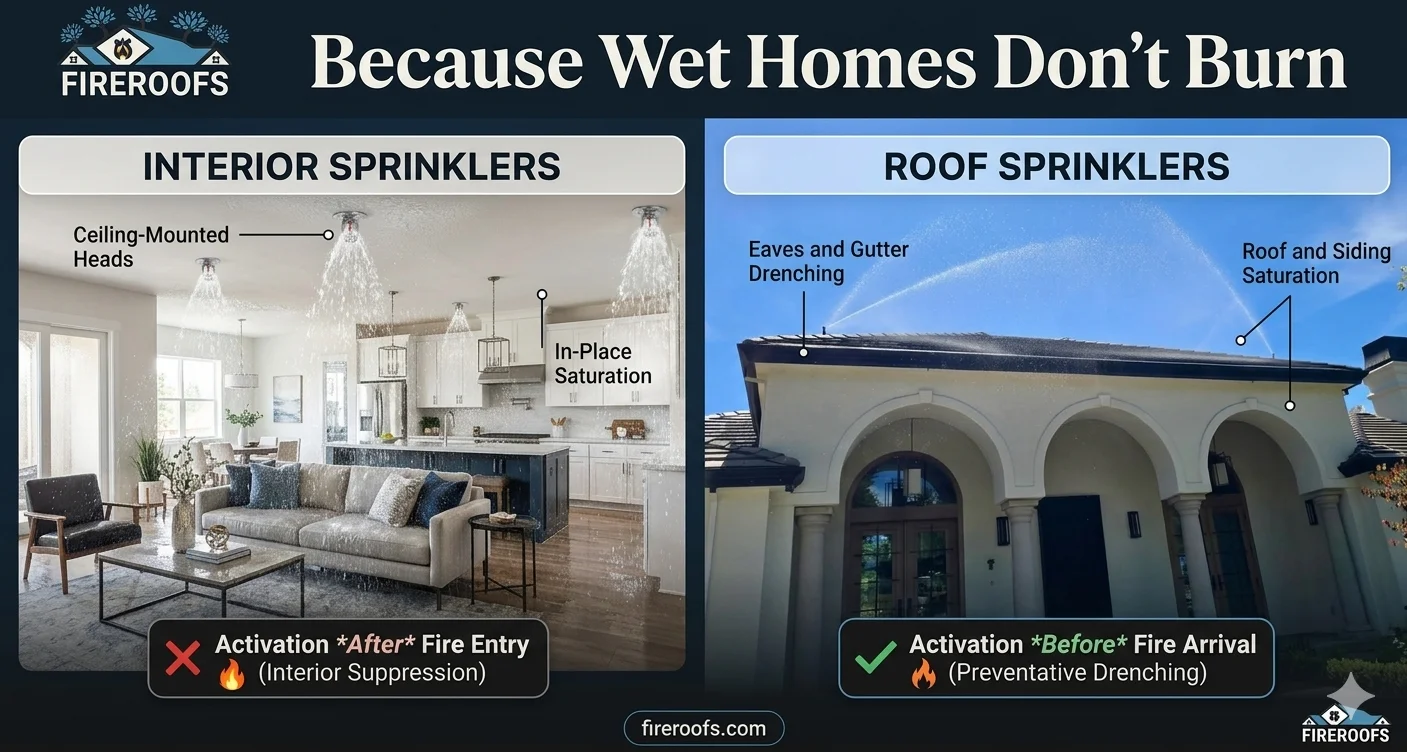
FireRoofs designs and coordinates automated roof sprinkler systems for homes in California wildfire zones. Every system is designed around your property: the slope, the wind direction, how close the trees and brush are, and where the weak spots are on your house. Eave sprinklers drench the soffits and vent openings where embers sneak in from below. Perimeter sprinklers soak the vegetation and ground around the foundation.
The system turns on by itself. Satellite monitoring and on-property cameras detect the threat. You do not need to be home. You do not need to press a button. The sprinklers activate and keep every surface wet until the danger passes.
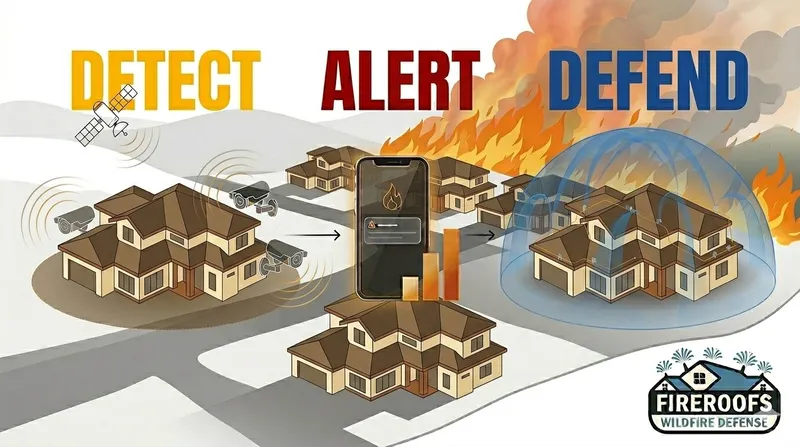
How Automated Exterior Sprinklers Defend Your Property
Detect
Dual wildfire detection monitors threats at two levels. Regional satellite wildfire monitoring tracks fire activity across a 5-mile radius. On-property cameras with intelligent fire detection watch the immediate surroundings. Both feed into the automated threat protocol.
Alert
When a threat is confirmed, the system escalates through three response levels. You get real-time notifications through the FireRoofs app. The system does not wait for you to press a button. It moves.
Defend
Exterior sprinkler zones activate in sequence based on threat direction. Roof sprinklers extend coverage past the roofline. Eave sprinklers protect the most vulnerable ignition points. Perimeter zones flood defensible space with continuous coverage. Optional Class A foam multiplies defense coverage. Foam is 100% biodegradable, non-toxic to plants, pets, and wildlife, and rinses off through the sprinklers.
Anatomy of a FireRoofs Roof & Eave Sprinkler System
Why Roof Sprinklers and Home Hardening Work Better Together
We design and coordinate exterior sprinkler systems for a living. We believe in them. But we will also be the first to tell you: roof sprinklers alone do not make a home fireproof. A wet roof with open vents, combustible plants touching the eaves, and dry pine needles piled against the foundation still has real vulnerabilities. Sprinklers are one layer. The homes that survive wildfires are the ones that combine sprinklers with solid defensible space and basic home hardening.
The data backs this up. During the 2007 Ham Lake Fire in Minnesota, a wind-driven wildfire burned 75,000 acres along the Gunflint Trail corridor. All 188 properties that had exterior sprinkler systems installed through a FEMA hazard mitigation grant survived the fire. Over 100 neighboring properties without sprinklers were destroyed. Firefighters walking into the sprinkler perimeters described it as "walking into a moisture bubble" where structures were untouched and the ground was cool and wet, while everything beyond the spray zone was scorched black.
Those 188 properties did not survive because of sprinklers alone. The FEMA program also required defensible space clearing and structure hardening as part of the grant. The combination of wet surfaces, cleared vegetation, and hardened structures is what produced a 100% survival rate across 75,000 burned acres.
How Embers Actually Destroy Homes
Most people picture a wall of flames rolling through their neighborhood. That is not how most homes are lost. Roughly 90% of home ignitions during a wildfire come from wind-driven embers, not direct flame contact. Embers travel a mile or more ahead of the fire front, and they do not need much to start a fire. They need a landing spot and something dry to burn.
Here is what that looks like in practice. An ember lands in your gutter, where pine needles and dry leaves have been sitting for months. It smolders, catches, and the flame creeps under the roofing material at the edge. Another ember gets blown into your attic vent. If that vent has standard 1/4-inch mesh or no screening at all, the ember passes right through. It lands on insulation or stored cardboard and smolders in your attic for hours. By the time anyone notices smoke, the fire is burning from the inside out.
Ladder fuels are another path. Bushes, hedges, or ornamental trees growing against your house act like a staircase for fire. Flames climb from ground-level vegetation into overgrown plants, up into the eaves, and catch the soffit or fascia board. Once fire gets into the eave area, it spreads into the attic through any gap or vent opening. Your roof could be Class A rated and in perfect condition, but fire coming from underneath, through the eaves and vents, bypasses the roof entirely.
That is why Zone 0, the five-foot noncombustible zone right against your house, matters so much. Nothing growing, nothing stored, nothing combustible within five feet of exterior walls, windows, vents, or the underside of decks. California made this mandatory under Assembly Bill 3074 because the data showed that the first five feet around a structure determine whether an ember can find fuel or not.
What Every Homeowner Should Do First
Clear Zone 0: nothing combustible within 5 feet of the house
No dead grasses, dry leaves, wood piles, firewood stacks, mulch, or combustible furniture within 5 feet of any wall, window, vent, or the underside of any deck. This is the buffer that decides whether an ember finds fuel or lands on something that will not burn.
Screen every vent with 1/8-inch metal mesh or finer
Attic vents, soffit vents, gable vents, and foundation vents are the most common ember entry points. An ember that gets through a vent can smolder inside your attic for hours before anyone sees smoke. Replace all screens with 1/8-inch noncombustible mesh. In very high fire severity zones, 1/16-inch mesh is even better.
Remove ladder fuels from eaves and walls
Any plant, bush, or tree branch touching or overhanging your eaves gives fire a direct path from the ground to the roof. Trim all vegetation so nothing is within 10 feet of the roofline. Remove any plant or shrub growing against the house. Fire climbs ladder fuels into the eave area and can catch the soffit and fascia before the roof sprinklers ever activate.
Class A roof, enclosed eaves, and fire-resistant siding
Class A roofing materials like concrete tile, metal, or composite shingle resist ember ignition on the roof surface. Enclosed (boxed) eaves prevent embers and flames from reaching the underside of the roof deck. Ignition-resistant siding stops radiant heat from catching the walls. See Fire Marshal-listed products at fireroofs.com/wui-building-products.
Clean gutters and roof valleys every season
Leaf litter, pine needles, and dry debris in gutters and roof valleys are exactly what embers are looking for. One glowing ember in a clogged gutter can start a fire at the roof edge. Regular cleaning removes the fuel before fire season.
Maintain defensible space in Zones 1 and 2
Zone 1 (5 to 30 feet from the house) should have low, well-spaced, well-watered plants with no dead material. Zone 2 (30 to 100 feet) should have reduced fuel loads, pruned lower tree branches, and separation between tree canopies. This slows the fire and reduces ember production as it approaches.
Where Roof Sprinklers and Exterior Sprinklers Fit In
Once your home is hardened and your defensible space is clear, exterior sprinklers become the active defense layer that ties everything together. Roof sprinklers keep the roof surface wet so embers cannot catch. Eave sprinklers drench the soffit, fascia, and vent openings from the outside, stopping embers and flames from getting under the roof from below. Perimeter sprinklers soak the vegetation and ground in Zone 1, the 20 to 25 feet closest to the house, to reduce ember production and eliminate dry fuel.
If you already have a Class A roof, your roof sprinklers can be positioned at the corners of the house to throw water outward, covering that critical 20 to 25 foot perimeter around your home. The roof itself is already fire resistant. The sprinkler coverage shifts to protecting the eaves, walls, windows, and the area around the foundation where embers collect.
The combination works because each layer covers a gap the others cannot. Defensible space slows the fire and reduces the volume of embers hitting your property. Home hardening removes the easy ignition points so embers that land have nothing to catch on. Roof sprinklers and eave sprinklers keep surfaces wet so the embers that do land are extinguished on contact. Zone 1 perimeter sprinklers create a wet buffer that stops ground fire from reaching the structure and knocks down embers before they arrive.
This is the same multi-layer approach that produced the 100% survival rate across 188 properties in the Ham Lake Fire. Wet surfaces, cleared fuel, hardened structures, and sprinklers working together.
The Full Picture: What a Protected Home Looks Like
FireRoofs coordinates the full scope: defensible space management, home hardening assessment, exterior sprinkler system design, and documentation of every mitigation action for your insurance carrier, with installation delivered by vetted, licensed and insured partner contractors. That documentation is what helps homeowners qualify for premium discounts under California Regulation 2644.9, or get off the FAIR Plan entirely.
Three Levels of Exterior Sprinkler Protection
Keystone
Essential Roof Defense
- Roof sprinklers with extended coverage past the roofline
- Commercial-grade copper piping throughout
- Smart controller with FireRoofs app connection
- Manual activation from your phone, anywhere
- System automation via regional satellite wildfire monitoring
- Automated pre-wetting triggered by satellite detection with homeowner cancel window
Guardian
Full Perimeter Defense with Dual Wildfire Detection
Everything in Keystone, plus:
- Eave sprinklers protecting Zone Zero, walls, and windows from radiant heat
- Cameras with intelligent fire detection and sensors mounted on your home
- Dual wildfire detection: regional satellite monitoring combined with on-property camera detection
- Three-level automated threat activation with homeowner cancel window
Fortress
Maximum Protection with Class A Foam
Everything in Guardian, plus:
- Class A foam injection system for roof and eave sprinklers during highest threat activation
- Foam clings to surfaces, holds moisture longer than water alone, and creates a fire-resistant barrier
- Same formulation used by wildland fire agencies
- 100% biodegradable, non-toxic to plants, pets, and wildlife. Rinses off through the sprinklers after the event
Designed for Homes in California's Wildfire Zones
FireRoofs exterior sprinkler systems are built for homeowners in the wildland-urban interface who face real fire exposure and can't get adequate insurance coverage.
If your home is in a Very High Fire Hazard Severity Zone, or you've been dropped by your carrier and pushed to the FAIR Plan, an automated exterior sprinkler system is one of the strongest risk-reduction measures available. Some insurance carriers recognize exterior wildfire sprinkler systems when evaluating coverage.
While other companies expand coast to coast, we went deeper into the Bay Area's fire corridors: Los Gatos, Saratoga, Woodside, Portola Valley, Los Altos Hills, Cupertino, Scotts Valley, and more across the Bay Area and Santa Cruz Mountains. 50+ years of local construction and irrigation expertise. Every system designed for the specific terrain, installed by our licensed partner contractors.
What Installation Looks Like
Every system starts with a free on-site evaluation: water pressure testing, roof and eave inspection, Zone Zero walkthrough, and a full perimeter assessment. The evaluation takes 45 to 60 minutes. You'll have a proposal within one to three business days.
Installation timelines are property-specific. Every system is commissioned and tested before handoff. The entire system is exterior-mounted with copper piping throughout. No roof penetrations. No interior wall work.
Home Wildfire Sprinkler System Installer Serving the Bay Area
Searching for a home wildfire sprinkler system installer near you? FireRoofs designs and coordinates automated exterior wildfire sprinkler systems across the Santa Cruz Mountains, the Peninsula and the South Bay. Headquartered in Scotts Valley, we work with local, vetted, licensed and insured partner contractors with 50+ years of combined construction and irrigation experience.
We focus on 41 high-risk WUI communities rather than spreading coast to coast, so each wildfire roof sprinkler installation is engineered for your specific terrain, water source, and roofline. Select your community below to see local fire history and risk, or call 831-705-0888 to schedule an on-site evaluation.
Santa Clara County
San Mateo County
Santa Cruz County
Don't see your town? We serve many more communities across the Bay Area's fire corridors. View all service areas and check your community's wildfire risk.
Outside the Bay Area?
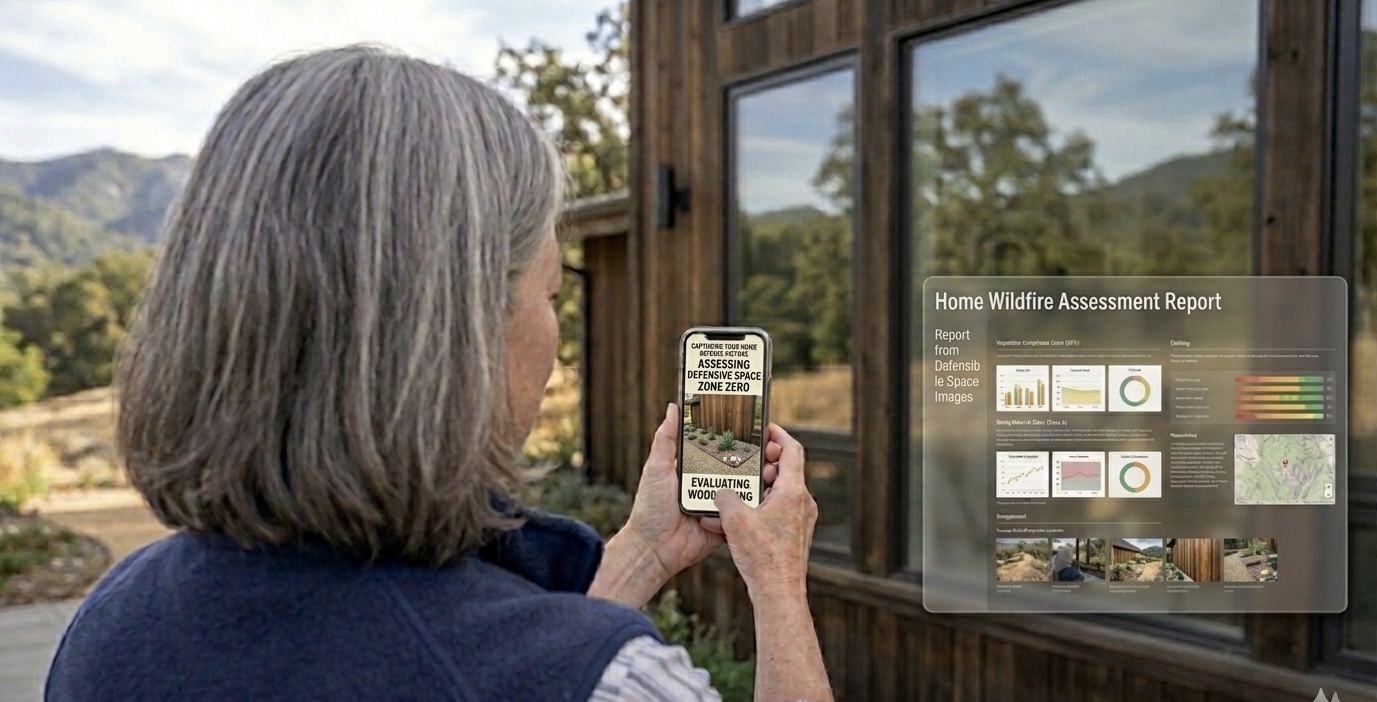
Our on-site installation work is limited to 41 Bay Area and Peninsula communities. If your property is elsewhere in California, you can still get a professional wildfire risk assessment. Our California Wildfire Assessment Report covers your parcel, structures, vegetation, and access using satellite imagery and public fire-history data, with prioritized hardening recommendations you can hand to any local contractor.
Get a California Wildfire Assessment Report ($149)California Codes and Standards for Exterior Sprinkler Systems
Exterior wildfire sprinkler systems in California operate within a regulatory framework that covers building codes, fire codes, and insurance mandates. Here are the key references homeowners and contractors should know:
California Fire Code Chapter 49 (WUI Fire Areas)
Chapter 49 of the California Fire Code outlines requirements for buildings in Wildland-Urban Interface fire areas. It covers exterior materials, defensible space, and water supply standards for fire protection systems. Exterior sprinkler systems installed in WUI zones must account for the higher water pressure and flow rates Chapter 49 demands compared to standard residential installations.
NFPA 13 and Exposure Protection
Most exterior sprinkler installations reference NFPA 13 (Standard for the Installation of Sprinkler Systems), specifically the exposure protection sections covering exterior walls and projections. FireRoofs systems are designed to meet or exceed the coverage and flow requirements outlined in these standards. Every system is installed by vetted, licensed and insured partner contractors.
California Chapter 7A (Building Standards for WUI)
Chapter 7A of the California Building Standards Code sets requirements for exterior construction materials and assemblies in fire hazard severity zones. While Chapter 7A focuses on passive hardening (roofing, siding, vents, windows), exterior sprinkler systems complement these standards by adding an active defense layer. Together, passive hardening and active sprinklers address both radiant heat and ember exposure. Browse our Home Hardening Products Guide for every Fire Marshal-listed material we specify.
California Insurance Code Section 2644.9 (Safer from Wildfires)
Section 2644.9 requires admitted insurance carriers in California to factor documented wildfire mitigation into their rate calculations across 12 specific categories. A professionally installed exterior sprinkler system generates the kind of third-party documentation that underwriters evaluate when assessing risk. FireRoofs provides carrier-ready documentation with every installation. See our wildfire insurance discounts guide for details.
AB 3074 and the Board of Forestry Zone 0 rulemaking
AB 3074 directed California to establish a noncombustible Zone 0 within 0 to 5 feet of a structure. The statewide Zone 0 regulation is still in draft as of August 2026; some local jurisdictions already require a 5-foot noncombustible zone on new construction. Exterior sprinkler eave coverage helps protect this zone by wetting walls, windows, and the immediate perimeter. Learn more about defensible space requirements.
What Does an Exterior Sprinkler System Cost?
Pricing depends on property size, roof complexity, number of sprinkler zones, water supply configuration, and the system tier you choose (Keystone, Guardian, or Fortress). Every FireRoofs installation is custom-designed after an on-site evaluation, so there is no one-size-fits-all number.
What we can tell you: professional automated exterior sprinkler systems with dual detection, copper piping, and licensed installation typically start in the mid five figures for standard Bay Area homes. Larger properties, estates, or properties requiring water tanks, backup power, or Class A foam integration are higher.
The gap between a professionally engineered system and a DIY setup is not just quality. It is whether the system actually functions when fire reaches the property and no one is home. DIY sprinklers require someone to physically turn them on. Automated systems with dual detection do not.
Many homeowners finance the installation over time. For a detailed breakdown of factors that affect pricing, see our full cost guide.
Maintenance and Annual Upkeep
Exterior sprinkler systems are designed for low maintenance, but they are not zero maintenance. The system sits exposed to California weather year-round and needs periodic attention to stay ready.
Annual system test and inspection
Each zone is run to verify full coverage, check for clogged nozzles, and confirm water pressure at every head. Cameras and sensors are tested for detection accuracy. FireRoofs offers annual service visits for all installed systems.
Nozzle and head cleaning
Mineral deposits, spider webs, and debris can clog sprinkler heads over time. Nozzles are inspected and cleaned during the annual service visit. Between visits, homeowners can visually check heads for obvious blockages.
Water supply verification
Water pressure and flow are tested at the source. If the system draws from a tank or pool, levels and pump function are verified. Automatic switchover between sources is tested to confirm failover works.
Controller and connectivity check
The smart controller, app connection, and satellite/cellular connectivity are verified. Firmware updates are applied if available. Backup power sources (generator or battery) are tested.
Copper piping inspection
Copper piping is extremely durable, but joints and fittings are visually inspected for leaks or corrosion. In the Bay Area climate, copper typically lasts decades without issues.
Sprinkler Systems & App Control
Roof sprinklers, perimeter nozzles, eave coverage, and the FireRoofs mobile app that puts system control in your pocket.
Common Questions About Exterior Sprinkler Systems
How are exterior sprinkler systems different from interior fire sprinklers?
Interior sprinklers activate after fire is inside the structure. Exterior sprinkler systems drench the roof, eaves, and perimeter before fire arrives, keeping surfaces wet so embers and radiant heat can't start a fire.
Do exterior sprinklers actually stop wildfires?
Exterior sprinklers do not stop the wildfire itself. They stop your home from igniting. Around 90% of homes lost to wildfire are ignited by wind-blown embers and radiant heat, not direct flame. By keeping the roof, eaves, siding, and surrounding vegetation wet, an exterior wildfire sprinkler system removes the dry fuel embers need to catch. It is one layer of a complete defense that works best alongside defensible space and home hardening.
How close does a fire have to be before the system activates?
The FireRoofs system uses dual wildfire detection. Layer one is regional satellite wildfire monitoring that watches for fire activity within roughly a 5-mile radius of your property. Layer two is on-property cameras with intelligent fire detection that confirm the threat on site. The system escalates through automated threat levels and can pre-wet surfaces well before flames reach the property line.
Can I install an exterior wildfire sprinkler system myself?
DIY kits exist, but they rely on manual activation, which means you have to be home and turn them on before you evacuate. A professionally installed automated system activates on its own through dual detection and keeps working after you leave. FireRoofs designs and coordinates every system with vetted, licensed and insured partner contractors and plans the water supply, coverage zones, and backup power for your specific property.
Do I need to be home for the system to work?
No. The system activates automatically through dual wildfire detection. Satellite monitoring and on-property cameras detect threats and trigger the appropriate response level without anyone pressing a button.
What happens if I lose power during a wildfire?
The system relies on the homeowner's backup power source, typically a generator or Tesla Powerwall. We design every system with power continuity in mind during the evaluation.
How much water does an exterior sprinkler system use?
Water consumption depends on the size of your property and the number of zones in your system. Systems include automatic water source switchover between municipal supply, wells, tanks, or pools to maintain pressure and supply.
Can an exterior sprinkler system help with homeowners insurance?
Some insurance carriers recognize exterior wildfire sprinkler systems when evaluating wildfire coverage eligibility. A professionally installed and documented exterior sprinkler system can strengthen a homeowner's position when applying for private coverage or supplementing FAIR Plan limits. Results vary by carrier and property.
What California building codes apply to exterior sprinkler systems?
There is no California statute that requires exterior wildfire sprinklers on homes. Chapter 7A (and, from 2026, the California Wildland-Urban Interface Code) governs exterior materials; PRC 4291 governs defensible space; Regulation 2644.9 governs how insurers must treat documented mitigation. FireRoofs designs systems to those surrounding standards and documents them for your carrier.
How much does an exterior sprinkler system cost?
Most whole-home exterior sprinkler systems fall in the mid five figures. The final price depends on the size of your home, the number of protection zones, your water source, and site access. FireRoofs provides a detailed cost breakdown during your property evaluation. Visit our cost page to learn more about what goes into the price.
What maintenance does the system need each year?
We recommend an annual inspection that includes a full system flow test, nozzle cleaning, water supply verification, controller and sensor check, and a visual review of all piping and connections. Regular maintenance keeps the system ready to perform when it matters. FireRoofs offers annual service plans for every system we design and coordinate.
Does the system work in freezing weather?
The Bay Area rarely sees freezing temperatures, so most systems use a standard wet-pipe design. For homes in higher elevations like the Santa Cruz Mountains or areas near Lake Tahoe, we can design a dry-pipe configuration that keeps water out of the lines until the system activates. Every system is engineered for the specific climate of your property.

Ask HydroIQ - Free AI Wildfire Assistant
HydroIQ is a free AI wildfire assistant that knows California wildfire law, insurance rules, local ordinances, and the science behind why homes burn. It covers communities across all nine Bay Area counties. No login, no cost.
Installing an exterior sprinkler system is one of the most tangible steps a homeowner can take toward improving their wildfire insurability. Under California's Safer from Wildfires regulation, admitted carriers are required to factor documented mitigation into their rate calculations. A professionally installed and commissioned sprinkler system generates the kind of verifiable, third-party documentation that underwriters look for when evaluating risk. FireRoofs provides that documentation with every system, formatted specifically for carrier submission.
Wildfire Mitigation Credits and Documentation
California Insurance Discounts Guide
Safer from Wildfires regulation, CDI mitigation categories, FAIR Plan context, and what underwriters evaluate.
Read the guideRequest a Sample Evidence Packet
Want to see what a carrier-ready evidence packet looks like? Contact our team and we will share a sample directly with you.
Contact usReviewed by Shawn Gardner and Walt Mullins
Co-founders of FireRoofs with over 50 years of combined experience in construction, irrigation, and wildfire defense across the San Francisco Bay Area. All work is performed by licensed and insured contractors. Learn more about us
Last updated August 2026
Sources and References
How Vulnerable Is Your Roofline?
Before choosing a sprinkler system, see what the satellite shows about your property. Our pre-assessment covers your roof material, vegetation proximity, and fire zone classification. It takes about a minute.
- Aerial view of your roof and surrounding landscape
- Defensible space and vegetation analysis
- Full assessment with sprinkler recommendations available
Takes about a minute. No account needed.