Summary from the FireRoofs Team: Don't leave garden sprinklers or hoses running when you evacuate. CAL FIRE says running water can drop the water pressure firefighters need, and a roof you wet on the way out dries long before embers arrive. If you want water on your home while you're gone, it has to come from a system built for wildfire: its own water, short cycles, and detection that turns it on when the fire is actually close.
Turning on the sprinklers and driving away feels like the smart move. Fire officials say it can make things worse.
This one is for estate homes in the hills above Saratoga and Los Gatos, in Los Altos Hills and up in the Santa Cruz Mountains. Out here an evacuation order can come with little warning, and every house on the ridge shares the same water system.
Should You Leave Sprinklers On When You Evacuate?
No. CAL FIRE's Ready for Wildfire evacuation guide says it in one line: "Don't leave sprinklers on or water running; they can affect critical water pressure." (CAL FIRE evacuation guide)
Lake Tahoe found out what happens when people do it anyway. During the Caldor Fire on September 1, 2021, the Tahoe Fire and Fuels Team said evacuated homeowners had left irrigation, hoses and roof sprinklers running. Their warning: "wide-scale activation of sprinklers and garden hoses dramatically reduces water pressure in the entire community." (Tahoe Fire and Fuels Team)
North Tahoe Fire Chief Steve Leighton asked residents to "turn off any outdoor irrigation, roof sprinklers or hoses before you evacuate to ensure our firefighters have ample water and enough water pressure to safely fight the fire." (CBS Sacramento)
Why Doesn't a Sprinkler Left Running Save the House?
Three reasons.
- It starts too early. Turn it on at 2 p.m. and it's watering the lawn hours before embers show up. The Tahoe team said spraying a roof before you leave "is not effective, as the roof will dry very quickly."
- It drains the shared supply. Every open tap pulls from the same mains and tanks the hydrants use. When pressure drops, it drops for the engines too.
- It waters the wrong things. A lawn head doesn't reach the roof, the eaves or the vents. That's where embers get in.
What Makes an Exterior Fire Sprinkler System Different?
It's built for the way homes actually burn.
| Garden sprinkler left on | FireRoofs exterior fire sprinklers | |
|---|---|---|
| Water source | City water main | Your pool or storage tanks, directly or as an automatic backup |
| When it runs | From the moment you leave, nonstop | When a fire is close, in short cycles with rest between |
| What gets wet | Lawn and shrubs | Roof, eaves, walls, windows and the first 5 feet |
| Power outage | Only works while city pressure holds | Runs on your home's generator or whole-home battery |
| Who turns it on | You, on your way out | Dual wildfire detection, so no one has to be home |
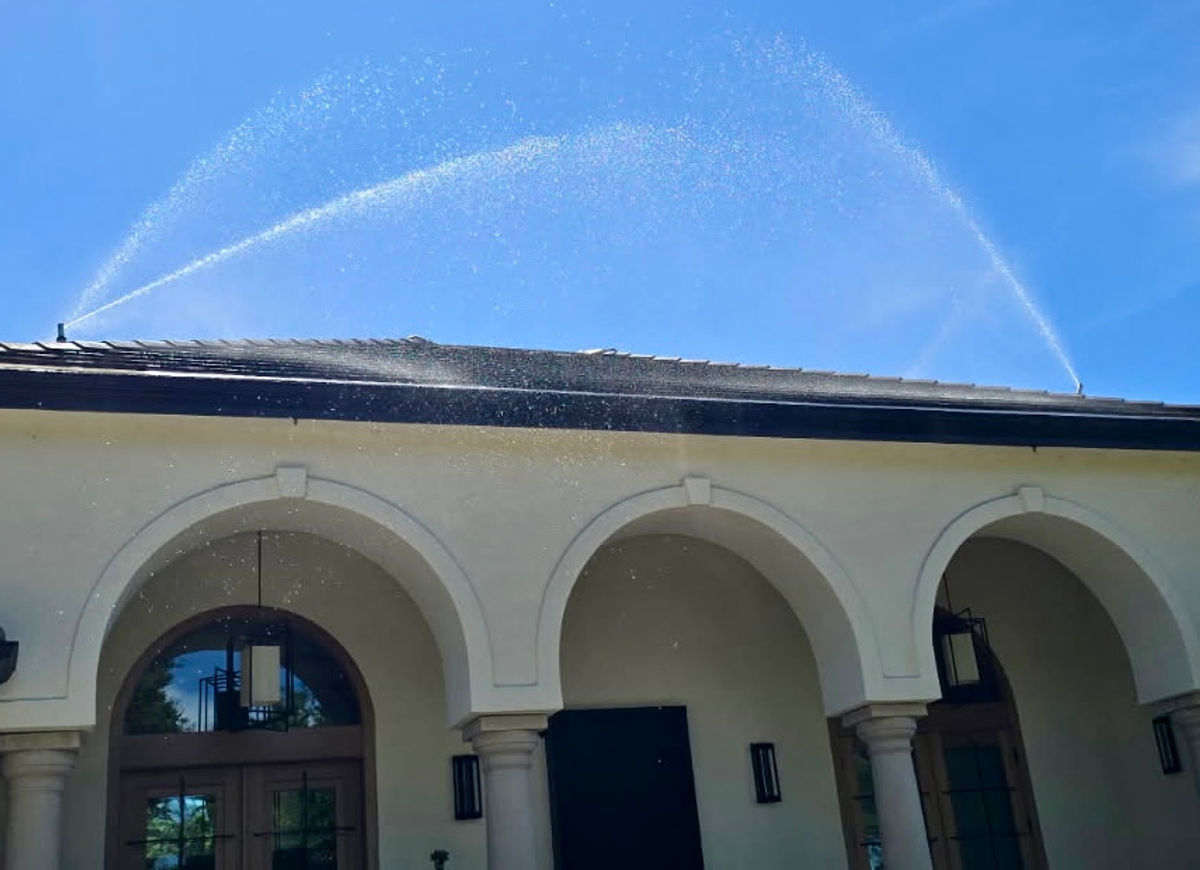
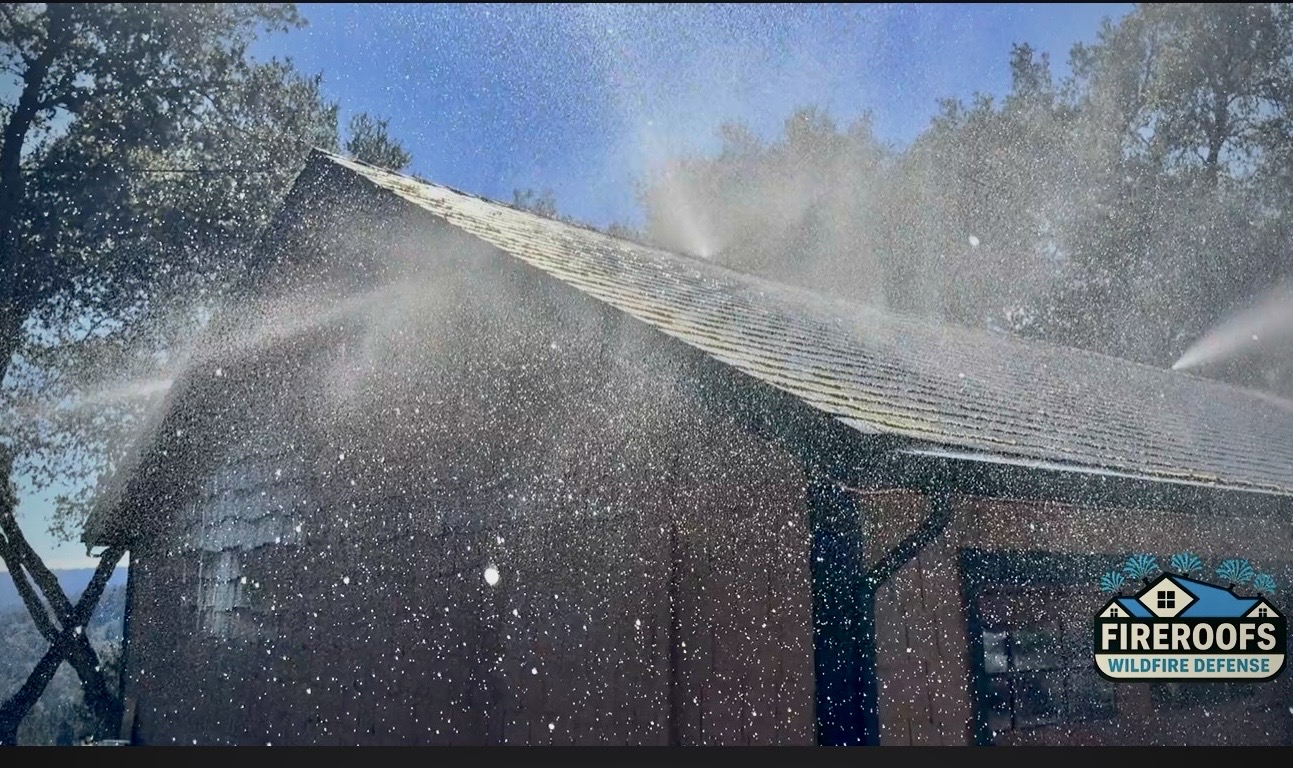
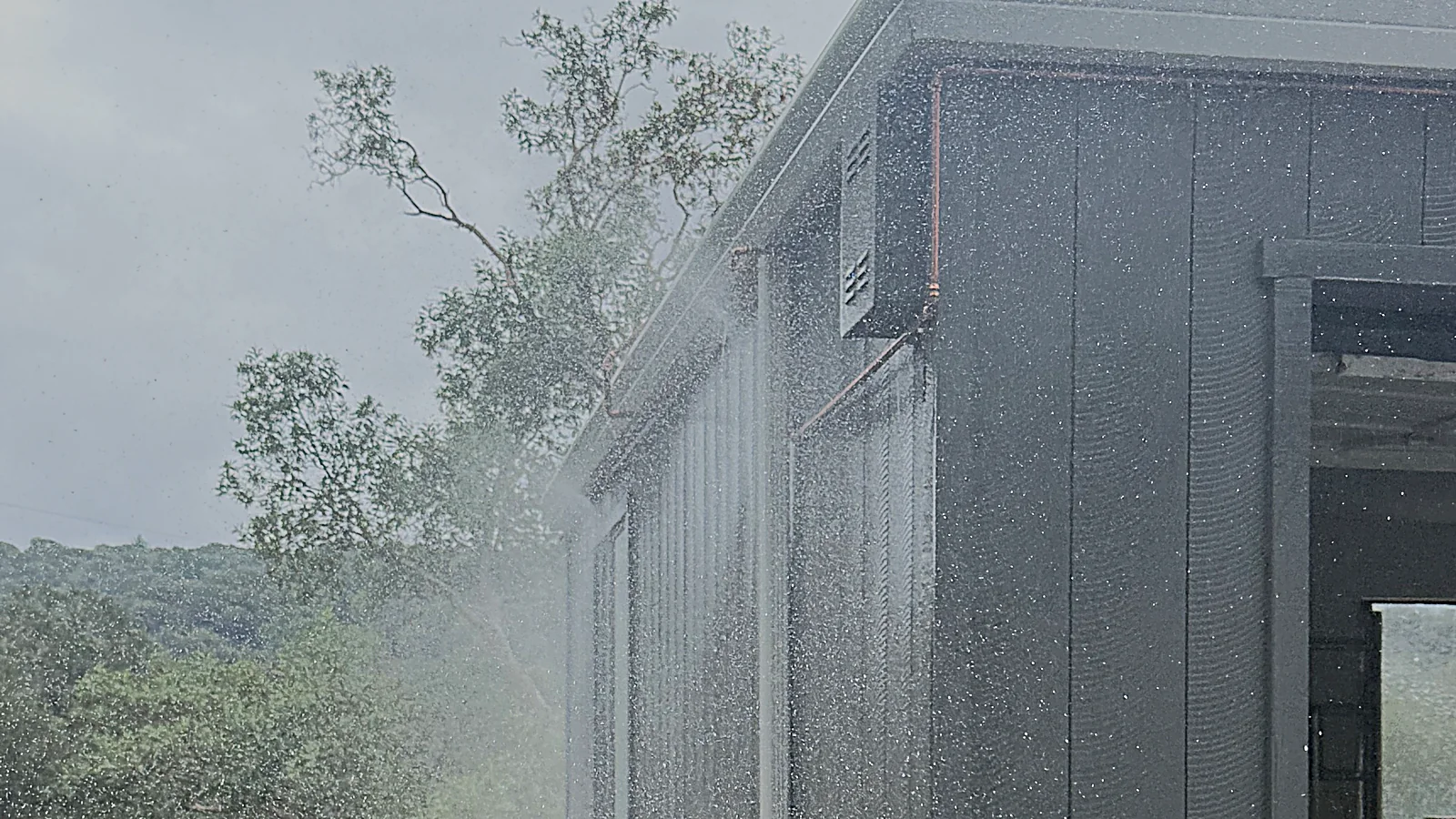
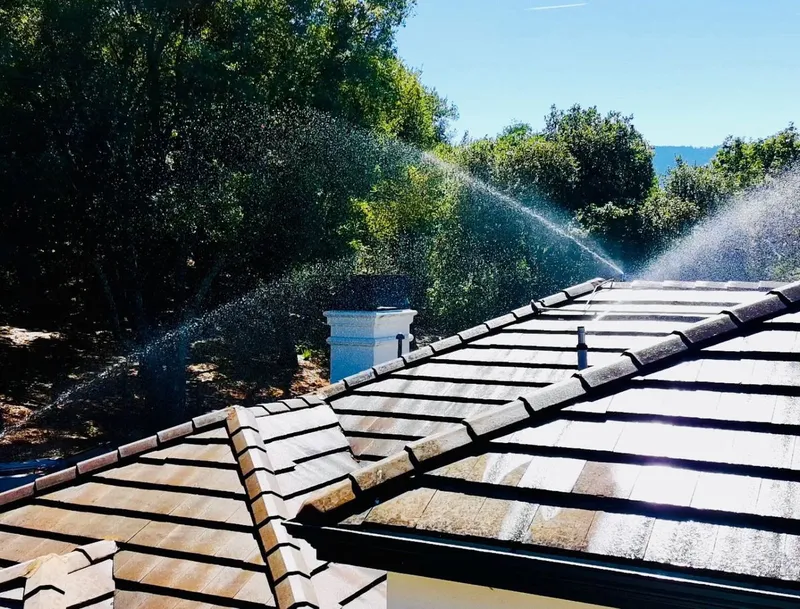
Roof rotors throw water up to 35 feet across the roof. Copper lines tucked under the eaves wet the walls, windows, garage doors and the 5 feet around the house, the area fire scientists call Zone 0.
Water is the part most people miss. If your property has a pool or water storage tanks, FireRoofs can connect the sprinklers straight to that water, or set it up as a backup that switches on automatically if pressure to the house drops. Either way the system has water of its own when the neighborhood's supply is under strain. More on that in our guide to water supply for exterior wildfire sprinklers.
Then there's timing. FireRoofs uses dual wildfire detection: regional satellite wildfire monitoring plus cameras with intelligent fire detection and sensors at your home. When a fire is close, the smart controller turns the sprinklers on and alerts your phone. You don't have to be there.
That's not theory. In August 2026 the Fern Fire started 1.2 miles from a FireRoofs client's home in the Santa Cruz Mountains. The camera at the house saw it, and the system turned on by itself before regional satellite data had picked up the fire. The home came through without damage. (Fern Fire case study)
One honest note. No system guarantees a home survives a wildfire. Exterior fire sprinklers are a layer of defense, and they work best on a home with ember-resistant vents, a sound roof and a clear first 5 feet.
What Should You Do With Your Water Before You Evacuate?
Use this checklist. Items 1 to 5 come straight from CAL FIRE's evacuation guide.
- Turn off garden sprinklers, drip irrigation and hoses.
- Connect garden hoses to outside spigots so firefighters can use them.
- Fill buckets with water and set them around the house.
- Leave exterior lights on so crews can see your home in smoke or at night.
- Shut off gas at the meter and turn off propane tanks.
- If you have an automated exterior fire sprinkler system, leave it alone. It's built to run without you.
For the go-bag and route plan, see our wildfire evacuation plan.
Frequently Asked Questions
Should I wet my roof before I evacuate?
No. During the 2021 Caldor Fire, the Tahoe Fire and Fuels Team said spraying a roof before you leave is not effective because the roof dries very quickly. It also pulls from the water firefighters need. Water helps when it lands while the fire is close, again and again. That's the job of an automated exterior fire sprinkler system.
Will an exterior fire sprinkler system take water from firefighters?
FireRoofs designs around that. When a property has a pool or water storage tanks, the system can draw from that water directly, or use it as a backup that takes over automatically if pressure to the house drops. It also runs in short cycles with rest between them, not nonstop like a garden sprinkler left on.
Do wildfire sprinklers work when the power goes out?
Yes, with backup power. A FireRoofs system runs on your home's generator or whole-home battery, so a power shutoff doesn't stop it. That matters in the Bay Area hills, where power can be cut ahead of high-wind fire weather.
Do I have to be home to turn on wildfire sprinklers?
No. FireRoofs uses dual wildfire detection: regional satellite wildfire monitoring plus cameras with intelligent fire detection and sensors at your home. When a fire is close, the smart controller turns the sprinklers on by itself and alerts your phone.
How far do roof sprinklers spray?
FireRoofs roof rotors throw water up to 35 feet. They sit near the roof edges, so the spray covers the roof and roughly 20 to 25 feet around the house. Copper eave lines wet the walls, windows and the first 5 feet, where embers land and start spot fires.
Should I leave my garden hoses connected when I evacuate?
Yes, but turned off. CAL FIRE's evacuation guide says to connect garden hoses to outside spigots so firefighters can use them, and to fill buckets of water around the house. Just don't leave the water running.
The Bottom Line
Don't leave the garden sprinklers running. It drains the water firefighters need, and the roof dries before the embers arrive.
If you want water on your home while you're gone, it has to come from your own supply and start when the fire is close. That's what FireRoofs exterior fire sprinklers do. Request a Private Consultation and we'll walk your property, your water and your roof with you.
Sources
FireRoofs installs are done by a licensed, insured partner.