
Case study
Fern Fire, August 2026: The System Turned On by Itself
Written by the FireRoofs Team, November 2026
In August 2026 the Fern Fire started 1.2 miles from a FireRoofs client's home in the Santa Cruz Mountains. The home's on-property camera spotted it, and the exterior fire sprinklers turned on by themselves before regional satellite data had picked up the fire.
What happened
The camera mounted at the home had a clear line of sight toward the ridge where the fire started. It detected the fire and the system began wetting the roof, eaves and the ground around the house on its own. Regional satellite monitoring had not yet registered the fire. Fire crews held the Fern Fire to a small area, and the home came through without damage.
The homeowner, Robert M., confirmed that the cameras on his house saw the Fern Fire and turned the system on before the fire showed up on satellite.
The technology that caught it
The camera looks for fire. The sensors confirm it. Then the sprinklers go to work. Four of these photos are from this home.
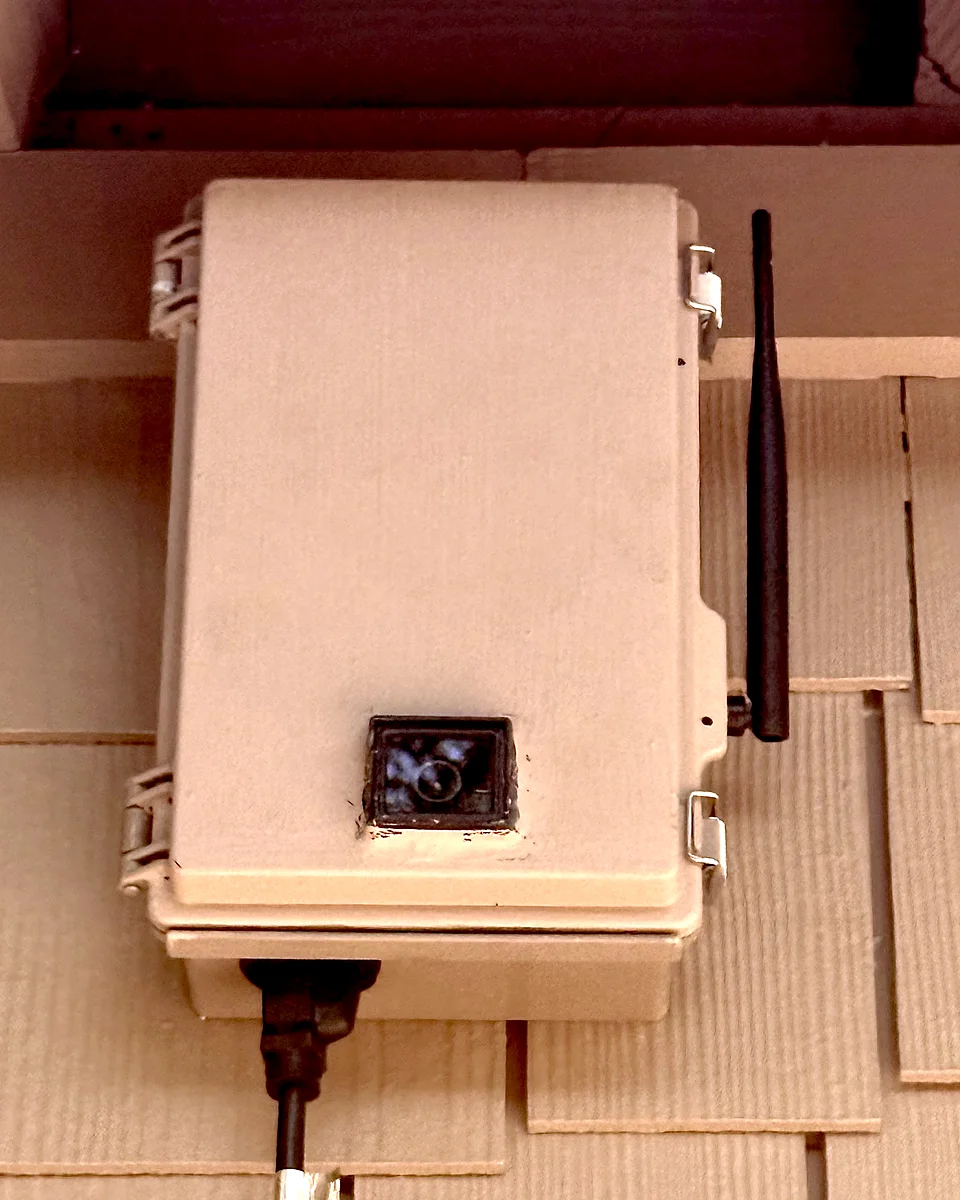
The fire camera
A 120° wide angle lens watches the property and the hillside around it. Its only job is looking for fire.
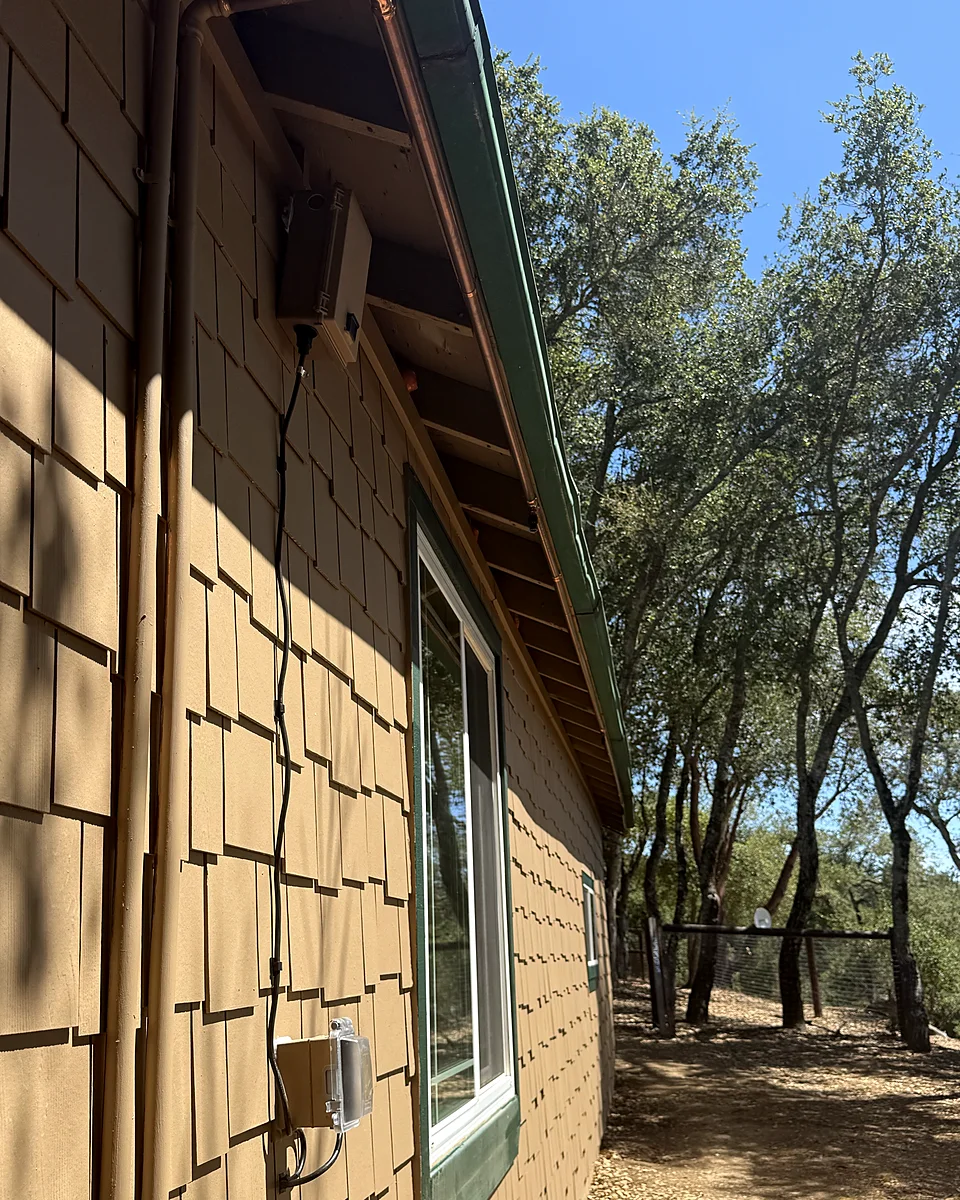
Watching the hillside
Mounted high under the eave with a clear view of the trees and slope, where a wildfire would come from.
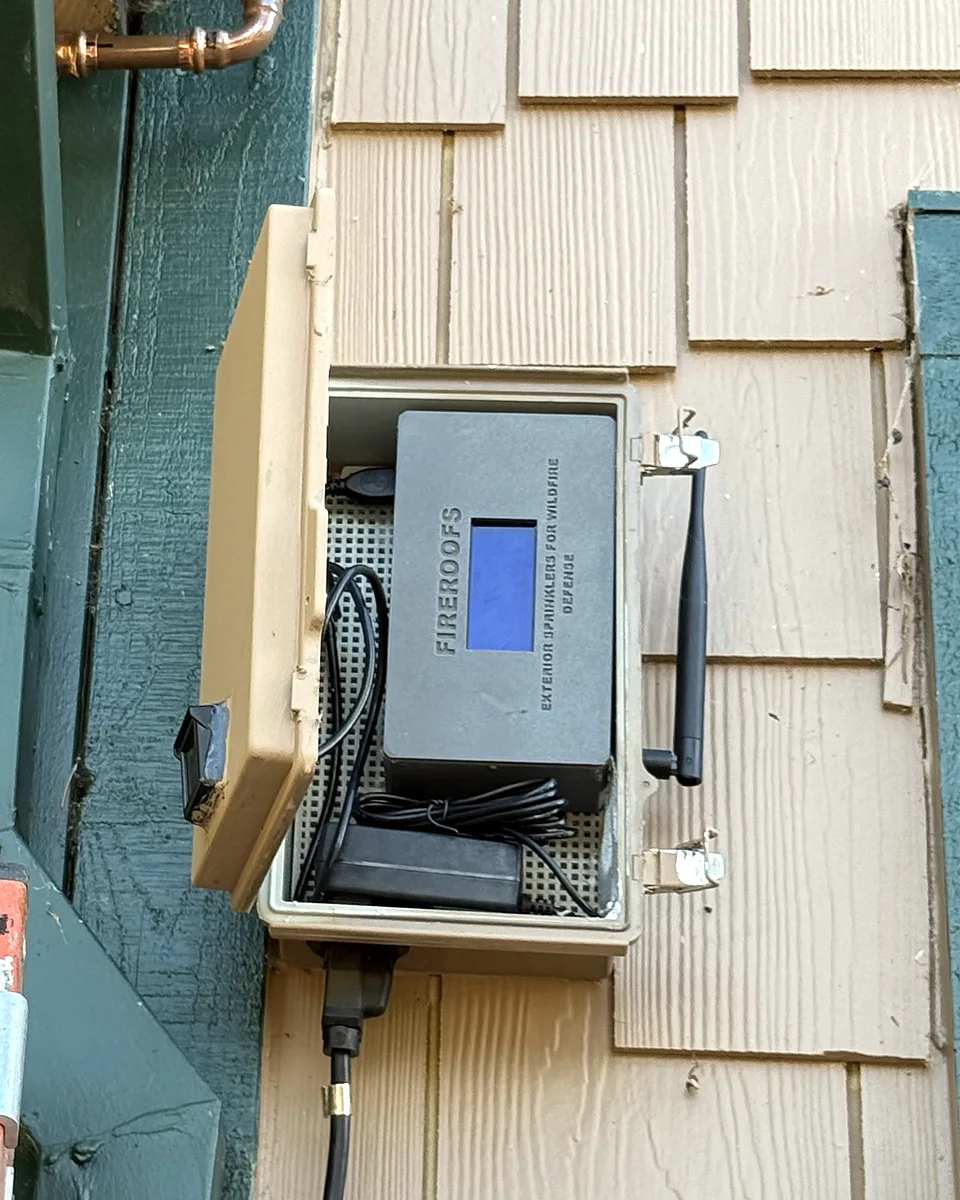
The sensors that confirm it
Sensors on the box check temperature, particulate matter (smoke particles) and gases. They confirm that what the camera sees is a real fire threat before the system starts.
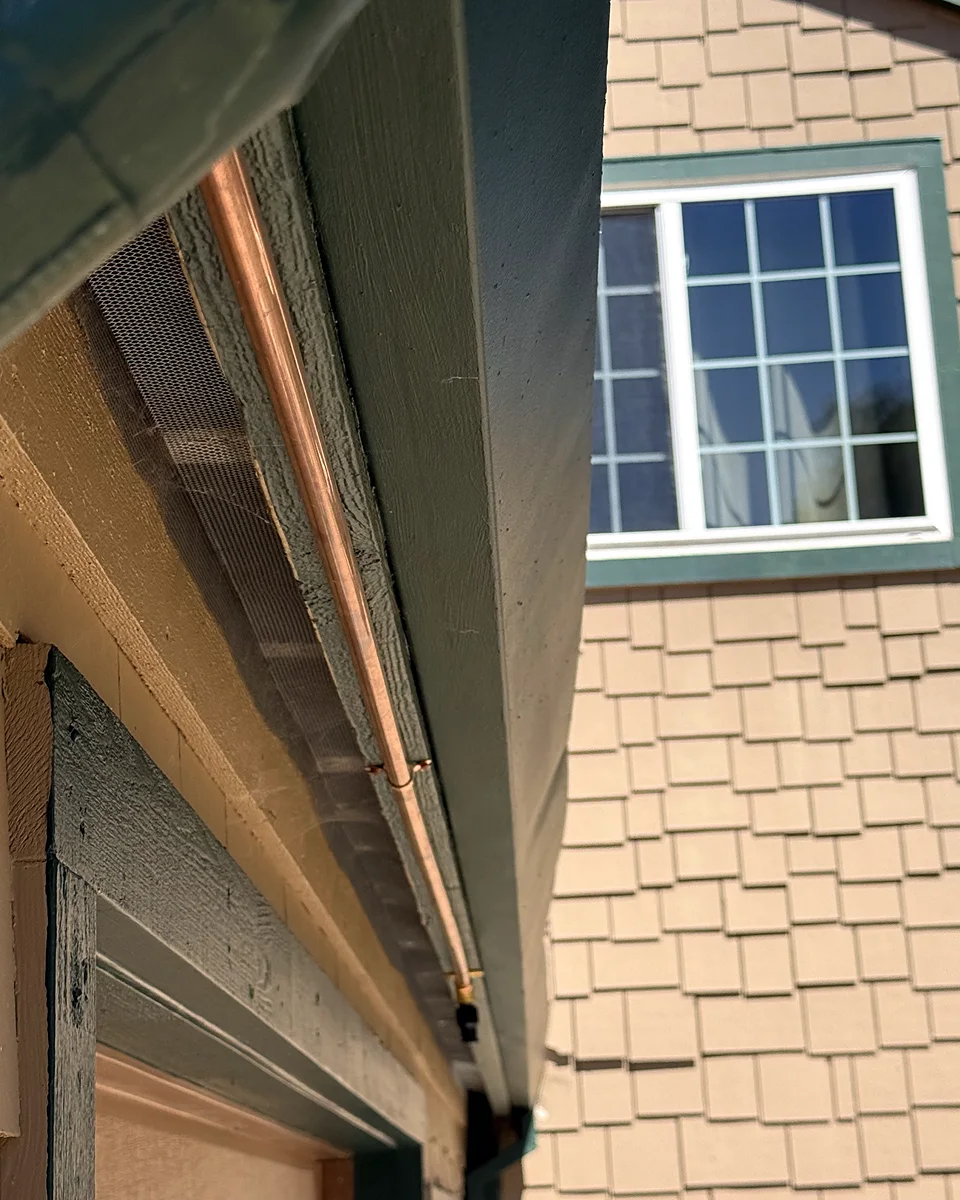
Copper eave line
Once a threat is confirmed, copper lines tucked under the eaves wet the walls, windows, garage doors and the first 5 feet around the house.
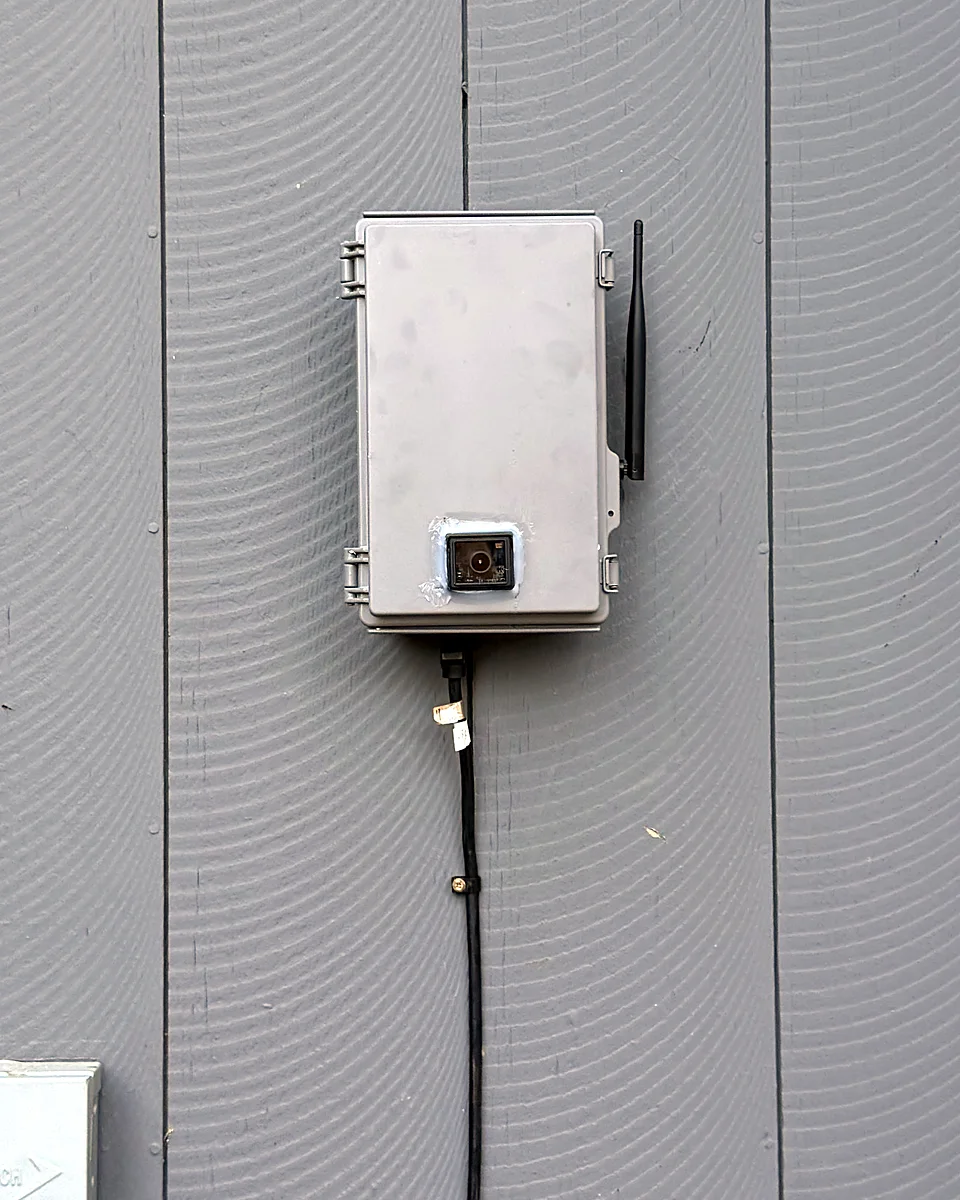
Small and quiet on the wall
The same detection unit on another home. It blends in and keeps watch on its own, whether or not anyone is home.
Why it matters
In a wildfire, embers can arrive long before flames, and fire engines cannot be at every house. A system that sees a fire and starts on its own buys time whether or not anyone is home.