Summary from the FireRoofs Team: The 2020 CZU fire destroyed 911 homes and forced 77,000 people out of the Santa Cruz Mountains. It left five lessons for every house still standing: you won't be home, help will be spread thin, embers do most of the damage, your water and power need a backup, and early detection buys time. Harden the home, clear the first 5 feet, keep your own water, and add exterior fire sprinklers that start on their own.
In August 2020, lightning started a fire that destroyed 911 homes in the Santa Cruz Mountains. Six years later, what it taught still applies to every house on the hill.
This one is for homeowners in Scotts Valley, Boulder Creek, Felton, Ben Lomond, Bonny Doon and the rest of the Santa Cruz Mountains. FireRoofs is based in Scotts Valley. These are our neighbors.
What Happened in the CZU Lightning Complex Fire?
- Started: August 16, 2020, by lightning (CAL FIRE)
- Burned: 86,509 acres across Santa Cruz and San Mateo counties
- Destroyed: 1,490 structures, 911 of them homes (County of Santa Cruz)
- Evacuated: 77,000 people
- Contained: September 22, 2020 (CAL FIRE)
Lesson 1: Will You Be Home When the Fire Comes?
Probably not. 77,000 people were evacuated during CZU. That's the plan working. You should leave when you're told to.
But it means anything that needs you to turn a valve, unroll a hose or flip a switch won't happen. Your home's defense has to run without you.
Lesson 2: Can You Count on a Fire Engine at Your House?
Not at every house, and not right away. IBHS says firefighters "may not be able to reach every home immediately," and that "a home should be prepared to withstand ember exposure and nearby flames on its own." (IBHS)
In the mountains that's even more true. Long driveways, one-lane roads and spread-out homes make it hard to cover everyone when a fire runs.
Lesson 3: What Actually Sets Mountain Homes on Fire?
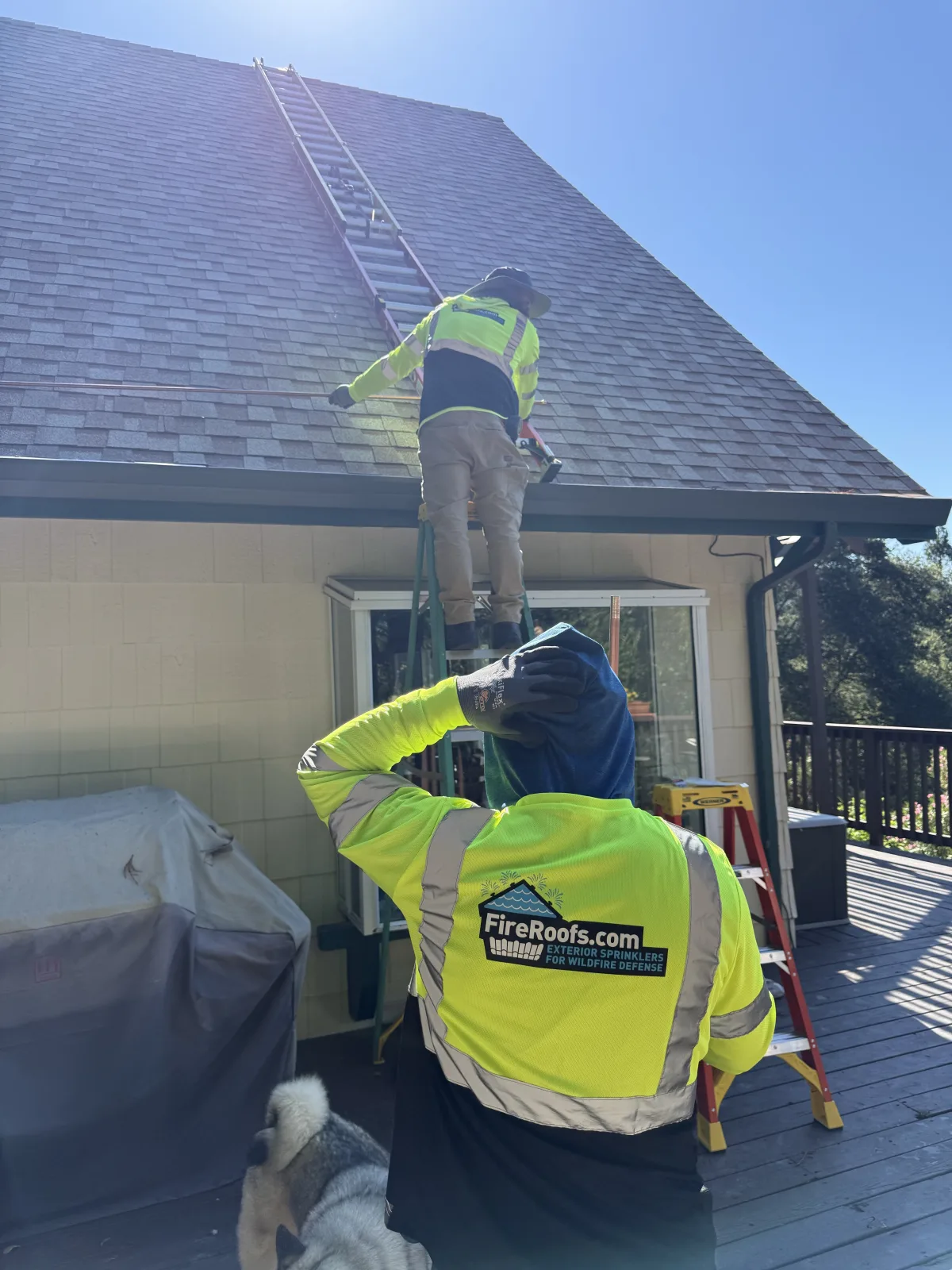
Embers, mostly. IBHS calls wind-blown embers "the #1 reason homes ignite during wildfires." They travel miles ahead of the flames and land on roofs, decks and landscaping. (IBHS Wildfire Ready)
In redwood and oak country, that means needles in gutters, bark mulch against the foundation, firewood on the porch and open vents. Fix those first:
- Ember-resistant vents or 1/8-inch metal mesh on every attic, eave and foundation vent (vent retrofits)
- Clean gutters and a sound Class A roof
- Nothing that burns in the first 5 feet (defensible space)
- Firewood and lumber moved away from the house
Lesson 4: Will the Water and Power Be There?
Plan as if they won't. The county's after-action report says CZU "destroyed infrastructure and multiple bridges," and restoring public utilities became part of the county's emergency response. (County of Santa Cruz) In a big fire, water pressure can drop as every hose and hydrant pulls at once (Tahoe Fire and Fuels Team), and power lines burn.
Up here, a lot of homes already have storage tanks. That's an advantage. FireRoofs can connect exterior fire sprinklers straight to a pool or tanks, or use them as a backup that switches on automatically if pressure to the house drops. Read more in our guide to water supply for wildfire sprinklers.
For power, a FireRoofs system runs on your home's generator or whole-home battery, so an outage doesn't stop it.
Lesson 5: How Fast Can You Know a Fire Has Started?
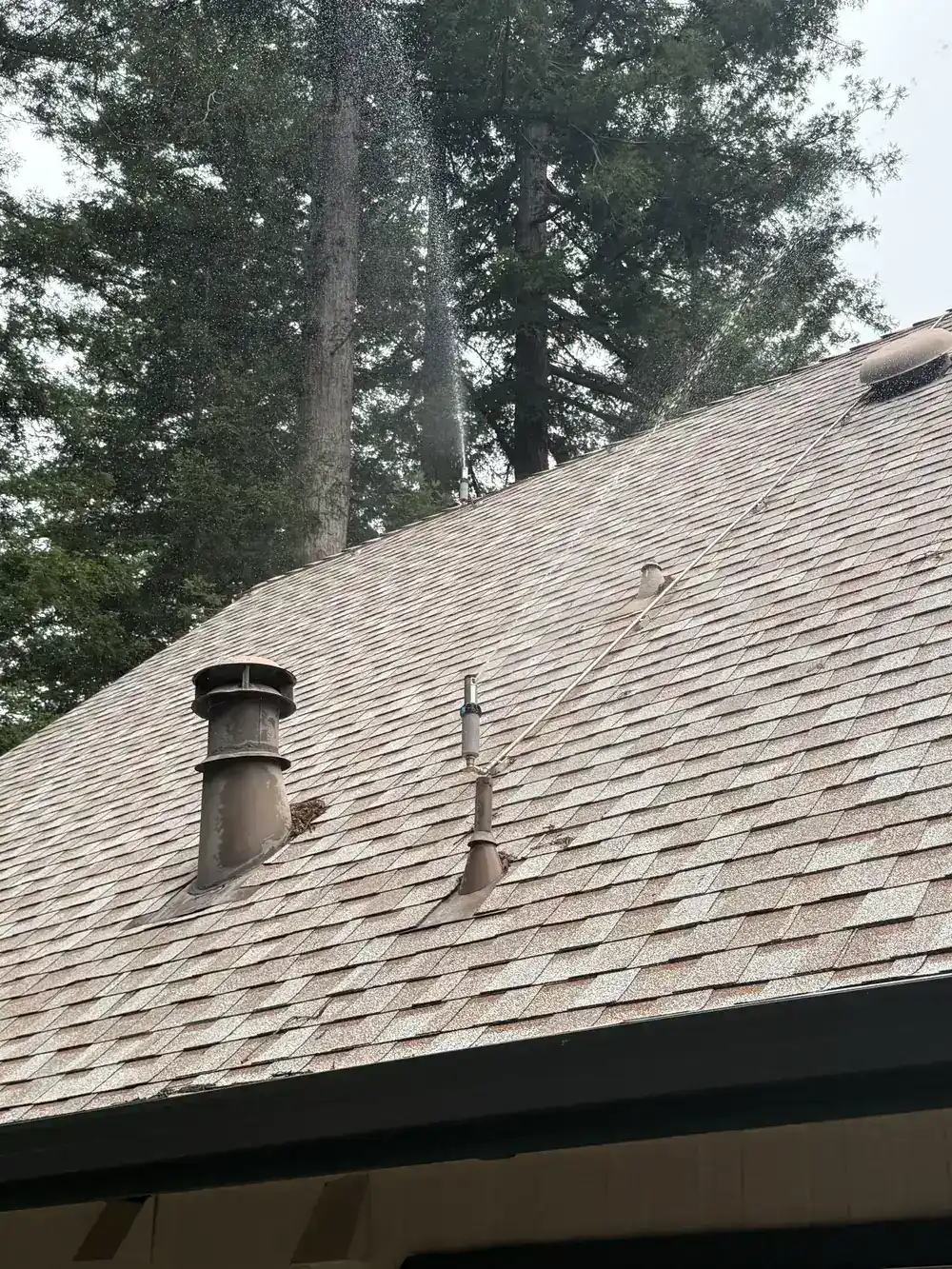
Faster than you'd think, if something is watching. In August 2026 the Fern Fire started 1.2 miles from a FireRoofs client's home in the Santa Cruz Mountains. The camera at the house had a clear view of the ridge and saw it first. The exterior fire sprinklers turned on by themselves before regional satellite data had picked up the fire. Fire crews held it to a small area, and the home came through without damage. (Fern Fire case study)
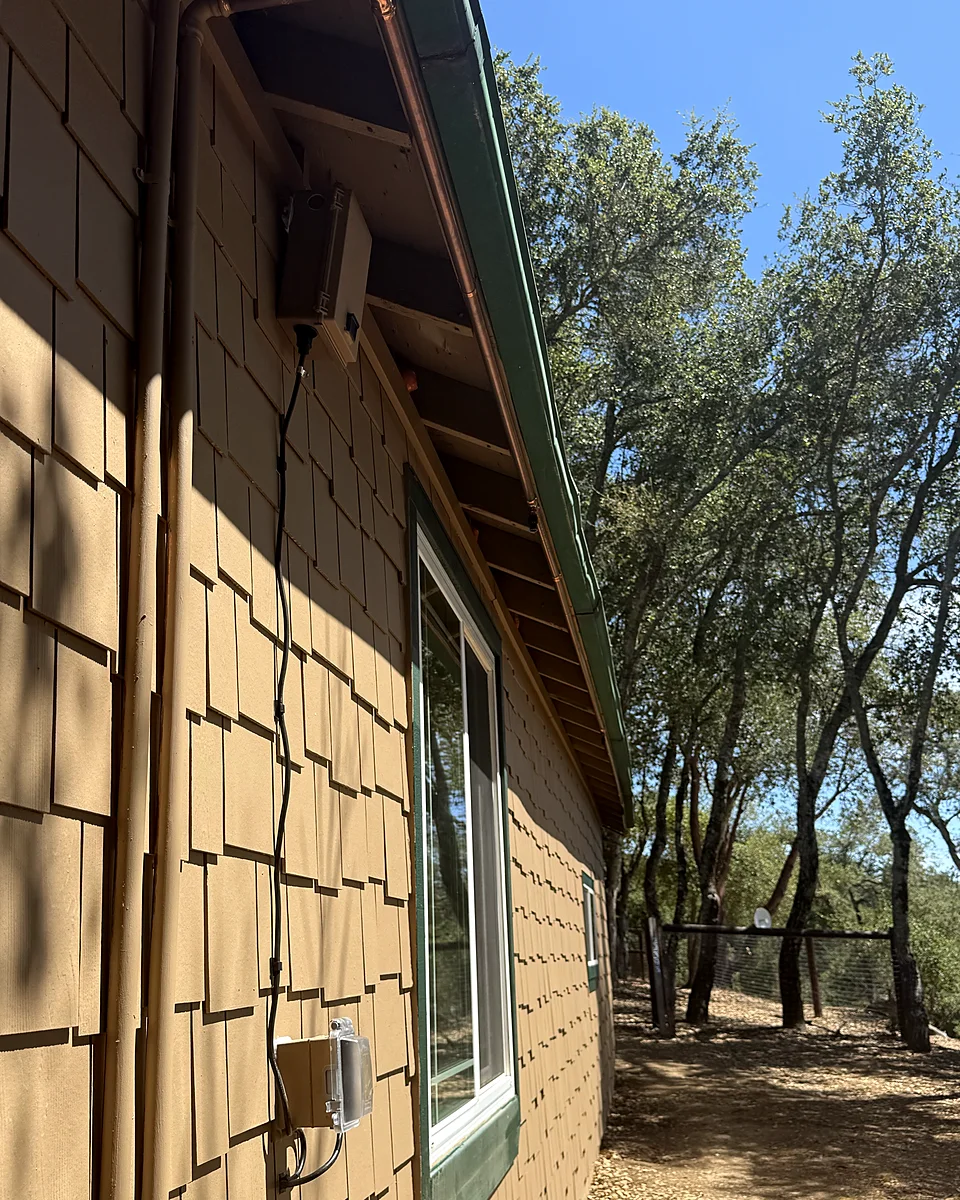
That's dual wildfire detection: regional satellite wildfire monitoring plus cameras with intelligent fire detection and sensors at the home. When a fire is close, the smart controller turns on the sprinklers and alerts you.
No system guarantees a home survives a wildfire. But a home that's hardened, cleared and wet when embers arrive has better odds than one that's waiting for help.
Before Next Fire Season: A Santa Cruz Mountains Checklist
- Check every vent for ember-resistant mesh.
- Clean the gutters and the roof valleys.
- Clear the first 5 feet: rock instead of bark, no plants against the wall, no woodpile.
- Know your water: pool, tanks, well or city line only.
- Know your backup power: generator or whole-home battery.
- Look up your address on our California wildfire map.
- Plan two ways out and pack once. See our wildfire evacuation plan.
Frequently Asked Questions
How many homes did the CZU fire destroy?
The CZU Lightning Complex destroyed 1,490 structures, 911 of them homes, according to the County of Santa Cruz after-action report. It burned 86,509 acres in Santa Cruz and San Mateo counties and forced 77,000 people to evacuate. CAL FIRE lists it as contained on September 22, 2020.
Can wildfire sprinklers run off a well or water tank?
Yes. Many Santa Cruz Mountains homes already have storage tanks, and that's water FireRoofs can use. The system can draw from a pool or tanks directly, or use them as a backup that takes over automatically if pressure to the house drops. A booster pump is added if needed.
What should Santa Cruz Mountains homeowners fix first?
Start with embers. Put ember-resistant vents or 1/8-inch metal mesh on every vent, clean the gutters, and clear everything that burns from the first 5 feet around the house. IBHS calls clearing that 5-foot zone the most effective defensible space action a homeowner can take. Then add exterior fire sprinklers.
Do wildfire sprinklers work during a power shutoff?
Yes, with backup power. A FireRoofs system runs on your home's generator or whole-home battery. That matters in the mountains, where power can be cut ahead of fire weather or lost when lines burn.
Does FireRoofs work in the Santa Cruz Mountains?
Yes. FireRoofs is based in Scotts Valley and works with homeowners across the Santa Cruz Mountains, the Peninsula and the South Bay hills, 41 communities in all.
The Bottom Line
CZU showed what a mountain fire does: you leave, help is spread thin, and water and power can't be counted on.
Build your home to handle that. Harden it, clear the first 5 feet, keep your own water, and add exterior fire sprinklers that start on their own. Request a Private Consultation and we'll walk your property with you.
Sources
- CAL FIRE, CZU Lightning Complex incident page
- County of Santa Cruz, 2020 CZU Lightning Complex Fire After-Action Report, Dec 7, 2021
- IBHS, Noncombustible Zone 0: Minimizing Pathways to Home Ignition, Aug 2026
- IBHS, Wildfire Ready
- Tahoe Fire and Fuels Team, Preserving Water for the Fire Fight, Sept 1, 2021
- FireRoofs, Fern Fire case study, Santa Cruz Mountains, Aug 2026
FireRoofs installs are done by a licensed, insured partner.