Enclosed Eaves for Wildfire Protection
Open eaves are the most common ignition point on older California homes. Here is how to seal them.
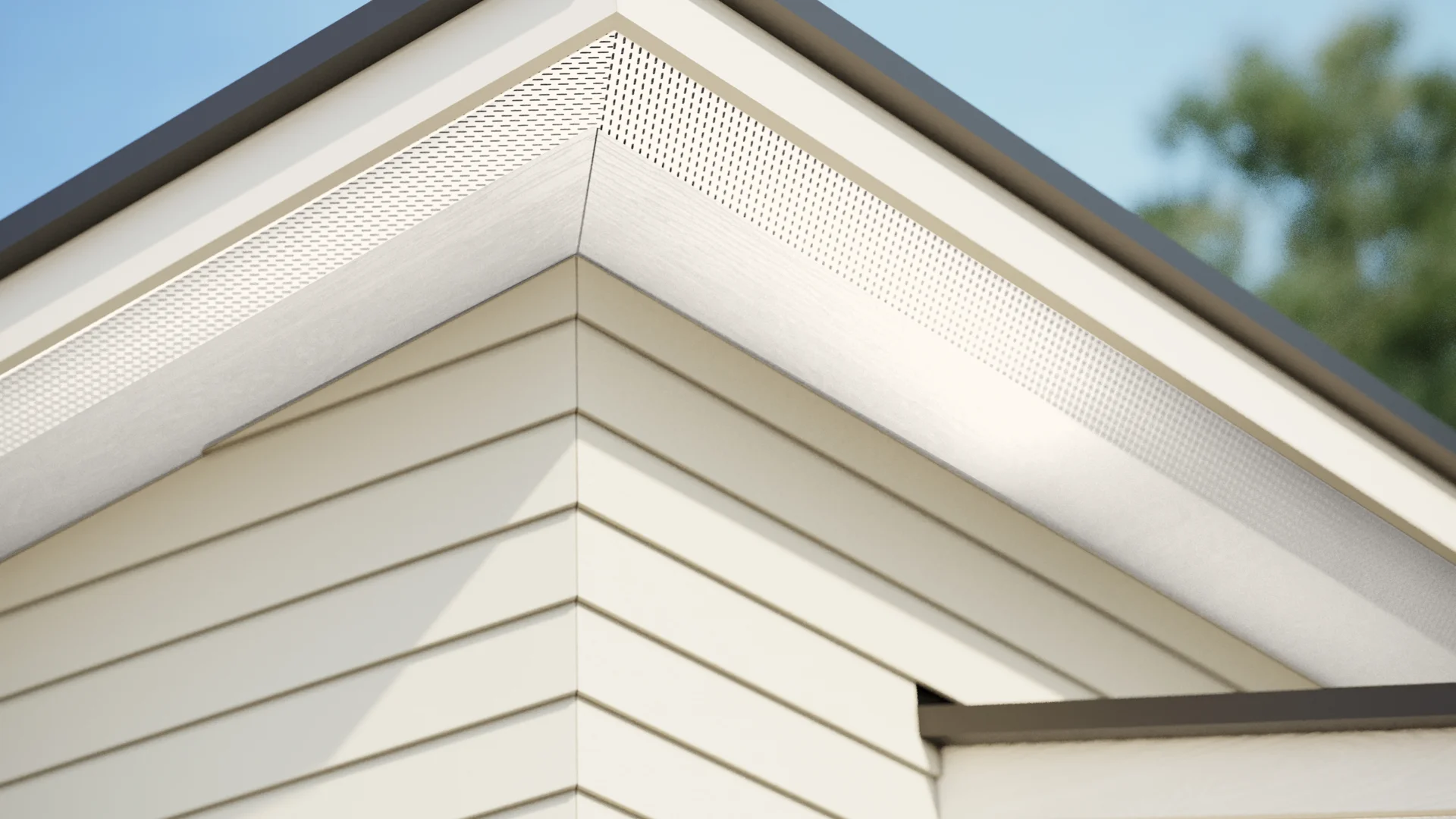
Image: James Hardie Building Products
Why This Matters
Open eaves with exposed rafter tails are the single most common ignition pathway we see on older Bay Area homes. Embers collect on the rough wood, ignite, and the fire travels directly into the attic. IBHS research confirms homes with open eaves are significantly more likely to burn during wildfire events. Enclosing eaves is one of the fastest, most affordable hardening upgrades a homeowner can make.
Enclosed eaves are roof overhangs sealed with noncombustible soffit panels to block wildfire embers from reaching the attic. On older Bay Area and California homes, exposed rafter tails leave rough wo...
Enclosed eaves are roof overhangs sealed with noncombustible soffit panels to block wildfire embers from reaching the attic. On older Bay Area and California homes, exposed rafter tails leave rough wood surfaces where embers collect and ignite. James Hardie HardieSoffit panels (noncombustible fiber cement) and 5/8-inch Type X gypsum are the two most common materials used to box in open eaves. All gaps greater than 1/8 inch must be sealed with intumescent fire caulking tested to ASTM E814. California Building Code Chapter 7A requires enclosed eaves in all Fire Hazard Severity Zones.
Why This Matters
Open eaves with exposed rafter tails are the single most common ignition pathway we see on older Bay Area homes. Embers collect on the rough wood, ignite, and the fire travels directly into the attic. IBHS research confirms homes with open eaves are significantly more likely to burn during wildfire events. Enclosing eaves is one of the fastest, most affordable hardening upgrades a homeowner can make.
Enclosed eaves are roof overhangs sealed with noncombustible soffit panels to block wildfire embers from reaching the attic. On older Bay Area and California homes, exposed rafter tails leave rough wood surfaces where embers collect and ignite. James Hardie HardieSoffit panels (noncombustible fiber cement) and 5/8-inch Type X gypsum are the two most common materials used to box in open eaves. All gaps greater than 1/8 inch must be sealed with intumescent fire caulking tested to ASTM E814. California Building Code Chapter 7A requires enclosed eaves in all Fire Hazard Severity Zones.
What Makes Open Eaves So Dangerous
Walk around an older California home and look up under the roof overhang. If you see exposed wood rafter tails, your home has open eaves. Those rough wood surfaces are a direct invitation for embers.
During a wildfire, embers travel miles ahead of the main fire on the wind. They are small, lightweight, and burning hot. When they land on exposed rafter tails, the rough grain catches easily. Heat also rises directly into the eave overhang from any fire below, like burning vegetation or a fence.
Once the rafter ignites, fire tracks along the wood into the attic. From there, the entire roof structure can be involved in minutes. This is not a theoretical risk. It is the ignition pathway in a large percentage of wildfire home losses documented by IBHS and CAL FIRE.
How to Enclose Eaves for Wildfire Protection
The fix is simple: box in the underside of the roof overhang with noncombustible material so embers cannot reach the wood structure. There are three layers to get right.
1. Soffit Panels
Install noncombustible soffit panels across the entire underside of the eave overhang. James Hardie HardieSoffit panels are classified as noncombustible under ASTM E136. They come in vented profiles (for attic airflow) and non-vented profiles. For budget projects, 5/8-inch Type X gypsum board works but needs weather protection.
2. Gap Sealing
Seal every gap greater than 1/8 inch around rafters, blocking, and where the soffit meets the wall. Use intumescent fire caulking like EverKem 814+ or 136. These sealants expand when heated, maintaining the seal even during active fire. This is the step most DIY projects miss.
3. Vent Protection
If your eave soffits have vents, make sure they are ember-resistant vents tested to ASTM E2886. Standard 1/4-inch mesh allows embers to pass through. Brands like Vulcan Vents and Brandguard combine ember-blocking mesh with intumescent coatings that swell shut in heat.
California Code Requirements for Eaves
California Building Code Chapter 7A requires that eaves, fascias, and soffits in all Fire Hazard Severity Zones (FHSZ) use noncombustible or ignition-resistant materials. This applies to new construction, major remodels, and increasingly to existing homes through AB 38 real estate transaction disclosures.
If you are selling or buying a home in a Very High Fire Hazard Severity Zone (VHFHSZ), the AB 38 disclosure process will flag open eaves as a deficiency. Having them enclosed before listing removes a negotiation point and demonstrates wildfire readiness to insurance companies.
What This Costs
Enclosing eaves on a single-story Bay Area home typically runs $3,000 to $8,000 depending on linear footage and material. Fiber cement is at the higher end. Gypsum is more affordable but requires finish work. Either way, this is one of the highest-return wildfire upgrades because it addresses a critical ignition point at relatively low cost. Many single-story homes can be completed in a single day.
Quick Comparison
Top Picks
James Hardie HardieSoffit Panels
James Hardie Building Products
BML Per 8140 listing
▼ tap for details
5/8" Type X Fire-Rated Gypsum
USG, Georgia-Pacific, CertainTeed
BML Prescriptive
▼ tap for details
EverKem Intumescent Fire Caulking
EverKem (814+ and 136)
BML N/A (accessory)
▼ tap for details
Not Sure If Your Eaves Are Vulnerable?
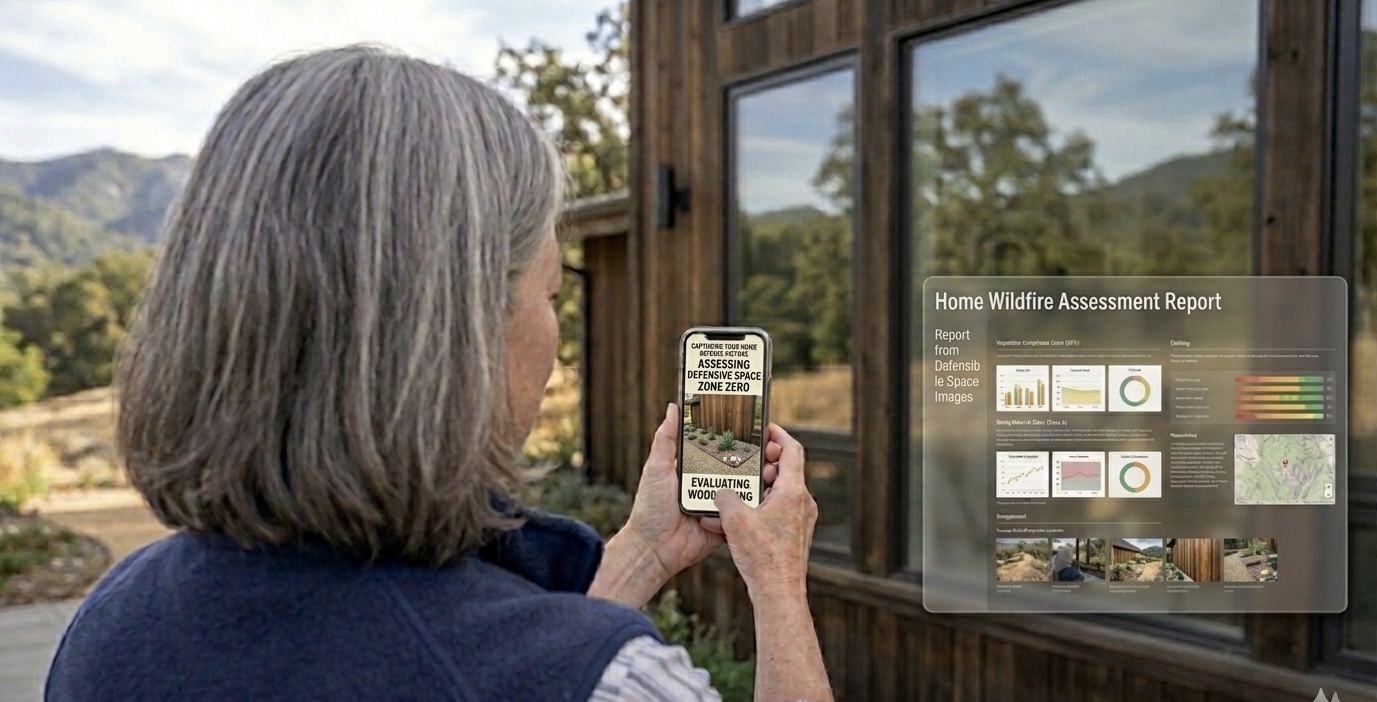
Upload photos of your home and our assessment report will evaluate your eaves, vents, siding, roof, and every other exterior element against California Building Code Chapter 7A. You get a code-cited action plan showing exactly what to fix first.
- Photo-based assessment of every exterior element
- Code citations matched to your specific property
- Prioritized action plan with difficulty levels
Takes about a minute. No account needed.
Common Questions
What are enclosed eaves and why do they matter for wildfire protection?
Enclosed eaves are roof overhangs where the underside has been sealed with noncombustible soffit panels. On older California homes, exposed rafter tails leave rough wood surfaces directly in the path of rising heat and windblown embers. Research from IBHS shows open eaves are one of the top ignition points during wildfire events. Enclosing them with fiber cement panels or fire-rated gypsum eliminates this vulnerability.
How do embers enter through open eaves?
During a wildfire, embers travel miles ahead of the fire front on the wind. They collect in the gaps between exposed rafter tails, land on rough wood surfaces, and ignite. Heat also rises directly into the eave overhang from fire below. Once the wood catches, the fire travels along the rafter into the attic, and the roof structure can be fully involved within minutes. Enclosed eaves block this pathway entirely.
What is the best material to enclose eaves for fire protection?
James Hardie HardieSoffit panels are the top choice because they are classified as noncombustible under ASTM E136. They come in vented and non-vented profiles, match the HardiePlank siding system, and carry a 30-year warranty. For budget projects, 5/8-inch Type X gypsum wallboard is effective but needs a weather-resistant finish. All gaps greater than 1/8 inch must be sealed with intumescent fire caulking.
How much does it cost to enclose open eaves?
For a typical single-story California home, enclosing eaves runs between $3,000 and $8,000 depending on the linear footage, material choice, and complexity. Fiber cement panels like James Hardie cost about $4 to $8 per square foot installed. Gypsum is cheaper but requires more finish work. This is one of the most affordable wildfire hardening upgrades, often completed in one day for single-story homes.
Does California code require enclosed eaves in fire zones?
Yes. California Building Code Chapter 7A mandates that eaves, fascias, and soffits in all Fire Hazard Severity Zones be constructed with noncombustible or ignition-resistant materials. Open eaves with exposed rafter tails do not meet code in any State Responsibility Area or Very High Fire Hazard Severity Zone. New construction must have enclosed eaves, and existing homes may be required to retrofit during major remodels or real estate transactions under AB 38.
Can I enclose my eaves myself or do I need a contractor?
Handy homeowners can do basic eave enclosures with gypsum board and metal flashing, but most people hire a contractor for fiber cement soffit work. The job involves cutting panels to fit between rafter tails, securing them with corrosion-resistant fasteners, and sealing every gap with intumescent caulking. If your home has complex rooflines or two-story sections, a licensed contractor with wildfire hardening experience will get a cleaner, code-compliant result.
Related Home Hardening Guides
Ember-Resistant Vents
OSFM-listed vents that block embers from your attic
Fire-Resistant Siding
Fiber cement and engineered wood wall protection
Class A Fire-Rated Roofing
Metal, tile, and asphalt roof assemblies
All Home Hardening Products
Complete OSFM-listed materials guide
Fire-Resistant Fencing
Noncombustible fence options for Zone 0
Wildfire Assessment Report
Photo-based evaluation of your property
Source: 2025 OSFM WUI Listed Products Handbook, published by CAL FIRE Fire Engineering and Investigations Division. This guide is for informational purposes. Consult your local building department and a licensed contractor for specific approvals in your jurisdiction.