Zone Zero is the area from zero to five feet around any structure. California's April 2026 draft regulation (Title 14, Sections 1298 and 1299) formally defines Zone Zero for the first time in state law and establishes enforceable requirements for homeowners in State Responsibility Areas and Very High Fire Hazard Severity Zones. Phase 1 (vegetation, gutters, tree trimming) is due within 3 years of adoption. Phase 2 (safety zones, fence replacements, outbuildings) is due within 5 years.
Draft as of April 17, 2026. This article is based on the Board of Forestry's draft regulation text released for public comment. Requirements described here may change before final adoption. Last verified: May 29, 2026.
In April 2026, California's Board of Forestry and Fire Protection put out draft regulation text that formally defines Zone Zero for the first time in state law. If you have not heard the term before, Zone Zero is the first five feet right around any structure. That narrow strip of space around your walls, eaves, decks, and stairs.
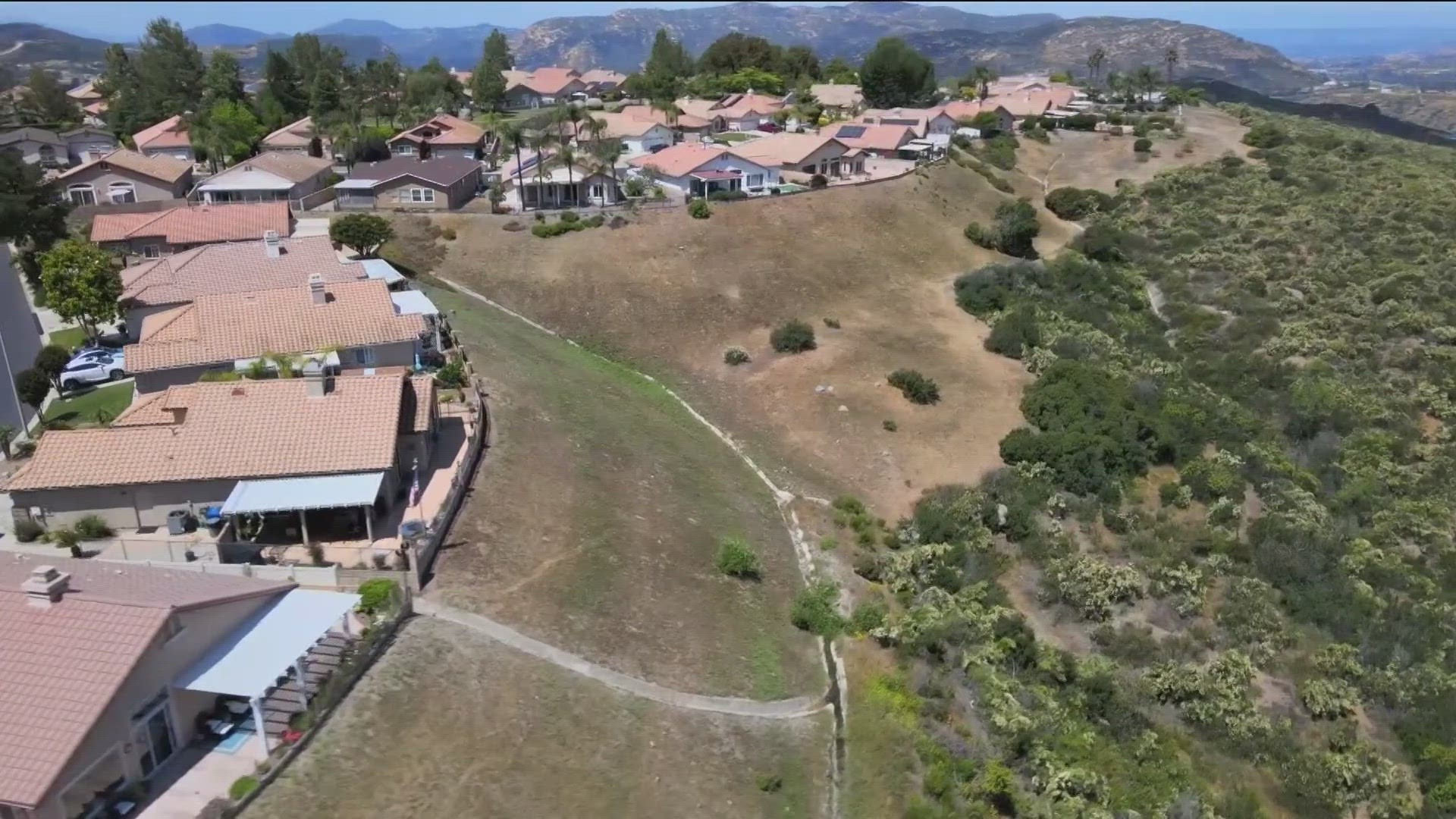
The draft rule applies to homes in State Responsibility Areas (SRA) and Very High Fire Hazard Severity Zones in Local Responsibility Areas (LRA). If your property falls under either designation, this regulation is expected to affect what you can and cannot have within five feet of your home. Here is what the April 2026 draft actually says, who it applies to, and what you should be doing about it now.
What Is Zone Zero?
Zone Zero is simply the area from zero to five feet around any structure. It sounds like a small strip of land, but it is the most important area when it comes to wildfire defense. Here is why.
Most homes that burn in wildfires are not destroyed by a wall of flame rolling through the neighborhood. They catch fire from embers. Burning bits of debris carried by the wind land on roofs, drop into gutters, or settle into combustible material right next to the house. Research from IBHS (Insurance Institute for Business and Home Safety) showed that keeping a non-combustible buffer within five feet of a home cuts the risk of ignition roughly in half. Half the risk, eliminated by clearing five feet of space.
Up to now, Zone Zero was just a recommendation. CAL FIRE promoted the idea. IBHS studied it. Local fire agencies encouraged homeowners to do it. But nobody could actually enforce it because there was no statewide standard that spelled out what Zone Zero means in practice, or what you had to do about it. The April 2026 draft changes that.
The Legislative Trail
This draft did not appear out of thin air. It sits on top of several years of legislation that built up to this point:
- AB 3074 (2020) directed the Board of Forestry to create a Zone Zero regulation as part of defensible space requirements under PRC 4291.
- SB 504 (2024) expanded the mandate and added detail about what the regulation should address.
- AB 1455 (2025) further refined the Board's authority over Zone Zero rulemaking.
- Executive Order N-18-25 (February 2025), signed by Governor Newsom after the Los Angeles fires, accelerated the timeline and ordered the Board to finalize the rules.
The result is two parallel code sections in Title 14 of the California Code of Regulations: Section 1298 (for Local Responsibility Areas with VHFHSZ designation) and Section 1299 (for State Responsibility Areas). The requirements in both are essentially the same. The difference is jurisdictional.
Who Does This Apply To?
The regulation applies to all structures in two categories:
- State Responsibility Areas (SRA): About 31 million acres across California where CAL FIRE has primary fire protection responsibility. Most rural and semi-rural land outside city limits falls into SRA.
- Very High Fire Hazard Severity Zones in Local Responsibility Areas (VHFHSZ LRA): Areas within city or county jurisdiction that CAL FIRE has mapped as very high fire hazard. This includes a lot of Bay Area hillside neighborhoods, places like Oakland, Berkeley, Saratoga, Los Altos Hills, Woodside, Orinda, and Lafayette.
Not sure which designation applies to your property? Ask HydroIQ or check the CAL FIRE FHSZ mapping tool.
Two Phases, Two Deadlines
One thing the draft rule gets right is that it does not require everything at once. It breaks the work into two phases for existing homes, which gives people time to plan and budget.
Phase 1: Within 3 Years of Adoption
Phase 1 is the stuff you can do right now without major construction or buying new materials. Most of this is basic maintenance:
- Remove combustible items stored against the structure (firewood, lumber, furniture, trash bins)
- Clean gutters and remove debris from roofs
- Trim trees: branches must be at least 10 feet from chimneys, 5 feet above roofs, 1 foot from walls, and completely clear from under eaves
- Remove dead branches and clear ladder fuels from trees in Zone Zero (branches need to start at least 6 feet from the ground, or one-third of the tree's total height, whichever is less)
- Clear vegetation within specific buffers: 1 foot from walls (or to the eave drip line, whichever is greater), 2 feet from windows, doors, and vents, and 5 feet from attached decks, stairs, and pergolas
Phase 2: Within 5 Years (or Longer, Set by Local Jurisdiction)
Phase 2 is where the bigger projects come in. These may require purchasing materials or hiring a contractor:
- Create the non-combustible "safety zone" directly beneath the eaves (explained below)
- Replace combustible gates, fences, and arbors attached to the structure with non-combustible alternatives
- Modify or replace combustible sheds and outbuildings within Zone Zero using non-combustible materials
Local jurisdictions can also extend the Phase 2 deadline beyond 5 years. The draft gives them that flexibility, which matters for communities where a lot of homes need work.
New Construction
Homes built after the regulation takes effect must meet all requirements right away. No phase-in period.
The Safety Zone: A New Concept
The biggest new idea in the draft rule is something called the "safety zone." It is a strip of non-combustible ground surface directly next to the home, running beneath the eave overhang. The width of the safety zone matches the width of the eave:
- A 12-inch eave requires a 12-inch safety zone
- A 24-inch eave requires a 24-inch safety zone
- A 36-inch eave requires a 36-inch safety zone
- No eave at a given location means no safety zone is required there
The safety zone has to be completely free of combustible material. No plants, no mulch, no stored items. Gravel, pavers, concrete, and decomposed granite all work. Think of it as a firebreak right against your foundation.
This is a Phase 2 requirement, so existing homes have up to 5 years (or longer, depending on the local jurisdiction) to create it.
Trees Are Allowed
We hear this question constantly: "Does Zone Zero mean I have to cut down all my trees?" No. The draft rule does not ban trees in Zone Zero. Trees can stay as long as they are maintained properly:
- All dead branches must be removed
- Ladder fuels must be cleared: branches must start at least 6 feet from the ground, or one-third of the tree's total height, whichever is less
- Branches must be at least 10 feet from chimneys
- Branches must be at least 5 feet above roofs
- Branches must be at least 1 foot from walls
- No branches under eaves
This makes sense. A lot of California properties have mature oaks, redwoods, or other trees near the house that provide shade, lower energy costs, and hold the soil together. The rule keeps them in place with clear maintenance standards. You just have to keep them pruned back.
Plants Allowed Outside the Safety Zone
Outside the safety zone but still within the five-foot Zone Zero boundary, you are not limited to bare dirt. Certain plants are allowed:
- Non-woody ground covers under 3 inches tall (lawns, creeping thyme, and similar) are fine without restriction
- Non-woody plants between 3 and 18 inches tall are allowed in individual plantings of no more than 1 square foot, spaced at least 1.5 times the plant height apart
- Potted plants in non-combustible containers of 5 gallons or less, no taller than 18 inches, are allowed
What is not allowed: woody plants, bark mulch, wood chips, and combustible ground cover materials anywhere in Zone Zero. If you have bark mulch against your foundation right now, that will need to go.
Fences, Gates, and Outbuildings
Fences
The draft rule requires a non-combustible span of at least 5 feet where any fence attaches to the structure. No new combustible fencing can be installed within Zone Zero. Existing combustible fences within Zone Zero must be addressed, but the 5-foot non-combustible connection point is the priority. Non-combustible fencing options like steel, aluminum, and concrete block all satisfy this requirement.
Gates
Combustible gates attached to the structure need to be replaced with non-combustible alternatives. That falls under Phase 2.
Outbuildings and Sheds
Any outbuilding within Zone Zero must use only non-combustible materials. Also Phase 2. If you have a wood shed within five feet of your house, start thinking about where to relocate it or what to replace it with.
Local Flexibility
One part of the draft that does not get enough attention is the local flexibility provision. The rule allows local fire agencies to authorize alternative practices if they determine the alternative provides equal protection. What does that mean in practice? A local fire chief or fire marshal can approve a different approach for a specific property when the standard requirement does not fit the situation, as long as whatever they approve is equally effective.
This matters. It gives local jurisdictions room to work with homeowners on unusual lot configurations, historic properties, or other site-specific situations without getting locked into a one-size-fits-all mandate.
What This Means for Bay Area Homeowners
If you own a home in a Bay Area community like Los Altos Hills, Saratoga, Woodside, Danville, or the East Bay Hills, there is a high probability your property sits in SRA or VHFHSZ. These rules will apply to you.
The good news is that the practical steps are simple. Most homeowners can knock out Phase 1 in a single weekend:
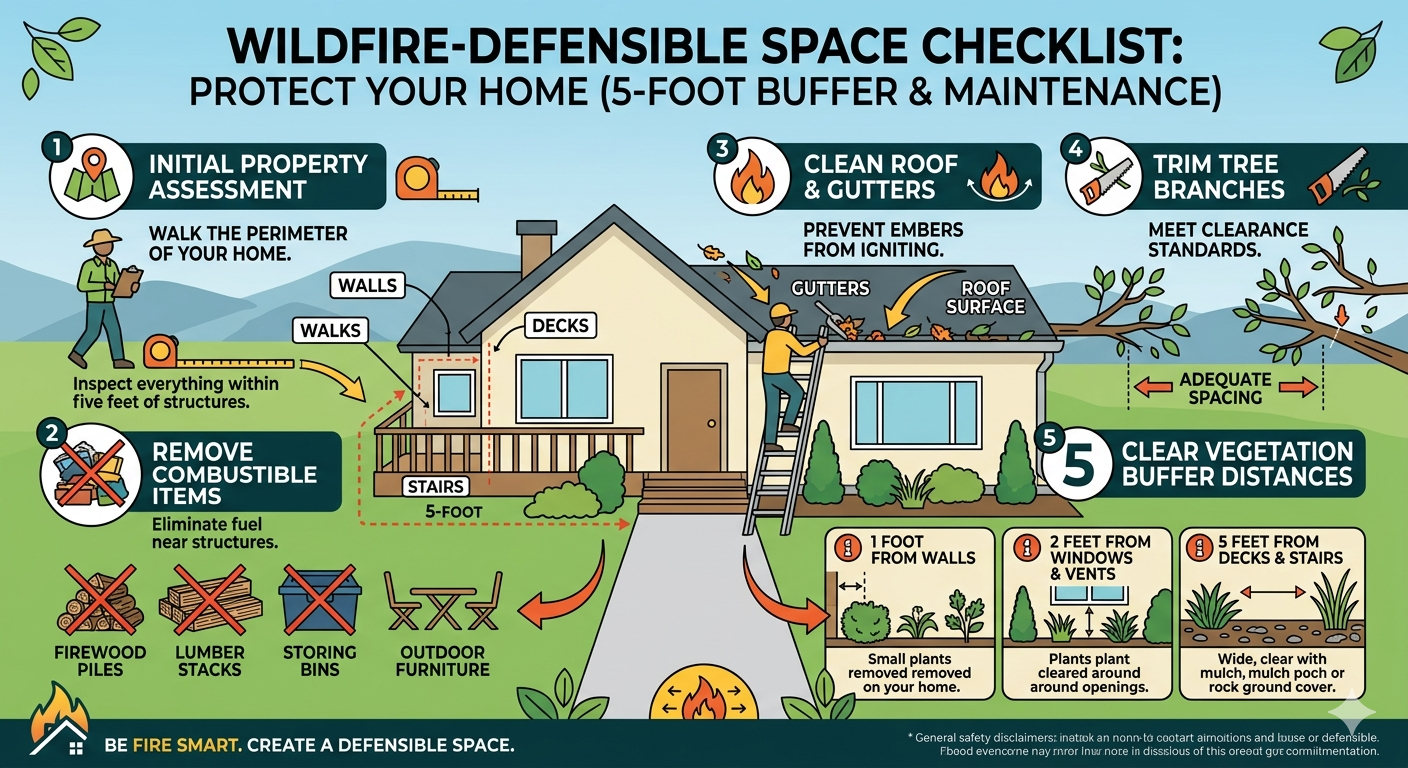
- Walk your property and identify everything within five feet of walls, decks, and stairs
- Remove stored combustible items (firewood, lumber, bins, furniture)
- Clean gutters and clear roof debris
- Trim tree branches to meet the clearance standards listed above
- Clear vegetation within the buffer distances: 1 foot from walls, 2 feet from windows and vents, 5 feet from decks and stairs
Phase 2 takes more planning and probably a contractor. Measure your eave overhangs. Map out where the safety zone will go. Get quotes for non-combustible fencing at structure attachment points. If you have a combustible shed within five feet of the house, start figuring out where to move it or what to replace it with. Starting early gives you options. Waiting until the deadline puts you at the mercy of contractor availability and material lead times.
Zone Zero and Active Defense
Zone Zero is the foundation of wildfire protection. It removes the easy ignition points closest to the structure. But here is the thing: it is a passive measure. It does not put water on your roof when embers are falling. It does not soak the perimeter when a fire front approaches while you are 30 miles away at an evacuation center.
Automated exterior fire defense systems fill that gap. A FireRoofs system activates when wildfire is detected within five miles, soaking the roof, eaves, and perimeter before and during the fire event. Zone Zero clearance makes the system more effective because there is no combustible material close to the structure for embers to ignite. The two work together, passive clearance plus active water defense.
Under California Insurance Code Section 2644.9, the Safer from Wildfires framework, both Zone Zero maintenance and documented exterior defense systems can qualify homeowners for insurance premium discounts.
What Happens Next
The April 2026 draft is currently in a public comment period. The Board of Forestry will review comments, potentially revise the language, and move toward formal adoption. The timeline from draft to final rule varies, but the legislative mandate is clear. The political pressure after the 2025 Los Angeles fires is real. Expect adoption in late 2026 or early 2027.
Our advice: do not wait for the final rule to start. Phase 1 work is simple and costs little or nothing. Phase 2 work, particularly the safety zone and fence replacements, takes planning and budget. Getting started now gives you time to do it right instead of scrambling at the deadline.
Check Your Property
Use HydroIQ to check your fire hazard zone designation, see what California law requires for your specific address, and understand how Zone Zero applies to your property. Or call us at 831-705-0888 to schedule a property evaluation.
Sources
- CA Board of Forestry and Fire Protection, Zone 0 Rulemaking: https://bof.fire.ca.gov/projects-and-programs/defensible-space-zones-0-1-and-2
- AB 3074 (2020): https://leginfo.legislature.ca.gov/faces/billTextClient.xhtml?bill_id=201920200AB3074
- SB 504 (2024): https://leginfo.legislature.ca.gov/faces/billNavClient.xhtml?bill_id=202320240SB504
- Governor Newsom Executive Order N-18-25: https://www.gov.ca.gov/wp-content/uploads/2025/02/2.6.25-EO-N-18-25.pdf
- IBHS Zone Zero Research: https://ibhs.org/ibhs-news-releases/ibhs-research-shows-creating-ember-resistant-buffer-around-a-home-cuts-its-risk-of-igniting-from-a-wildfire-in-half/
- CAL FIRE Home Hardening: https://www.fire.ca.gov/home-hardening
- California Insurance Code Section 2644.9 (Safer from Wildfires): https://leginfo.legislature.ca.gov/faces/codes_displaySection.xhtml?sectionNum=2644.9.&lawCode=INS