We Evaluate Your Property. Engineer a System Around It. Then We Build It.
Automated sprinklers that detect fire, activate on their own, and wet every surface where embers land. Home hardening that seals every gap. One documentation package for your insurer.
Four Steps. One Team. A Home That Can Defend Itself.
Every property is different. The terrain, the vegetation, the roof material, the exposures. That is why every FireRoofs system starts with a site visit, not a sales pitch.
Book a Free Evaluation
Schedule a 45-minute visit. We come to your property and walk every side of the house, the roof, the vegetation, the fencing, the vents, all of it. No cost, no commitment.
We Find Every Vulnerability
Where do embers land? Where does radiant heat reach? What burns first? We photograph every weak point and map the risk from roof to property line.
You Get a Complete Roadmap
A written plan that covers home hardening, defensible space, and an exterior sprinkler system engineered for your specific property. Real numbers. Real timeline. No guesswork.
We Build It and Commission It
Licensed General Contractor. Copper pipe. Permitted through your local jurisdiction. We install, test every zone, and hand you the documentation your insurer needs.
45 minutes at your property. No cost. No commitment.
Three Zones. Every Surface.
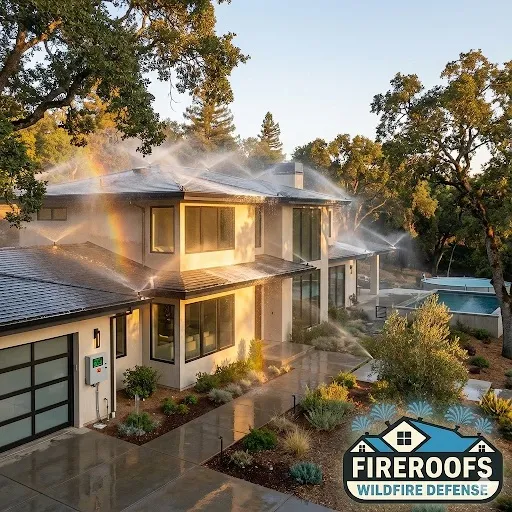
Embers do not pick one landing spot. They hit the roof, push into the eaves, and ignite the brush around your foundation. Our system puts water on all three targets at once, so nothing dries out while something else burns.
Zone 01
Roof Zone
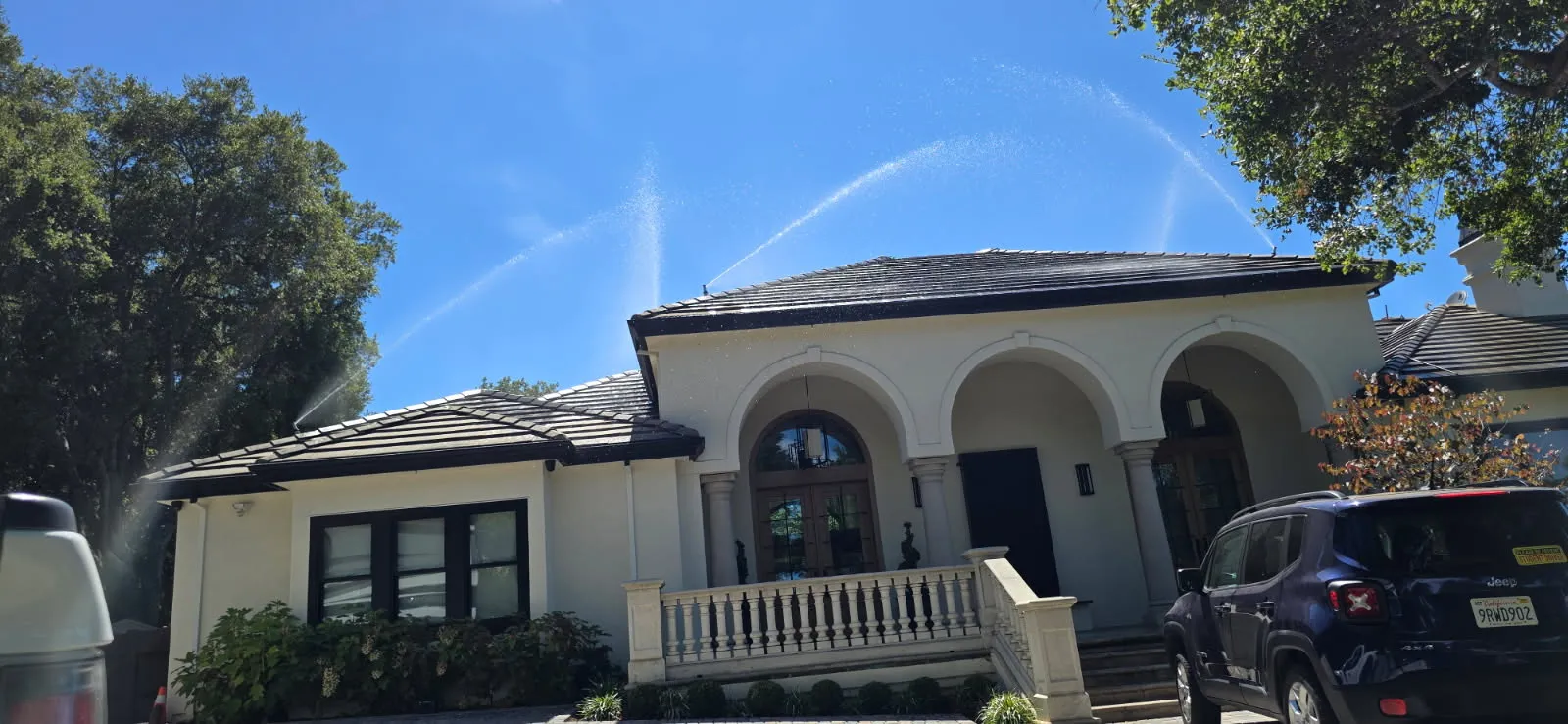
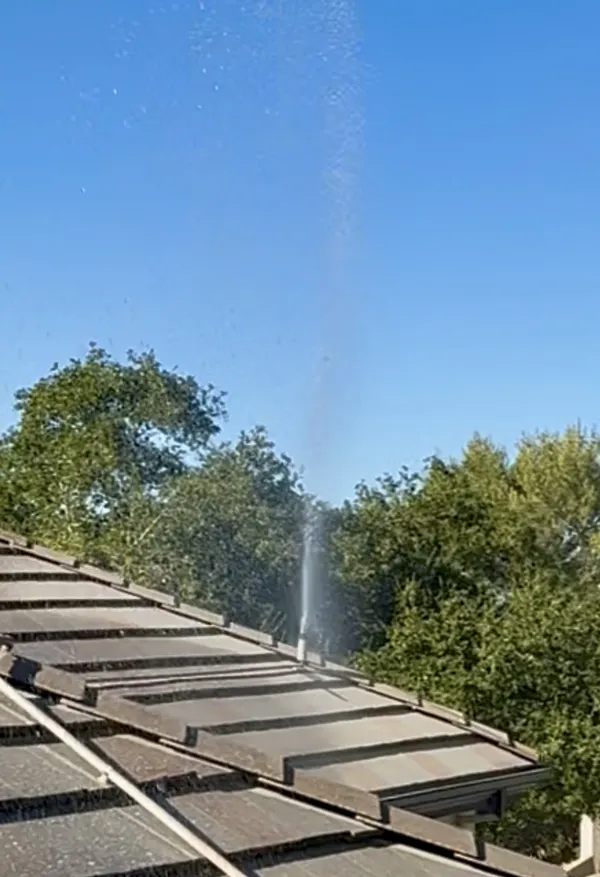
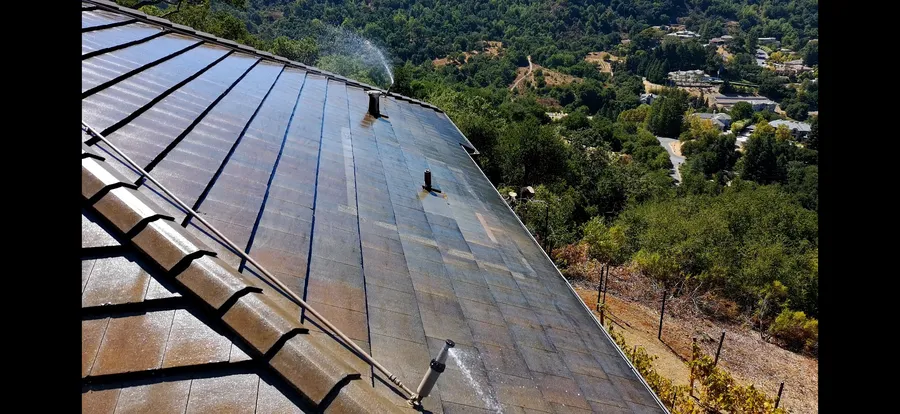
Rotating sprinklers saturate the entire roofline including ridges, valleys, and gutters. Coverage extends 20 feet past the roofline to protect patios, decks, and surrounding landscaping. Copper pipe throughout.
Have a metal roof? Metal does not burn, but radiant heat still damages what is underneath it and embers land in everything around it. We shift the sprinkler focus to the eaves and perimeter where your property is actually vulnerable.
Zone 02
Eave Zone
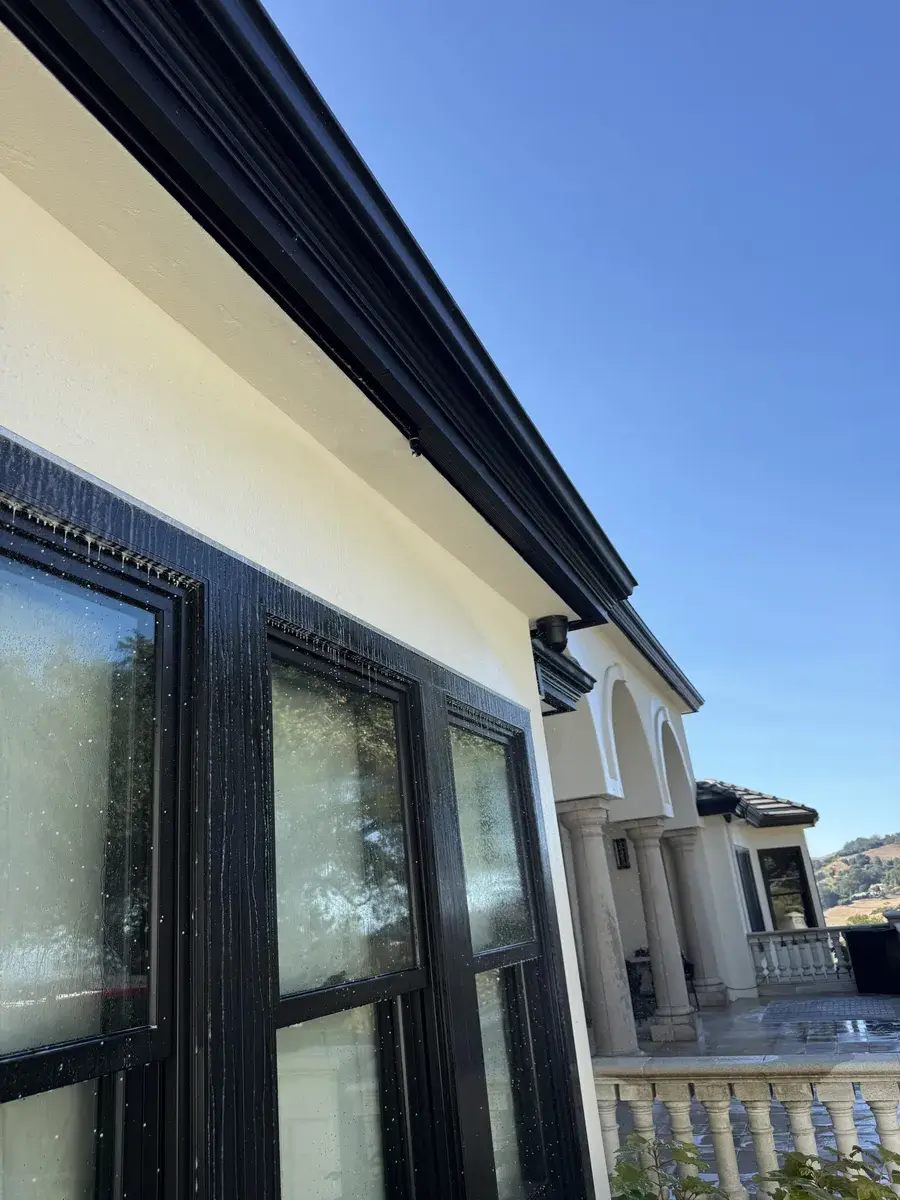
This is where most homes ignite. Eave-mounted nozzles target soffits, vents, and the junction where roof meets wall. Passive hardening helps, but it cannot keep these surfaces wet. These nozzles can.
Eave sprinklers also protect exterior walls from radiant heat, keeping siding, windows, and trim wet during the critical minutes when a fire front passes.
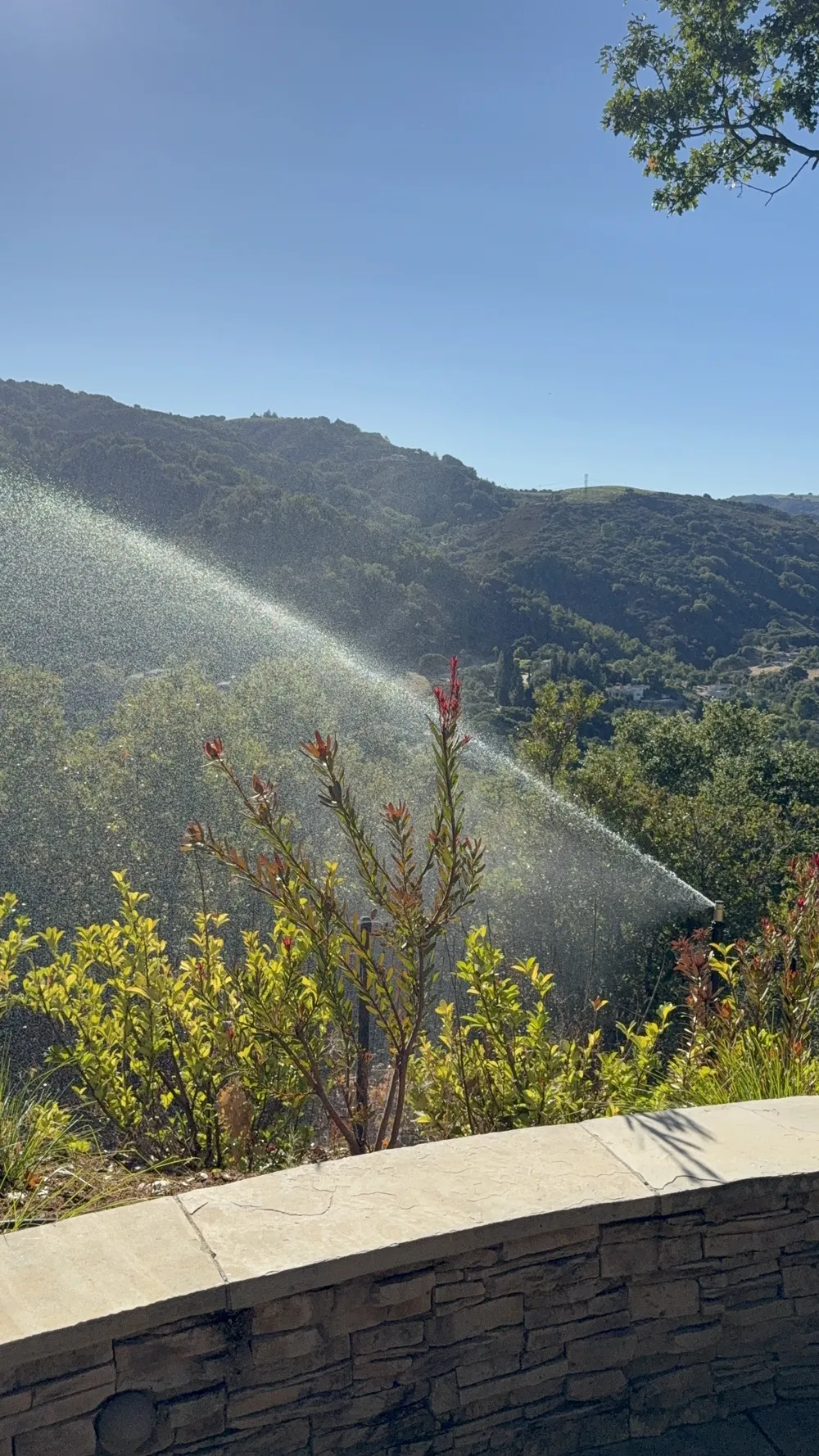
Zone 03
Perimeter Zone
Perimeter sprinklers point outward from the structure, saturating surrounding vegetation and tree lines up to 35 feet beyond the property. This is the buffer between your home and whatever is burning in the brush.
Zone Zero is the most important defensible space boundary, and most homeowners struggle to maintain it perfectly. These sprinklers flood that zone with water when it matters most.
Two Layers of Detection. Neither One Needs You Home.
Most systems rely on a single sensor. Ours uses two independent detection layers that cross-reference each other for accuracy. Either one can trigger the sprinklers on its own.
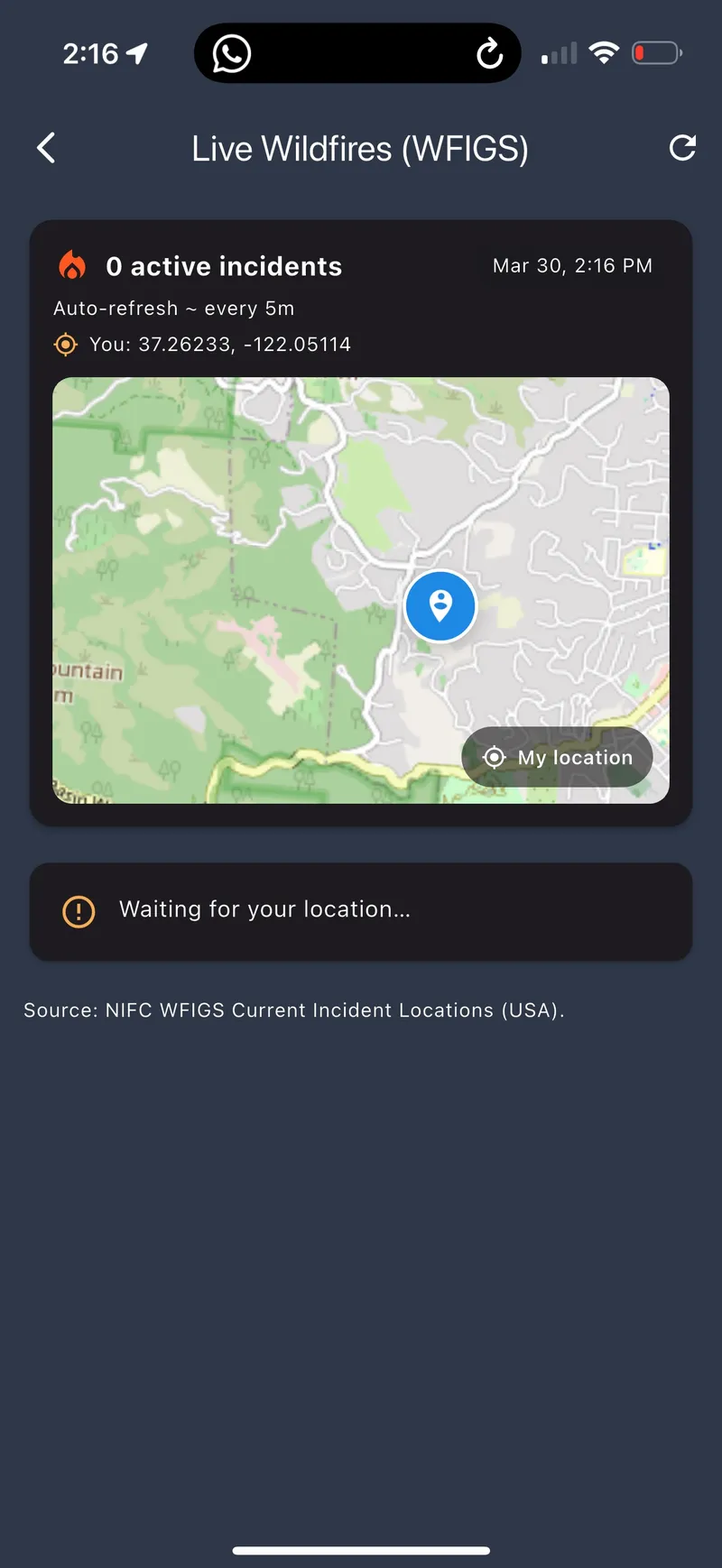
Regional Satellite Monitoring
GOES-18 / NOAA / CAL FIRE Feeds
Watches for fire activity within a 5-mile radius, 24 hours a day. When it detects a regional threat, the system moves to Threat Level 1 and prepares to activate.
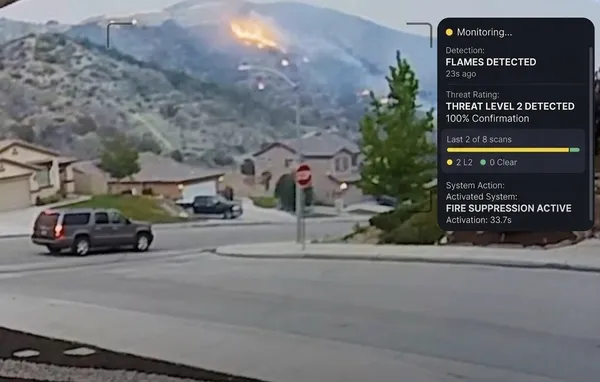
On-Property Camera Detection
Intelligent Fire Detection
Cameras with intelligent fire detection watch your immediate surroundings. When they confirm a direct threat, the system escalates to Threat Level 2 and activates the sprinklers.
You Get a Push Notification. Not a Phone Call.
The FireRoofs app shows you exactly what your system is doing in real time. Live sensor data, camera feeds, wildfire alerts within 5 miles, and manual sprinkler controls if you ever want them.
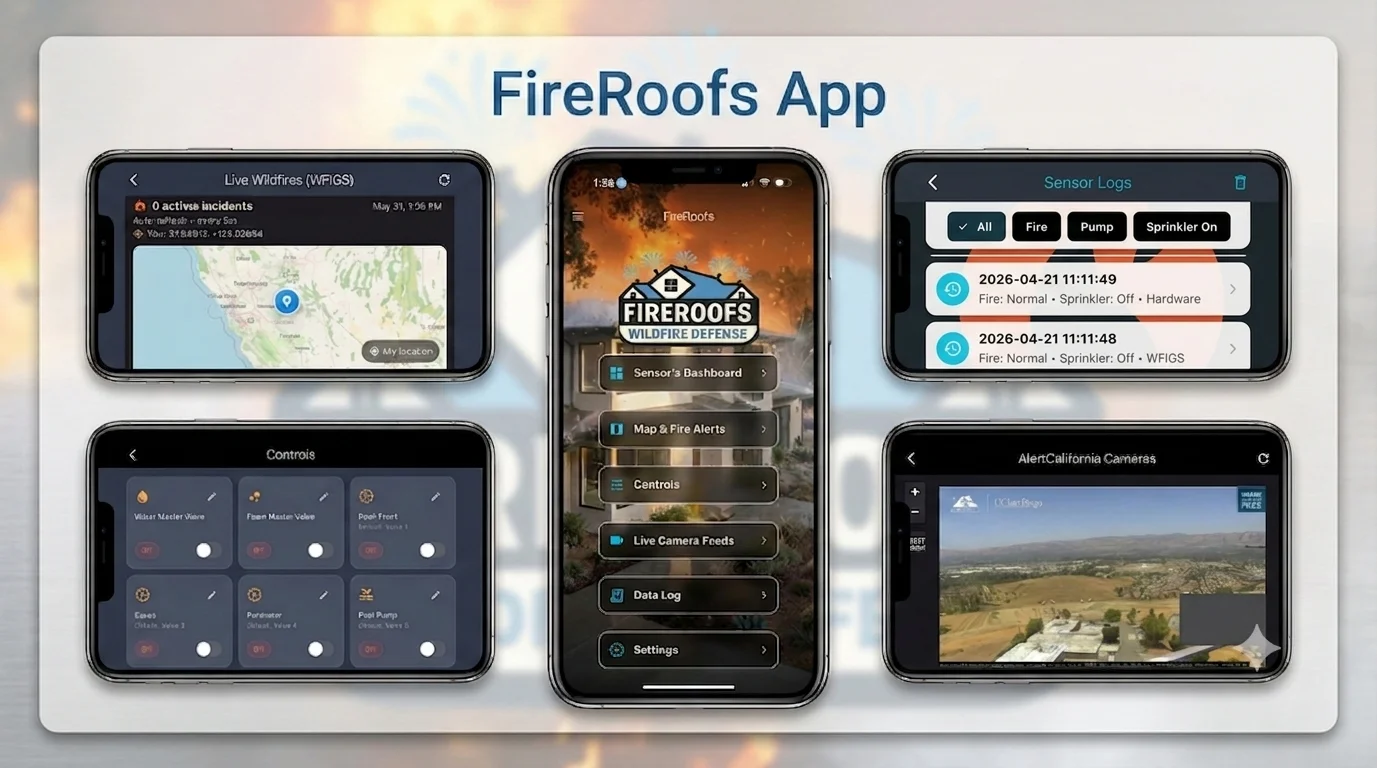
Works over Starlink when grid power and cell service are down.
Watch
See the System in Action
From Detection to Defense: What Happens Step by Step
Here is what happens from the moment a fire is detected to the moment your system returns to standby. Every step is automatic. You do not need to be home.
Satellite Wildfire Monitoring
5-Mile Radius
Regional satellite data from GOES-18, NOAA, and CAL FIRE tracks fire activity within a 5-mile radius 24 hours a day. When regional fire is detected the system moves to Threat Level 1 and prepares to activate.
Layer 1 of dual wildfire detection. No human intervention required.
On-Property Camera Detection
Immediate Threat Confirmation
On-property cameras with intelligent fire detection watch the immediate surroundings in real time. When cameras confirm a direct threat the system escalates to Threat Level 2 and begins pre-activation. Either detection layer can trigger activation independently.
Layer 2 of dual wildfire detection. Continuous monitoring.
Automated Threat Escalation
Three Response Levels
The system has three escalating response levels that activate automatically. Threat Level 1 is regional awareness. Threat Level 2 is property-level alert with pre-activation. Threat Level 3 is full system deployment. Each level triggers the next with no button to push.
Push notification sent to homeowner at Threat Level 2.
Roof, Eave, and Perimeter Sprinkler Activation
All Three Zones
At Threat Level 3 all three sprinkler zones activate in sequence based on threat direction. Roof sprinklers saturate the roofline and extend 20 feet past it. Eave sprinklers protect the most common ember entry points. Perimeter sprinklers flood defensible space up to 35 feet beyond the structure.
Copper pipe throughout. Installed by a licensed California General Contractor.
Optional Class A Foam Deployment
Maximum Surface Protection
For Fortress tier properties, Class A foam is injected through the same sprinkler heads already delivering water. Foam clings to surfaces, holds moisture longer than water alone, and creates a fire-resistant barrier between water cycles. 100% biodegradable, non-toxic to plants, pets, and wildlife.
Foam is always optional. Rinses clean through automated rinse cycle.
Automatic Rinse, Reset, and System Confirmation
Back to Standby
Once the threat clears the system enters an automated rinse cycle and returns all zones to standby. A post-event status report is sent to the FireRoofs app. No cleanup crew. No manual reset. The system is ready for the next threat.
Full post-event status report delivered to the app.
Home Hardening: Closing Every Gap Embers Can Find
Sprinklers fight fire actively. Hardening makes your home harder to burn in the first place. We handle both under one scope of work, so nothing gets missed between contractors.
Ember-Resistant Vents
Replace standard attic and foundation vents with ember- and flame-resistant models that block ember intrusion while maintaining airflow.
FireRoofs CrewNoncombustible Fencing
Replace combustible fencing within 5 feet of the structure with steel, masonry, or other noncombustible materials that break the fuel path from property line to home.
FireRoofs CrewZone Zero Clearance
Remove all combustible material within 0 to 5 feet of the structure. No mulch, no stored firewood, no combustible planters against the foundation.
FireRoofs CrewFire-Retardant Application
Professional application of fire retardant to exterior wood surfaces including siding, trim, and exposed structural elements.
FireRoofs CrewEnclosed Eaves and Soffits
Box in open eaves and soffits to eliminate ember traps at the roof-wall junction, one of the most common ignition points in WUI fires.
FireRoofs CrewExterior Wall Cladding
Install noncombustible or ignition-resistant wall cladding from grade to roofline, reducing radiant heat exposure and direct flame contact risk.
FireRoofs CrewYour Insurance Situation Shapes the Plan
Not every homeowner starts in the same place. Some have an active policy. Some have received a non-renewal notice. Some are already on the FAIR Plan. We adjust the scope and timeline accordingly.
Evaluate Your Insurance Situation
We review your current coverage, any non-renewal notices, and your carrier requirements to determine which mitigation categories matter most for your specific situation.
Prioritize High-Impact Mitigation
If you have a non-renewal deadline, we front-load the categories your carrier weighs most heavily. If you are already on the FAIR Plan, we build toward the documentation package that supports an exit strategy.
Coordinate Active and Passive Scope
Sprinkler installation and home hardening are scheduled to minimize disruption. One project manager coordinates all trades so nothing falls through the cracks.
Document Every Phase
Pre-installation assessment, material specifications, progress photography, and final system documentation are compiled into a single Evidence Packet mapped to all 12 mitigation categories under Regulation 2644.9.
Deliver the Evidence Packet
You receive a completed documentation package designed to support insurance discount applications, non-renewal appeals, and FAIR Plan exit strategies.
Professional Installation by a Licensed California General Contractor
- 3 to 10 days construction depending on property size and complexity
- 1 to 2 days commissioning and homeowner orientation
- 100% exterior-mounted. No roof penetrations, no interior wall work
- Copper pipe throughout
- Licensed by the California Contractors State License Board
- Every installation permitted through the local jurisdiction
Water Supply: What Happens When the Grid Fails
Municipal Supply
The system draws from your home’s existing water supply at operating pressure.
Automatic Failover
If municipal pressure drops the system automatically switches to your pool, storage tank, or secondary source. No manual valves.
Backup Power
The system runs on your home’s backup power: generator or Tesla Powerwall. No battery backup is built into the controller.
The January 2025 Palisades Fire demonstrated why this matters. Municipal water infrastructure failed under demand. FireRoofs systems with independent water sources continued operating.
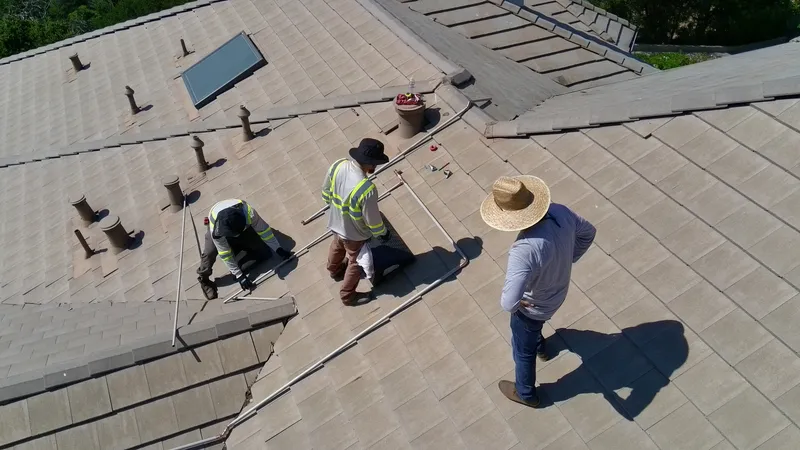
See It Installed on a Real Property
Questions About How the System Works
How do automated wildfire sprinklers and home hardening work together?
Automated sprinklers provide active defense by saturating exterior surfaces during a fire event. Home hardening provides passive defense by making the structure itself more resistant to ember intrusion and radiant heat. Together they address all 12 mitigation categories that California insurers evaluate under Regulation 2644.9.
What is the difference between active and passive wildfire defense?
Active defense includes automated exterior sprinklers that detect threats and deploy water and optional Class A foam before fire arrives. Passive defense includes structural modifications like ember-resistant vents, noncombustible fencing, enclosed eaves, and Zone Zero clearance. FireRoofs provides both under one scope of work.
Does the system work if I have already evacuated?
Yes. The system activates automatically based on dual sensor detection, not homeowner action. The FireRoofs app sends push notifications so you can monitor conditions remotely after evacuating.
What documentation does FireRoofs provide for insurance?
FireRoofs provides a comprehensive Evidence Packet including pre-installation property assessment, material specifications with manufacturer data sheets, progress photography, final system documentation, and a completed mitigation checklist mapped to all 12 categories under California Regulation 2644.9. This documentation package is designed to support insurance discount applications and FAIR Plan exit strategies.
How long does installation take?
Most sprinkler installations take 3 to 10 days of construction plus 1 to 2 days of commissioning. Home hardening scope varies by property. All work is coordinated under one project manager with one timeline.
See What the Satellite Sees
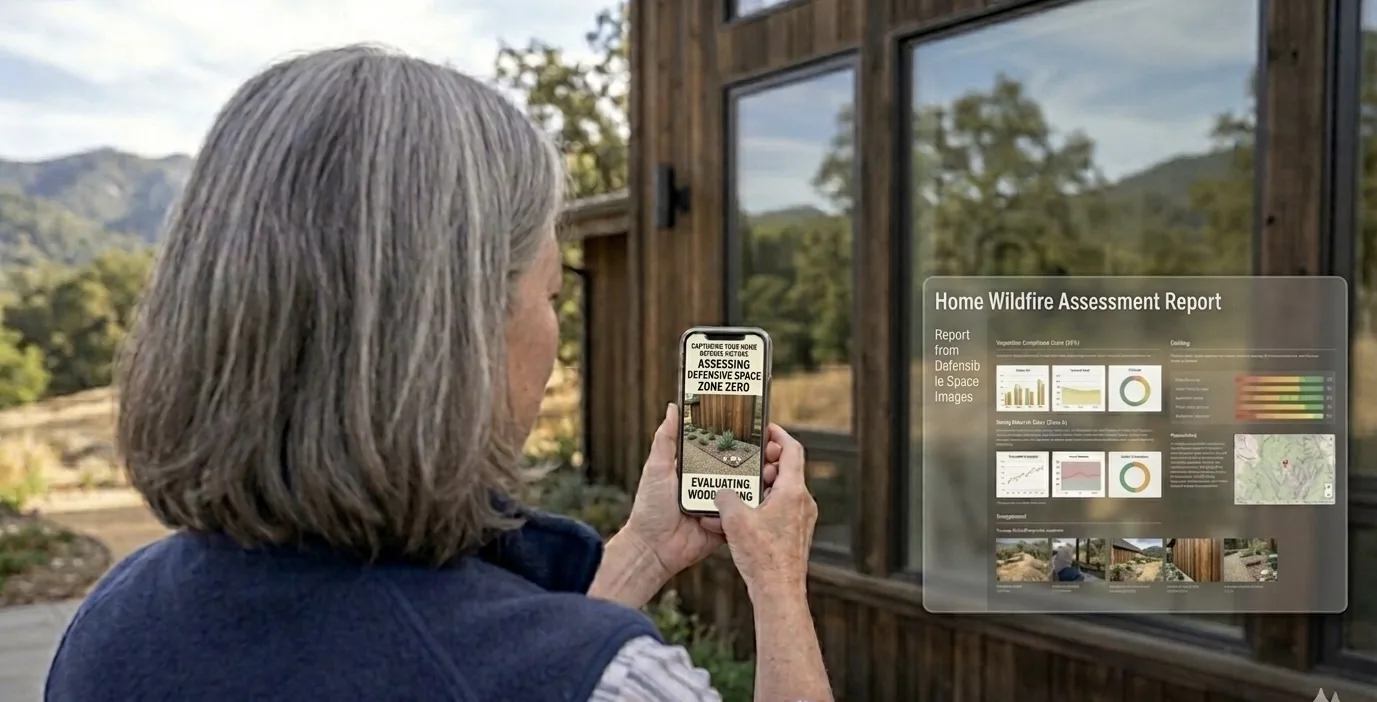
Before we install anything, we look at your property from above. Our satellite report shows your roof condition, nearby vegetation, and fire zone status in about a minute.
- Roof and vegetation snapshot from satellite imagery
- Fire zone and risk level for your specific address
- Full assessment option available if you want more detail
Takes about a minute. No account needed.
Sprinklers, Hardening, Documentation. Find Out What That Looks Like for Your Property.
Free 45-minute property evaluation. We photograph every vulnerability and deliver a written plan with real numbers. No commitment. San Francisco Bay Area.